bloom
bloom at World Data Ocean is a file of 4 stories. The newest of them: “Phenological data confirms warming springs drive earlier cherry blossoms in Japan”, “Simulating Ocean Change: A Hands-On Lesson in Dissolved Oxygen.”, and “Antarctic Plankton Food Webs: Blooming vs. Non-Blooming Trophic Dynamics”. Japan's cherry blossoms are arriving earlier, and the evidence is clear: phenological data confirms that warming spring temperatures are driving this shift. A middle school classroom tank can't replicate the ocean's full complexity, but it can reveal a core truth: nutrient pollution sets off a chain reaction that drains oxygen from the water. A Global Hub for Ocean Intelligence 4 World Data Ocean is a centralized digital platform where researchers, scientists, and ocean enthusiasts converge to… The list below is every bloom story on World Data Ocean, newest first.
Phenological data confirms warming springs drive earlier cherry blossoms in Japan
Japan's cherry blossoms are arriving earlier, and the evidence is clear: phenological data confirms that warming spring temperatures are driving this shift. This is not anecdotal, it's a measurable, empirical signal of climate change playing out in real time. Understanding these patterns is essential for predicting broader ecological impacts. For deeper context on how long-term data reveals structural change, see our related article, "A calibrated shift: global employment data confirms the rise of the service sector."
Simulating Ocean Change: A Hands-On Lesson in Dissolved Oxygen.
A middle school classroom tank can't replicate the ocean's full complexity, but it can reveal a core truth: nutrient pollution sets off a chain reaction that drains oxygen from the water. This hands-on lesson on dissolved oxygen gives students a tangible window into that process. The challenge of testing for DO without expensive probes is real, and we're curious what budget-friendly tricks educators have found.

Antarctic Plankton Food Webs: Blooming vs. Non-Blooming Trophic Dynamics
Phytoplankton underpin Antarctic food webs, yet the trophic pathways that sustain them remain unclear. This study of Potter Cove's plankton community compares blooming and non-blooming seasons, drawing on a 30-year time series to model interaction strengths. Bloom conditions supported more trophic species at higher levels, while microzooplankton proved vital for energy transfer when blooms were absent. That distinction matters. It sharpens our ability to predict how climate-driven shifts may ripple through polar ecosystems.
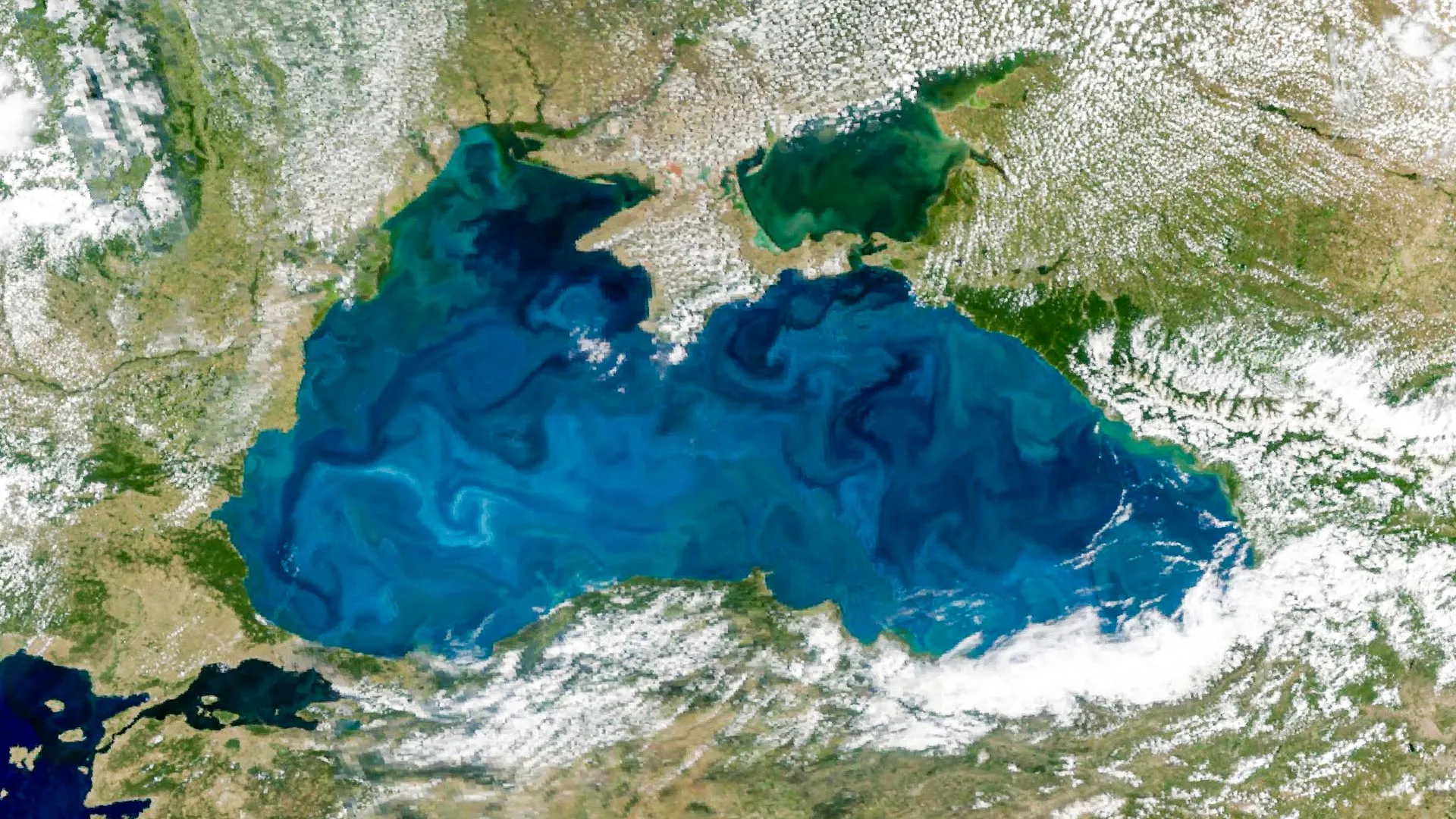
Black Sea Bloom: Satellite Data Reveals Turquoise Waters from Space
From orbit, the Black Sea has turned turquoise. NASA's PACE satellite captured the annual phytoplankton bloom, its reflective coccolithophore shells brightening the water enough to be seen from space. An astronaut on the International Space Station also photographed the bloom threading through the Bosphorus, where swirling currents reveal its reach. It is a striking reminder that ocean intelligence begins with observation, and that such calibrated data is essential for tracking the health of our shared seas.