Black Sea
Black Sea at World Data Ocean is a file of 89 stories. The newest of them: “Black Sea Attack: Cargo Ship Targeted, Raising Maritime Security Concerns”, “Disrupted Shipping Impacts Ukraine’s Vital Agricultural Exports.”, and “Shipping Restricted at Novorossiysk Amid Increased Security Measures.”. The MV Reyhan Sari was sailing from Russia's Port of Taman to Trabzon when it came under attack on July 22, according to ship owner T and O Maritime. The disruption of Ukraine's agricultural exports cuts to the heart of its wartime economy. A Global Hub for Ocean Intelligence 4 World Data Ocean is a centralized digital platform where researchers, scientists, and ocean enthusiasts converge to… The list below is every Black Sea story on World Data Ocean, newest first.

Black Sea Attack: Cargo Ship Targeted, Raising Maritime Security Concerns
The MV Reyhan Sari was sailing from Russia's Port of Taman to Trabzon when it came under attack on July 22, according to ship owner T and O Maritime. The strike raises pointed questions about the safety of commercial routes in the region. This incident is not isolated; our related coverage, including "Strikes Target Ports and Vessels in Confirmed Military Action," underscores a troubling pattern. For those navigating these waters, the threat is no longer hypothetical, it is measurable, and it demands calibrated responses.

Disrupted Shipping Impacts Ukraine’s Vital Agricultural Exports.
The disruption of Ukraine's agricultural exports cuts to the heart of its wartime economy. These shipments are not merely cargo; they are a vital source of hard currency sustaining the nation through conflict that has raged since 2022. Every delayed vessel compounds the pressure. This is a measurable cost in a war defined by economic endurance. For deeper context on Russia's broader maritime strategy, our related report, "Russia Calibrates Export Revenue for Northern Sea Route Icebreaker Fleet," offers useful perspective.

Shipping Restricted at Novorossiysk Amid Increased Security Measures.
Novorossiysk, the conduit for up to one-third of Russia's grain exports, now faces shipping restrictions amid tightened security measures. The port's role is set to expand as it absorbs cargo diverted from the Sea of Azov, concentrating risk where logistics already run dense. This is a calibrated response to a volatile moment, not a panic. For context on how Moscow is reordering its maritime economics, our related piece on Russia's icebreaker export revenue offers a useful counterpoint.

Shipping Disruption: Maersk Halts Ukraine Port Service Amid Escalating Conflict
Maersk's decision to suspend its Ukraine port service at Chornomorsk marks the second major carrier to step back, following Ukraine's largest grain exporter in halting operations there. The move is a measured response to escalating conflict, not a panic. It reflects a sober calculation: when maritime corridors become contested, reliability erodes. For those tracking the Black Sea's shifting trade routes, this is a signal worth calibrating.

Technical Surveillance Enables Swift Rescue of Crew from Burning Vessel
When a fire broke out aboard a vessel, technical surveillance systems detected the threat early, enabling Maritime Guard rescue boats to reach the crew without delay. Swift action, driven by precise ocean intelligence, turned a potential tragedy into a controlled evacuation. This incident underscores how integrated monitoring tools deliver measurable outcomes when they matter most. For broader context on maritime risks, our related report, "Cargo Ship Fire Prompts Evacuation Near Mykonos; Incident Under Investigation," offers further insight into similar emergencies.

Black Sea Attack Injures Crew, Disrupts LPG Delivery to Ukraine
An attack on an LPG tanker bound for the Ukrainian port of Reni has injured three crew members, adding another layer of risk to already volatile Black Sea shipping lanes. The incident disrupts critical propane deliveries and underscores how maritime commerce remains a direct target in this conflict. Reliable data streams are essential here; without them, assessing threats and protecting seafarers becomes guesswork.

Fatal Strike Highlights Risks to Maritime Trade in the Indian Ocean
The first fatal strike on Indian merchant seafarers since 2022 sharpens the risk calculus across the Indian Ocean's vital shipping lanes. This attack is not an isolated incident; it signals a troubling escalation with direct consequences for global trade. We view this as a stark reminder that maritime security is fragile and demands integrated data ecosystems to track threats. For a broader perspective on regional instability, our piece on phased negotiations to ease Strait of Hormuz restrictions offers valuable context.

Ukrainian Navy Rescues Seafarers After Strike on Cargo Ship VENTURO
Seventeen Filipino seafarers are safe tonight because Ukrainian Navy crews moved swiftly after a Russian strike disabled the cargo ship VENTURO off Odesa. One life was lost in the attack, a sobering reminder of the human cost shadowing these waters. The rescue itself demonstrates real operational discipline under pressure. For those tracking the broader pattern of aggression against commercial shipping, our related report, "Strikes Target Ports and Vessels in Confirmed Military Action," provides essential context. This incident underscores why protecting maritime corridors demands constant vigilance.

Attacks Damage Vessels, Disrupt Trade in Ukraine’s Black Sea Ports
The attack in Odesa, which killed another civilian, shows how directly maritime conflict endangers lives and trade. Each strike against port infrastructure disrupts more than steel and cargo; it fractures the supply chains that sustain global markets. This violence demands measured attention, not alarm. Russia's broader maritime strategy, including its calibrated export revenue plans for the Northern Sea Route, reflects a calculated approach to economic pressure. For deeper context on that strategy, see our related piece on Russia calibrating export revenue.

Three Years and €16 Million: Costs Mount for Seized Vessel
Three years of berthing and maintenance now total approximately €16 million for the seized vessel, a cost that works out to roughly €120,000 each week. The figure underscores how prolonged legal and operational limbo carries a financial weight of its own, one that grows with every passing month. It is a stark reminder that maritime disputes rarely come cheap, and the bill keeps climbing. For broader context on regional shipping pressures, our related coverage on Black Sea risks offers further grounding.

Ukrainian Drones Target Vessels in Black Sea, Disrupting Shadow Fleet Operations
The confirmed strikes on five oil tankers, one gas tanker, three dry cargo vessels, and two tugboats mark a precise escalation in disrupting shadow fleet operations. USF Commander Brovdi's report clarifies the scale of this action, and the measured impact here is notable. This is not chaos; it is calibrated pressure. For context on the broader shift toward maritime autonomy, our piece on the Navy's accelerated systems integration offers a useful parallel. These developments signal a hardening of tactics across the region's waters.

Black Sea Conflict: Drone Strikes Impact Russian Maritime Logistics.
Twenty Russian vessels, including 17 oil tankers, were struck by Ukrainian drones in the Black Sea overnight, a significant blow to Moscow's maritime logistics. The attack, which also damaged two gas carriers and a tugboat, demonstrates how drone warfare is reshaping naval operations in the region. This is not just a tactical setback; it is a measurable disruption to Russia's export capacity.

Ukraine’s Naval Strikes Target Russian Shipping, Disrupting Maritime Trade
Ukraine's latest naval strikes hit five tankers, five dry cargo ships, and a tugboat under Operation "MoLoChKa," a direct challenge to Russian shipping lanes. The action underscores how maritime trade has become a battlefield lever, not just a logistical footnote. It is a calibrated escalation, measured in hulls and cargo holds, aimed at disrupting supply lines that fuel the war effort.
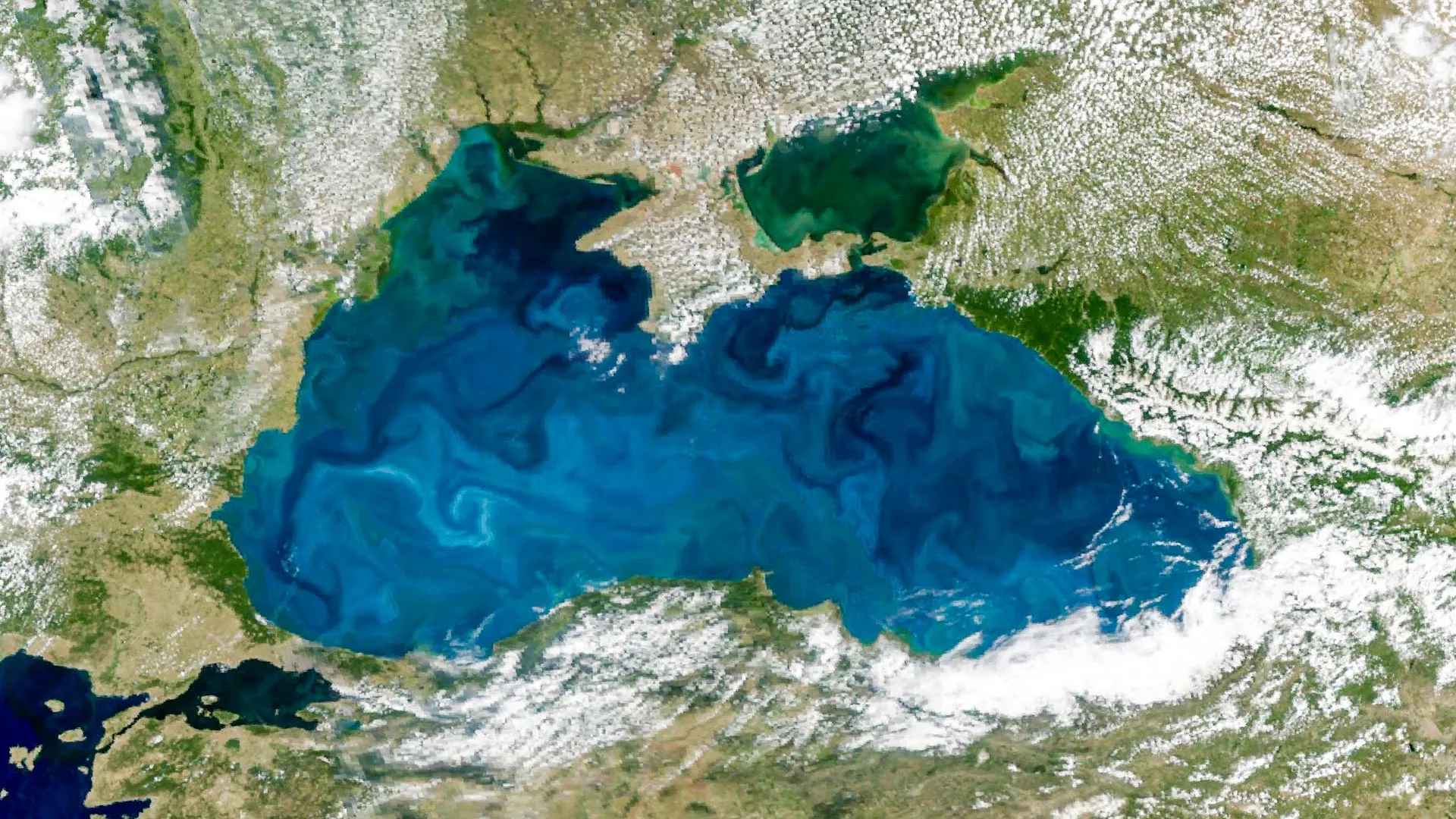
Black Sea Bloom: Satellite Data Reveals Turquoise Waters from Space
From orbit, the Black Sea has turned turquoise. NASA's PACE satellite captured the annual phytoplankton bloom, its reflective coccolithophore shells brightening the water enough to be seen from space. An astronaut on the International Space Station also photographed the bloom threading through the Bosphorus, where swirling currents reveal its reach. It is a striking reminder that ocean intelligence begins with observation, and that such calibrated data is essential for tracking the health of our shared seas.

Sea of Azov Sees Escalation: Drone Attacks Target Russian Naval Assets
The overnight strike on the Sea of Azov marks a pointed escalation, with Ukraine's drone forces commander Robert Brovdi reporting hits on 11 Russian vessels. This is calibrated, measurable pressure on naval assets that have long anchored Moscow's maritime posture. We view this as a deliberate step in a broader campaign, one that demands attention for its precision and its implications.

Autonomous System Deployed: Ukraine Employs Robotic Boat in Coastal Operation
Ukraine's deployment of a robotic boat in coastal operations signals a practical shift toward autonomous systems in contested waters. The platform's reliance on a ballistic computer and AI for target detection and engagement reflects a growing emphasis on precision over proximity. This is measured, calculated capability. It also aligns with broader trends, such as the US Navy's recent push to integrate similar technologies, a point covered in our related article, "Navy Accelerates Autonomous Systems Integration for Enhanced Maritime Operations.

Maritime Security Imperative: IMO Condemns Attacks on Shipping Lanes
The IMO's condemnation of attacks on shipping lanes is a measured, necessary response to a crisis that threatens the very framework of global trade. The Secretary-General's call for an end to unwarranted strikes is not just diplomatic language; it is a demand for the rules that keep our integrated data ecosystem moving to hold firm. Geopolitical friction cannot be allowed to destabilize the maritime routes we all depend on.