astronomy
World Data Ocean keeps astronomy in one place: 5 stories so far. The section currently leads with “Researchers trace a real celestial date to van Gogh's Starry Night”, “Interstellar surprises await as Voyager 1 crosses one light-day”, and “JWST data reveals an unexpected ice world within the habitable zone”. A precise celestial alignment has been traced to van Gogh's *Starry Night*, researchers have now identified the real astronomical date that inspired the iconic 1889 painting. On November 18, Voyager 1 crosses one light-day from Earth, a distance that takes a signal nearly 24 hours to travel. A Global Hub for Ocean Intelligence 4 World Data Ocean is a centralized digital platform where researchers, scientists, and ocean enthusiasts converge to… The list below is every astronomy story on World Data Ocean, newest first.

Researchers trace a real celestial date to van Gogh's Starry Night
A precise celestial alignment has been traced to van Gogh's *Starry Night*, researchers have now identified the real astronomical date that inspired the iconic 1889 painting. This empirical calibration of art and science is a compelling example of how validated data can illuminate even the most subjective of human expressions. For those tracking how measurable observations reshape our understanding of the world, our coverage of Arctic sea ice thinning persists as winter and summer records decline offers a parallel story of long-term environmental signals.

Interstellar surprises await as Voyager 1 crosses one light-day
On November 18, Voyager 1 crosses one light-day from Earth, a distance that takes a signal nearly 24 hours to travel. It has been in interstellar space for years, yet it keeps finding surprises. That persistence matters. Each unexpected discovery refines our empirical understanding of the boundary between our solar system and the wider galaxy. This is measured, validated progress. For deeper context on how long-term data reveals planetary change, see our coverage of ancient ocean phosphorus cycles.
JWST data reveals an unexpected ice world within the habitable zone
An ice world where we least expected it. JWST data has revealed a frozen planet orbiting within the habitable zone, a finding that recalibrates our understanding of where life-sustaining conditions can exist. This is empirical observation challenging assumption. It reminds us that ocean intelligence extends beyond our own blue planet. For complementary insights into Earth's own dynamic systems, explore our coverage of the validated global atlas of ocean thermohaline structure. Understanding drives protection, whether in orbit or at depth.
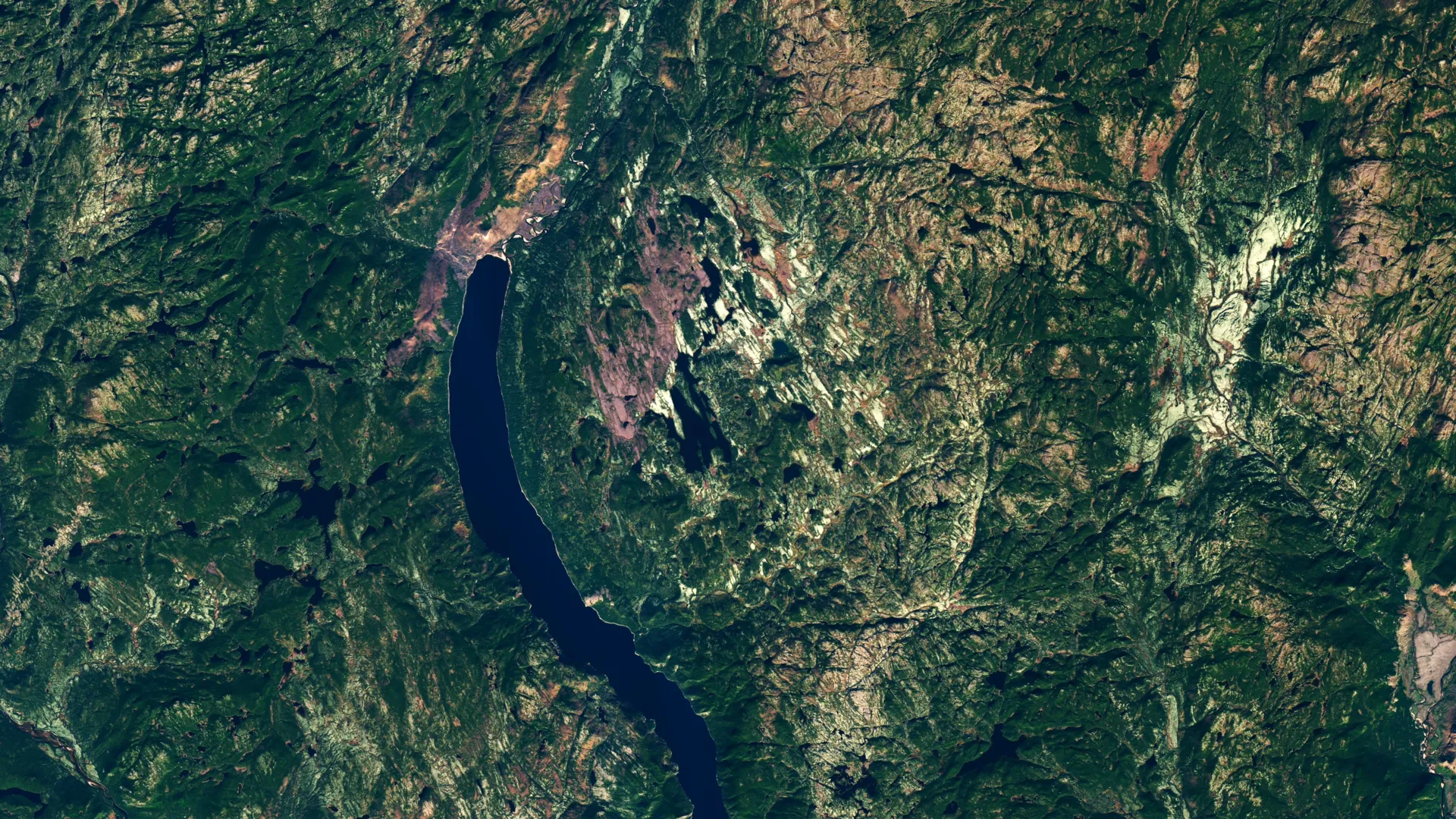
Ancient Impact Crater, 390 Million Years Old, Identified in Quebec
A chance glance at satellite maps for a camping trip has yielded a 390-million-year-old secret. An amateur astronomer's discovery in Quebec led scientists to confirm a 25-kilometer-wide impact crater, evidenced by shatter cones. It is a striking reminder that Earth's history is written in plain sight. For those tracking planetary forces, this find complements our coverage of Cascadia's Subduction Zone Reveals a Fragmented Tectonic Process, adding another layer to our understanding of the planet's dynamic, violent past.

Controlling the Cosmos: Space-Based Illumination and the Future of Night
A satellite that beams light on demand sounds like a solution in search of a problem, until you consider who gets to decide what that means. Astronomers are rightly concerned: the night sky is not a blank canvas for commercial convenience. Illumination on command reshapes more than visibility; it reshapes our shared scientific baseline. We think this is a conversation about governance as much as technology.