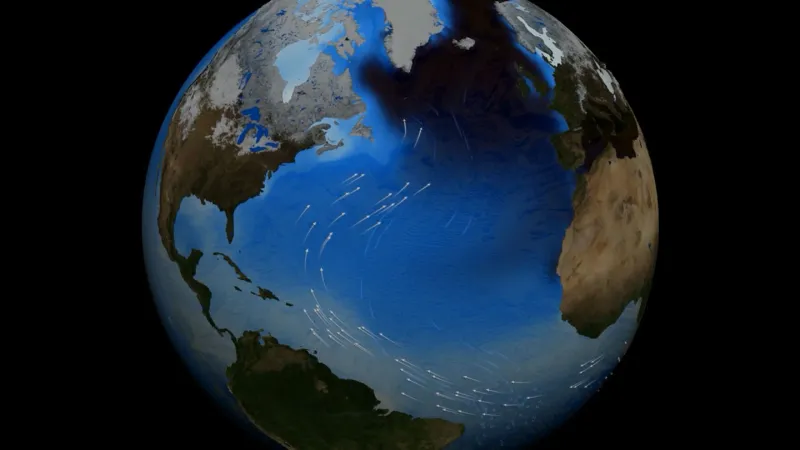
The recent forecast regarding the Atlantic Meridional Overturning Circulation (AMOC) presents a stark warning: by 2100, this vital ocean current is projected to weaken by 50 percent. This development carries profound implications for global climate regulation, marine ecosystems, and socio-economic structures reliant on ocean health. As we grapple with the specter of climate change, understanding the ramifications of such shifts in oceanic currents becomes imperative. The AMOC plays a crucial role in regulating temperatures across the Atlantic and influencing weather patterns worldwide. Its potential decline underscores the interconnectedness of ocean health and human livelihoods, as highlighted in articles like The price of a warming sea: climate change, nonindigenous species, and their impact on Israel’s fishing economy, where the economic implications of climate shifts are explored.
The weakening of the AMOC is more than a scientific curiosity; it poses existential questions about our climate future. The circulation is responsible for transporting warm water from the tropics to the North Atlantic, where it cools and sinks, creating a cycle that influences global weather. A significant reduction could lead to harsher winters in Europe, increased sea-level rise along the U.S. East Coast, and disruptions to marine biodiversity. Such changes could profoundly affect fisheries, as seen in the challenges posed by shifting species distributions, as discussed in High-accuracy fish species identification using transfer learning on vision foundation models. Moreover, these alterations in fish populations would not only affect ecological balance but also threaten food security and economic stability in communities that depend on fishing.
In addressing what can be done about the AMOC's decline, it is crucial to emphasize the role of collaborative efforts in ocean stewardship. The urgency of this situation calls for a multi-faceted response that includes scientific research, policy-making, and community engagement. Solutions must hinge on an integrated approach that combines empirical data with innovative strategies for climate adaptation and mitigation. The discussion surrounding the AMOC is not just about observing a trend; it is about galvanizing action to safeguard ocean health. As we navigate these complexities, the call to action becomes clearer, echoing the sentiments of the upcoming STCW PSSR 2026: 10 Key Points About the New Mandatory Training on Bullying, Harassment, and Sexual Assault, which emphasizes the necessity of empowerment and responsibility in maritime communities.
Looking ahead, the implications of a weakened AMOC extend beyond immediate environmental concerns. They challenge us to reevaluate our relationship with marine systems and the climate at large. As stakeholders in ocean health, we must consider how our actions today will shape the future of our planet. The question remains: are we prepared to harness our collective knowledge and resources to address these impending changes? The urgency for informed, innovative solutions has never been greater. As we confront the realities of climate change, the need for a robust, coordinated response is clear. Engaging with the scientific community, policymakers, and the public will be crucial in fostering a resilient ocean ecosystem that supports both biodiversity and human prosperity.