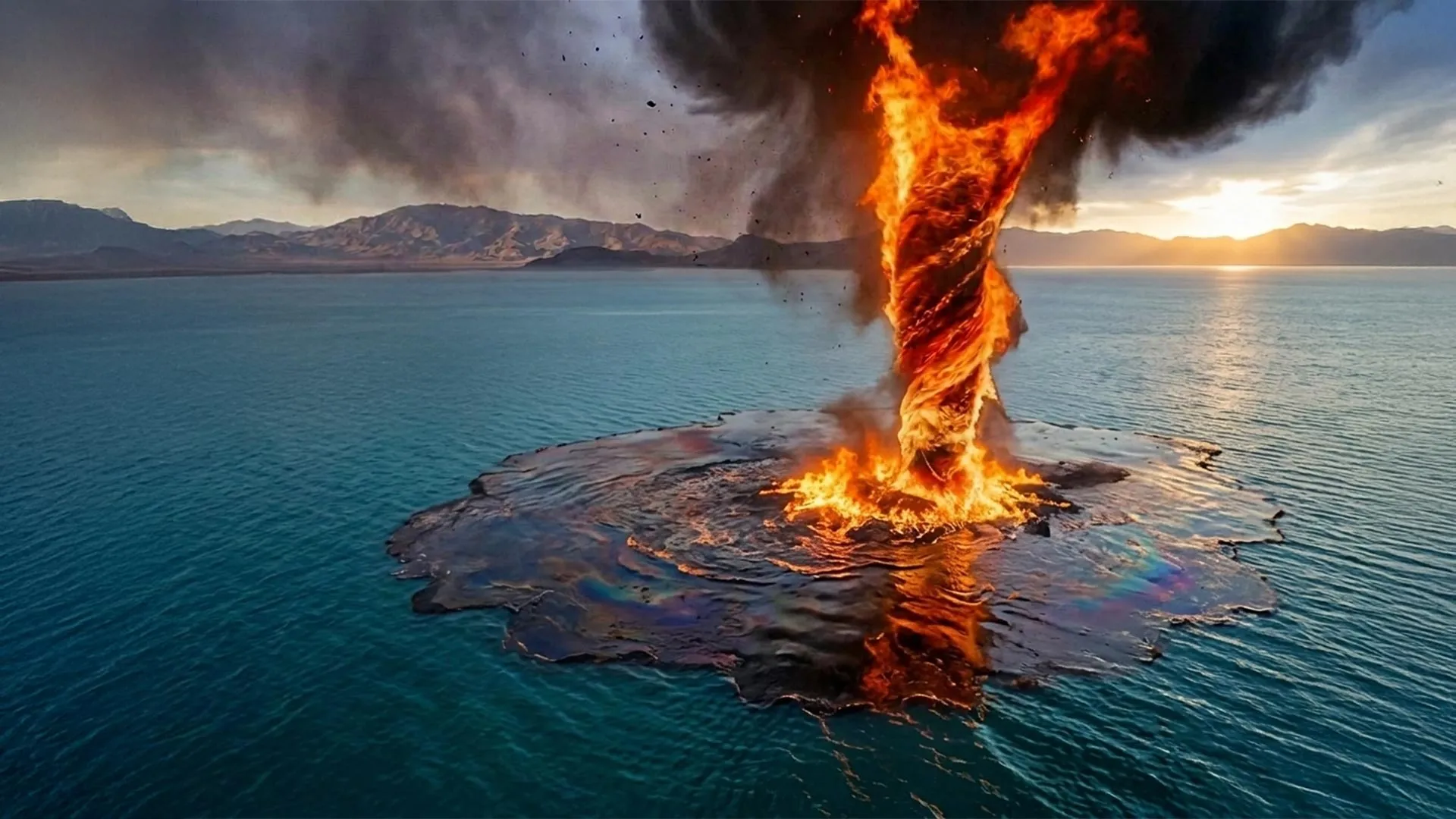
The recent demonstration that controlled fire whirls can incinerate up to 95 % of spilled oil while reducing soot emissions by 40 % marks a notable advance in emergency response technology. By harnessing the physics of vortex‑driven combustion, researchers have created a method that not only accelerates the degradation of hydrocarbon slicks but also limits the secondary pollution that traditionally accompanies in‑situ burning. This breakthrough aligns with the data‑driven stewardship emphasized in our coverage of marine protection, such as the analysis in 30x30 means protecting 30% of the ocean by 2030. The goal is clear. The bottleneck is not ambition, it’s coverage: data and complements the nuanced understanding of habitat risk highlighted in Impacts of jetty construction on hydrodynamics, seabed morphology and marine ecology: a case study of Tongzhou Bay, Nantong, China. By delivering a more efficient, lower‑impact burn, fire whirls could become an integral component of the integrated data ecosystem that informs real‑time spill mitigation strategies.
From a scientific perspective, the controlled vortex introduces several measurable benefits. The rotational motion increases flame temperature and residence time, promoting more complete oxidation of volatile compounds and reducing the formation of polycyclic aromatic hydrocarbons that persist in the water column. Empirical trials have shown a longitudinal reduction in residual oil thickness, suggesting that fire whirls could be calibrated to target specific spill volumes with a precision previously reserved for mechanical skimmers. Moreover, the reduction in soot—validated through calibrated spectroscopic analysis—means that atmospheric deposition on nearby marine habitats will be markedly lower, preserving the integrity of sensitive ecosystems such as coral reefs and seagrass beds that are often the first victims of oil‑induced turbidity.
The operational implications extend beyond the immediate cleanup. Traditional burn‑off techniques are limited by wind direction, sea state, and the logistical challenge of maintaining a stable flame over a sprawling slick. A fire whirl, by contrast, can be generated from a portable burner system that self‑stabilizes through its own induced airflow, offering a degree of autonomy that supports rapid deployment in remote or contested waters. This capability dovetails with the broader push toward forward‑thinking, technology‑enabled ocean intelligence, where peer‑reviewed models feed into decision‑support tools for policymakers and responders alike. By integrating fire‑whirl data into existing monitoring platforms, stakeholders can generate real‑time, calibrated forecasts of spill trajectory and residual risk, thereby enhancing the measurable impact of response actions.
Nevertheless, adoption will require rigorous validation across diverse marine contexts. Variables such as oil viscosity, salinity gradients, and ambient temperature influence vortex formation and combustion efficiency, demanding a suite of longitudinal field studies to establish robust performance envelopes. Moreover, the technique must be reconciled with regulatory frameworks that govern atmospheric emissions and marine protected areas. Transparent, peer‑reviewed reporting will be essential to ensure that the promise of reduced soot does not obscure any unforeseen ecological side effects, such as localized heat stress or the generation of fine‑scale ash particles that could settle on benthic habitats.
Looking ahead, the convergence of controlled fire whirls with emerging remote‑sensing networks offers a compelling research frontier. If real‑time satellite or unmanned aerial system observations can verify the burn completeness and plume dispersion in situ, response teams could iterate tactics on the fly, achieving a calibrated, adaptive response loop. The question now is whether the scientific community can translate this laboratory‑scale success into a globally deployable, standards‑based protocol that respects both atmospheric and marine health. Monitoring the evolution of these efforts will be essential for understanding how innovative combustion can become a measured, responsible tool in the broader mission of ocean stewardship.