Ancient Greek rings may have been forged with iron from meteorites
Our take
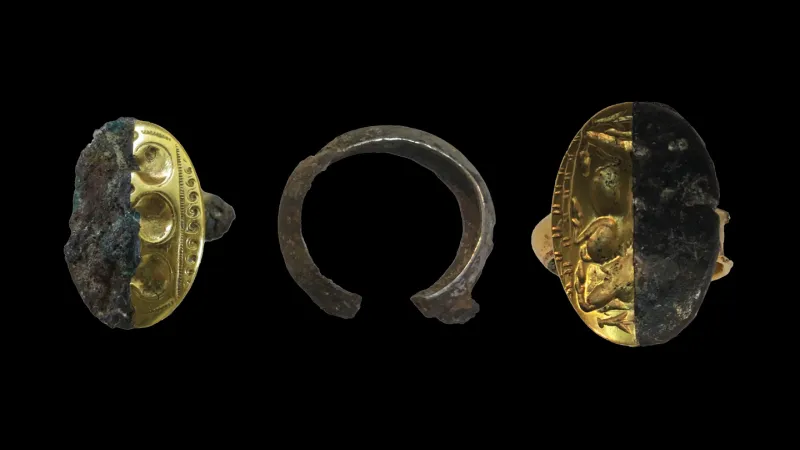
The discovery that some ancient Greek signet rings were crafted from iron originating in meteorites offers a compelling new lens through which to examine Bronze Age metallurgy and societal values. Chemical analysis, a field increasingly revealing the secrets of the past, has definitively identified the extraterrestrial origin of the iron within these objects, suggesting a deliberate choice by Greek elites to incorporate a material of perceived cosmic significance into their personal adornments. This finding resonates with broader understandings of ancient cultures’ fascination with the heavens and their integration of celestial phenomena into both religious and technological practices. It’s a reminder that archaeological investigation is continually evolving, moving beyond simply identifying artifacts to understanding their chemical composition and, ultimately, the motivations behind their creation. Consider, for instance, the innovative methods used to reconstruct the lives of Pompeii's inhabitants, vividly brought to life in Pompeii’s survivors shine in a new documentary series, demonstrating the power of interdisciplinary approaches to historical understanding. This discovery parallels similar efforts to understand cultural narratives through material remains, illustrating the interconnectedness of archaeological science and human storytelling. The implications extend beyond simply adding a new detail to the history of ironworking. Iron, even in the Bronze Age, was a rare and valuable commodity, particularly in Greece. The fact that it was sourced from meteorites—a dramatically more difficult and unlikely acquisition—points to a symbolic value exceeding mere material worth. These rings were not simply status symbols; they represented a connection to the cosmos, a tangible link to the celestial realm. The effort involved in obtaining and working this extraterrestrial iron would have been significant, further emphasizing the exclusivity and prestige associated with owning such an object. This also raises questions about the extent of ancient knowledge regarding meteorites. Did the Greeks understand their extraterrestrial origin, or did they simply recognize them as possessing unique properties? The metallurgical expertise required to forge these rings from meteorite iron is also noteworthy; it indicates a level of technological sophistication previously underestimated in some regions during the Bronze Age. Further research into the techniques used and the sources of the meteorites themselves could yield invaluable insights into ancient trade networks and the dissemination of knowledge. It's fascinating to consider how techniques used to analyze ancient materials are constantly improving, offering new perspectives on historical events, much like the analysis of ancient Roman artifacts showcased in Pompeii’s survivors shine in a new documentary series. The broader significance lies in the potential to re-evaluate our understanding of ancient belief systems and the role of rare materials in shaping social hierarchies. The deliberate choice of meteorite iron suggests a worldview where the heavens were not merely distant and unknowable, but a source of tangible power and prestige. This challenges the conventional narrative of Bronze Age societies as solely focused on terrestrial resources and technologies. The discovery also aligns with growing evidence of ancient cultures’ awareness of celestial events and their incorporation into religious rituals and cosmological models. It prompts us to consider whether similar extraterrestrial materials were used in other artifacts and structures, potentially unlocking further secrets about the ingenuity and worldview of our ancestors. The scientific rigor applied to analyzing these rings, employing techniques like mass spectrometry, provides a validated and measurable understanding that complements traditional archaeological methods. This integrated approach to historical inquiry is vital for building a more complete and nuanced picture of the past. It’s a potent example of how empirical data, carefully calibrated and peer-reviewed, can reshape our understanding of ancient civilizations. Looking forward, this discovery should spur further investigations into the prevalence of extraterrestrial materials in ancient artifacts. Could other seemingly unusual metal sources be traced back to meteorites or other cosmic origins? The development of increasingly sophisticated analytical techniques will undoubtedly reveal more surprising connections between the Earth and the cosmos, prompting a re-evaluation of ancient technologies and belief systems. The ocean, too, holds untold secrets about our planet’s past and future, and the development of ocean intelligence platforms, as we strive for, will be crucial in unlocking them.
Read on the original site
Open the publisher's page for the full experience