25 people learned to fly with virtual wings. Here’s how the brain changed
Our take
Our Take – Virtual Wings and the Plasticity of the Human Brain
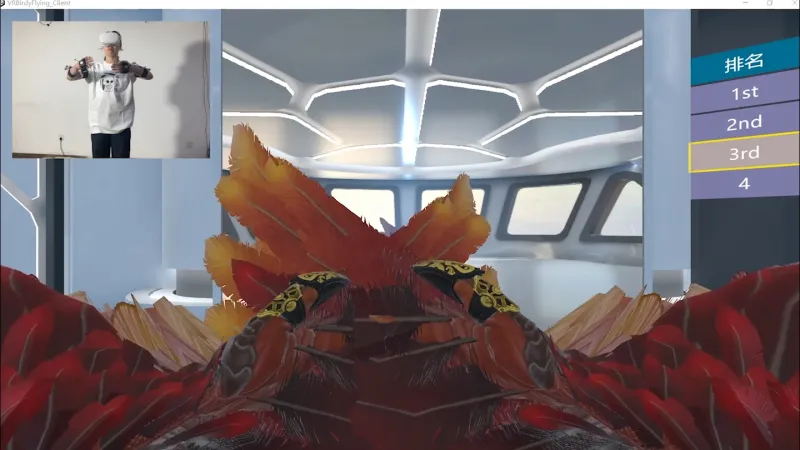
The recent study in which 25 participants learned to “fly” using virtual wings offers more than a captivating headline; it provides a validated glimpse into how embodied interaction reshapes neural architecture. By integrating a calibrated motion‑capture system with real‑time visual feedback, researchers created an integrated data ecosystem that treated the virtual appendages as extensions of the body. This approach echoes the methodological rigor seen in other longitudinal investigations, such as the mapping of far‑flung brain networks in rodents — see Newly mapped brain networks link far-flung regions. The brain’s response was measurable: functional MRI revealed increased activation in sensorimotor cortices traditionally devoted to limb control, suggesting that the brain can calibrate novel effectors with a speed that rivals the acquisition of real‑world motor skills.
Why does this matter for ocean science and climate stewardship? The ocean intelligence community relies on immersive tools—virtual reality (VR) simulations of coral reefs, wave dynamics, and vessel operations—to train researchers and policymakers at scale. If the brain can assimilate virtual wings as bodily parts, the same neuroplastic mechanisms can be harnessed to embed complex oceanic concepts more deeply. For instance, a VR drill that lets a trainee manipulate calibrated wave models in a simulated storm could trigger the same sensorimotor integration, making abstract climate indicators feel as tangible as a lever in one’s hand. This aligns with the purpose‑driven ethos of World Data Ocean: to transform empirical data into lived experience, thereby fostering a shared responsibility for stewardship.
The findings also illuminate a path toward more inclusive, global collaboration. Traditional fieldwork on remote oceanic fronts is limited by geography, funding, and safety. A VR platform that leverages the brain’s capacity for embodied learning can democratize access, allowing students in coastal communities and policymakers in landlocked nations to experience the dynamics of ocean circulation first‑hand. The study’s longitudinal design—tracking neural changes over weeks of practice—offers a template for measuring the efficacy of such educational interventions. By adopting peer‑reviewed metrics of brain adaptation, oceanographers can quantify how well virtual training translates into real‑world decision‑making, moving beyond anecdotal evidence to a calibrated, measurable impact.
Nevertheless, the promise of virtual embodiment must be balanced with rigorous validation. The sample size of 25, while sufficient for an initial proof of concept, requires expansion to diverse populations to confirm that neuroplastic responses are not confined to a narrow demographic. Moreover, the study’s reliance on visual immersion raises questions about multisensory integration; adding haptic feedback could further align virtual appendages with proprioceptive cues, potentially accelerating the brain’s recalibration. Future research should therefore integrate real‑time physiological monitoring—heart rate variability, galvanic skin response—to capture the full spectrum of embodied experience, ensuring that the technology remains both innovative and empirically grounded.
Looking ahead, the convergence of VR, neuroscience, and ocean data invites a pivotal question: can we design an ocean‑wide, immersive curriculum that not only teaches the mechanics of climate change but also rewires our neural perception of the sea as an integral part of our own body? As we refine the tools that translate oceanic datasets into embodied insight, the answer may define the next frontier of climate action—one where the line between human cognition and planetary health becomes scientifically measurable and ethically compelling.
Read on the original site
Open the publisher's page for the full experience