water quality
World Data Ocean keeps water quality in one place: 11 stories so far. The section currently leads with “Five Years of Data Track Phased Recovery in Bohai Bay Oyster Reefs”, “Human Impact Reveals Shifting Biogeochemical Patterns in Marine Ecosystems”, and “Advancing Underwater Imaging: A New Filter for Clearer Ocean Insights”. Five years of empirical data now confirm what calibrated monitoring can reveal: subtidal oyster reef restoration works, but recovery is phased. Measured shifts in marine biogeochemical patterns now point to a clear conclusion: human activity is redefining ocean chemistry at scale. A Global Hub for Ocean Intelligence 4 World Data Ocean is a centralized digital platform where researchers, scientists, and ocean enthusiasts converge to… The list below is every water quality story on World Data Ocean, newest first.
Five Years of Data Track Phased Recovery in Bohai Bay Oyster Reefs
Five years of empirical data now confirm what calibrated monitoring can reveal: subtidal oyster reef restoration works, but recovery is phased. In Bohai Bay's Dashengtang project, oyster density on natural reefs reached 1,830.4 individuals per square meter by March 2026, while artificial reefs showed steady recruitment. Water quality improved measurably, suspended particulate matter dropped from 19.3 to 7.28 mg L⁻¹. These are not quick fixes; they are validated, stage-specific gains.

Human Impact Reveals Shifting Biogeochemical Patterns in Marine Ecosystems
Measured shifts in marine biogeochemical patterns now point to a clear conclusion: human activity is redefining ocean chemistry at scale. These are not abstract anomalies but calibrated signals, tracked through integrated data ecosystems and peer-reviewed observation. We see this as an opportunity to refine our understanding, not an excuse for alarm. The evidence demands rigorous attention and shared response. For those tracking how marine structures challenge assumptions, our related coverage, including the Port Phillip Bay debate, offers useful context.
Advancing Underwater Imaging: A New Filter for Clearer Ocean Insights
Clear water is a luxury underwater images rarely enjoy. Haze, wavelength-dependent absorption, and scattering routinely strip clarity from marine observation, yet most enhancement methods treat these as uniform noise rather than physical realities. The proposed RSADAF framework changes that calculus. By embedding Rayleigh scattering directly into a second-order diffusion model, the authors give the filter true wavelength awareness, allowing it to suppress degradation while preserving structural edges. The benchmark results, including a PSNR of 42.85 dB, speak for themselves. This is practical, interpretable ocean intelligence.

Unexpected Trust: A Curious Encounter with a Lake Dweller in Poland
A small fish at Kręcko Lake decided it had found its people. During a festival in Garbicz, Poland, this little lake dweller swam up, lingered, and refused to leave, even when hands were pulled away. Its habit of popping to the surface, as if catching a breath, only added to the charm. While we can't identify the species, its trusting behavior raises a genuine question about wild fish curiosity. It is a reminder that unexpected encounters often hold the most honest data.
Real-Time BOD and Temperature Monitoring via Integrated Microfiber Sensor.
Reliable oxygen and temperature data are the backbone of sound ocean stewardship, and this integrated microfiber sensor delivers both in real time. Published in *Applied Optics*, the work demonstrates a practical step toward more responsive monitoring of coastal and open-water systems. The ability to validate conditions continuously, rather than relying on discrete samples, strengthens our understanding of changing climate indicators. For readers exploring how technology expands marine research, this connects naturally to our coverage in "Real-Time Ocean Simulations Advance Understanding Through Integrated Modeling.
Coastal Waters: Assessing Copernicus Data for Water Quality and Temperature
Coastal waters defy easy answers. The Copernicus program offers a wealth of satellite-derived data on temperature and water quality, yet these products lean on empirical algorithms that stumble where rivers meet the sea. Here, in the Northern Adriatic, chlorophyll-a shares the optical stage with suspended matter and dissolved organics, complicating every retrieval. Our assessment, grounded in multi-year in-situ measurements, reveals sea surface temperature products perform admirably, with errors near three percent. Chlorophyll-a improves after bias correction, though turbidity remains stubbornly unreliable.
Simulating Ocean Change: A Hands-On Lesson in Dissolved Oxygen.
A middle school classroom tank can't replicate the ocean's full complexity, but it can reveal a core truth: nutrient pollution sets off a chain reaction that drains oxygen from the water. This hands-on lesson on dissolved oxygen gives students a tangible window into that process. The challenge of testing for DO without expensive probes is real, and we're curious what budget-friendly tricks educators have found.
Sixteen Years Later: Measuring Recovery and Water Quality in the Gulf
Sixteen years after the Deepwater Horizon oil spill, the Gulf of Mexico remains a living laboratory for recovery, and for questions that still demand answers. For those who stayed away, the urge to return is now paired with a need to understand: Is the water safe, and how has it truly changed? Water quality along Alabama's coast has largely rebounded, but the long-term fate of the oil and the chemical dispersants used to break it up remains a complex, ongoing story.
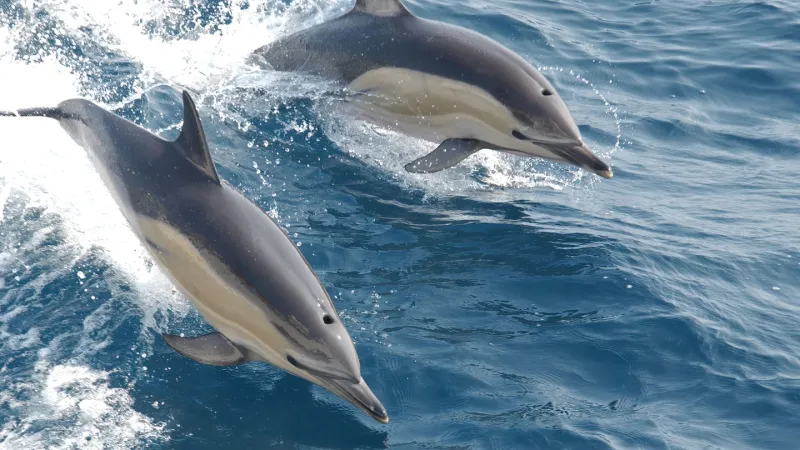
New Zealand Dolphins Show Accelerated Aging Linked to Environmental Contaminants
New Zealand's common dolphins are aging faster than their years, and the evidence points to a toxic burden we can no longer ignore. Trace metals and per- and polyfluoroalkyl substances, the so-called forever chemicals, are likely accelerating biological aging in these animals. This is more than a striking data point; it is a measurable indicator of ocean health that demands our attention.
Long-Term Data Reveals Predictable Shifts in Coastal Water Quality.
Thirty-seven years of monthly data across 94 stations is a rare lens, and it shows that coastal water quality follows patterns we can actually anticipate. The study's strength lies in its chronological validation, which reveals that tree-based models hold up best for temperature and salinity, while chlorophyll-a remains stubbornly unpredictable. SHAP analysis adds a compelling layer, showing how predictor importance shifts with hydrography, particularly in the Pearl River-influenced west. This is a practical benchmark, not a theoretical one.
Data-Driven Solutions for a Sustainable Ocean Future
Every observation we log, from a chiton's unexpected presence in Puerto Rico to a mystery specimen washing ashore in California, sharpens our collective picture of the ocean. These are not isolated curiosities; they are data points that refine the models guiding our stewardship. We treat each report as a signal worth integrating into a larger, peer-reviewed framework. Understanding drives protection, but only when we connect the dots.