unmanned vessels
World Data Ocean keeps unmanned vessels in one place: 5 stories so far. The section currently leads with “Navigating Legal Waters: Unmanned Vessels and Maritime Law Enforcement”, “Securing the Strait: Navy SEALs Conduct Covert Mine Clearing Operation”, and “Layered Innovation: 3D-Printed Drone Boat Advances Ocean Data Collection”. The legal status of unmanned vessels in maritime law enforcement remains unresolved, and the gaps are becoming harder to ignore. For four months, U.S. A Global Hub for Ocean Intelligence 4 World Data Ocean is a centralized digital platform where researchers, scientists, and ocean enthusiasts converge to… The list below is every unmanned vessels story on World Data Ocean, newest first.

Navigating Legal Waters: Unmanned Vessels and Maritime Law Enforcement
The legal status of unmanned vessels in maritime law enforcement remains unresolved, and the gaps are becoming harder to ignore. The analysis of the warship, military device, and ship doctrines is a necessary step toward clarity. We find the ship doctrine, grounded in navigation competency, the most defensible under international law. Yet the three challenges it identifies, algorithmic equivalence, black-box opacity, and fragmented accountability, are real obstacles.
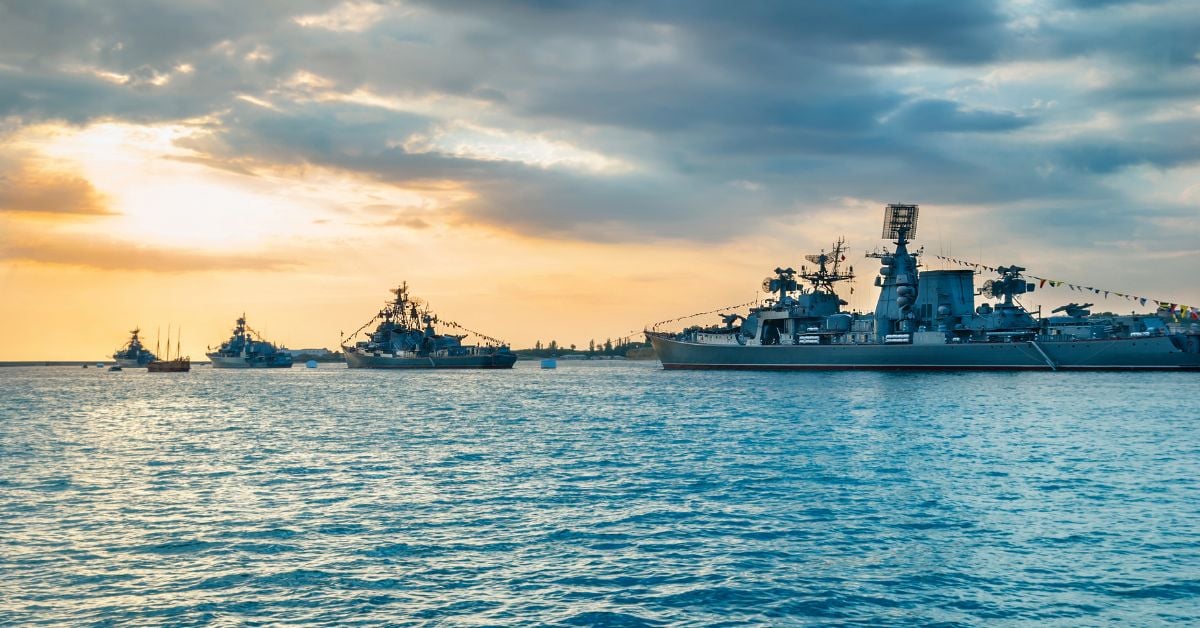
Securing the Strait: Navy SEALs Conduct Covert Mine Clearing Operation
For four months, U.S. Navy SEALs operated in the Strait of Hormuz, clearing naval mines placed by Iran. This covert operation secures a waterway where geopolitical tension meets global energy flow. Measurable, empirical action, not rhetoric, protects maritime stability. It is the kind of calibrated, real-world intervention that underscores why integrated ocean intelligence matters. For deeper context on regional pressures, see our coverage of how Gulf of Oman STS transfers have maxed out amid rising Saudi oil exports.

Layered Innovation: 3D-Printed Drone Boat Advances Ocean Data Collection
The TF-179 Drone Boat represents a shift in how we build ocean observation tools. By using robot arms to deposit material layer by layer, this U.S.-built vessel moves beyond traditional moulds, offering a more integrated approach to data collection. The precision here matters; it is a practical step toward more responsive ocean intelligence. For those tracking security and infrastructure progress, our coverage of Alaska's Base Kodiak pier project shows how we are expanding our reach in the Arctic.

AI-Driven Mine Sweeping: South Korea Advances Autonomous Naval Technology
South Korea's recent mine-sweeping exercise in Busan, led by Hanwha Systems, signals a deliberate step toward autonomous naval operations. This is not about replacing crews outright but about reducing risk where it matters most. The integration of AI into such precise, high-stakes tasks reflects a broader momentum across allied navies, as seen in the US Navy's push for autonomous systems integration. Measured, empirical progress like this strengthens maritime security without the hype.

Persian Gulf: Iran Targets U.S. AI-Driven Maritime Surveillance.
The Persian Gulf has become a testing ground for AI-driven maritime surveillance, with Iran targeting U.S. unmanned vessels and sensor networks in the region. The unit's reliance on autonomous systems and real-time data marks a calibrated shift in how naval operations are monitored. It is a precise, measurable response to a complex environment, though one that raises the stakes for transparency. For broader context on regional shipping pressures, our coverage of phased negotiations on the Strait of Hormuz offers a useful parallel.