PCTC
World Data Ocean keeps PCTC in one place: 3 stories so far. The section currently leads with “Hong Kong launches first ship-to-ship LNG bunkering for vehicle carrier”, “Methanol Bunkering Powers New Car Carrier, Advancing Ocean Decarbonization.”, and “Solar-Powered Car Carrier Embarks on Global Shipping Routes”. Hong Kong's first ship-to-ship LNG bunkering for a vehicle carrier is now operational, completed by CLPe in partnership with CNOOC. The M/V Arctic Tern has taken on 2,800 metric tonnes of green methanol in China's largest simultaneous car-handling and bunkering operation, marking a practical step forward for ocean decarbonization. A Global Hub for Ocean Intelligence 4 World Data Ocean is a centralized digital platform where researchers, scientists, and ocean enthusiasts converge to… The list below is every PCTC story on World Data Ocean, newest first.
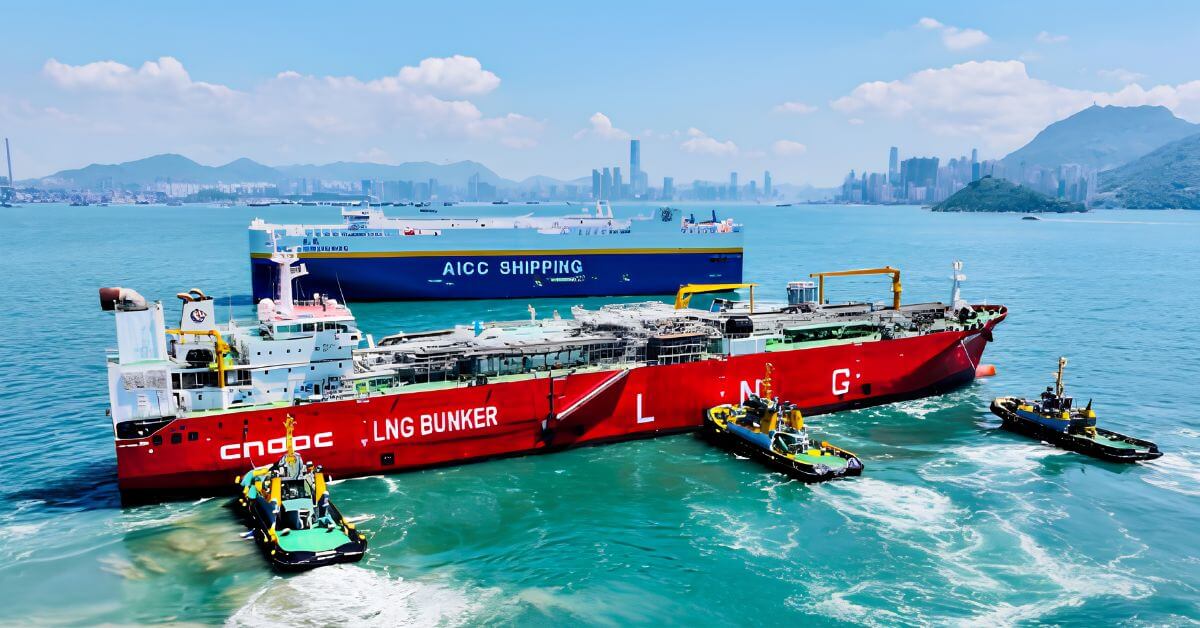
Hong Kong launches first ship-to-ship LNG bunkering for vehicle carrier
Hong Kong's first ship-to-ship LNG bunkering for a vehicle carrier is now operational, completed by CLPe in partnership with CNOOC. This is a calibrated step forward for maritime decarbonization in a major port, measurable progress built on real-world infrastructure, not promises. It reinforces that clean fuel logistics are not theoretical. For deeper context on fleet modernization, see our coverage of Matson's LNG-ready Makua christening.

Methanol Bunkering Powers New Car Carrier, Advancing Ocean Decarbonization.
The M/V Arctic Tern has taken on 2,800 metric tonnes of green methanol in China's largest simultaneous car-handling and bunkering operation, marking a practical step forward for ocean decarbonization. This 9,300-CEU carrier shows how alternative fuels move from concept to routine application. We see momentum building across vessel types, from LNG bunkering designs to ore carriers. For a closer look at how dual-fuel capability is being validated elsewhere, see our coverage of Hanwha Power's recent ABS approval.

Solar-Powered Car Carrier Embarks on Global Shipping Routes
A solar-powered car carrier is set to enter global trade routes, leased to Hyundai Glovis for service connecting Asia, Southeast Asia, North America, and Europe. The move aligns with broader efforts to integrate cleaner propulsion into commercial shipping. For context on how vessel design is evolving alongside fuel efficiency, our piece on optimal LNG carrier design offers useful comparison. This deployment signals measurable progress in applying renewable energy to high-traffic ocean corridors.