ocean cleanup
World Data Ocean keeps ocean cleanup in one place: 3 stories so far. The section currently leads with “A high school researcher identifies fungi that degrade ocean pollutants”, “Tracing plastic from 1,000 rivers to nearly 80% of ocean emissions”, and “Tracking Plastic's Reach: Ocean Intelligence from Remote Waters.”. A high school researcher has identified fungi capable of degrading ocean pollutants, a discovery that turns a classroom project into a measurable contribution to marine science. A thousand rivers, represented by the red dots on our map, account for nearly 80% of global annual riverine plastic emissions, between 0.8 and 2.7 million metric tons per year. A Global Hub for Ocean Intelligence 4 World Data Ocean is a centralized digital platform where researchers, scientists, and ocean enthusiasts converge to… The list below is every ocean cleanup story on World Data Ocean, newest first.
A high school researcher identifies fungi that degrade ocean pollutants
A high school researcher has identified fungi capable of degrading ocean pollutants, a discovery that turns a classroom project into a measurable contribution to marine science. This is empirical work with real potential. Understanding drives protection, and finding biological allies in the fight against pollution is exactly the kind of integrated data ecosystem we need. For deeper context on how shared knowledge accelerates such breakthroughs, see our piece on "Four pathways to a shared data ecosystem for ocean industry."
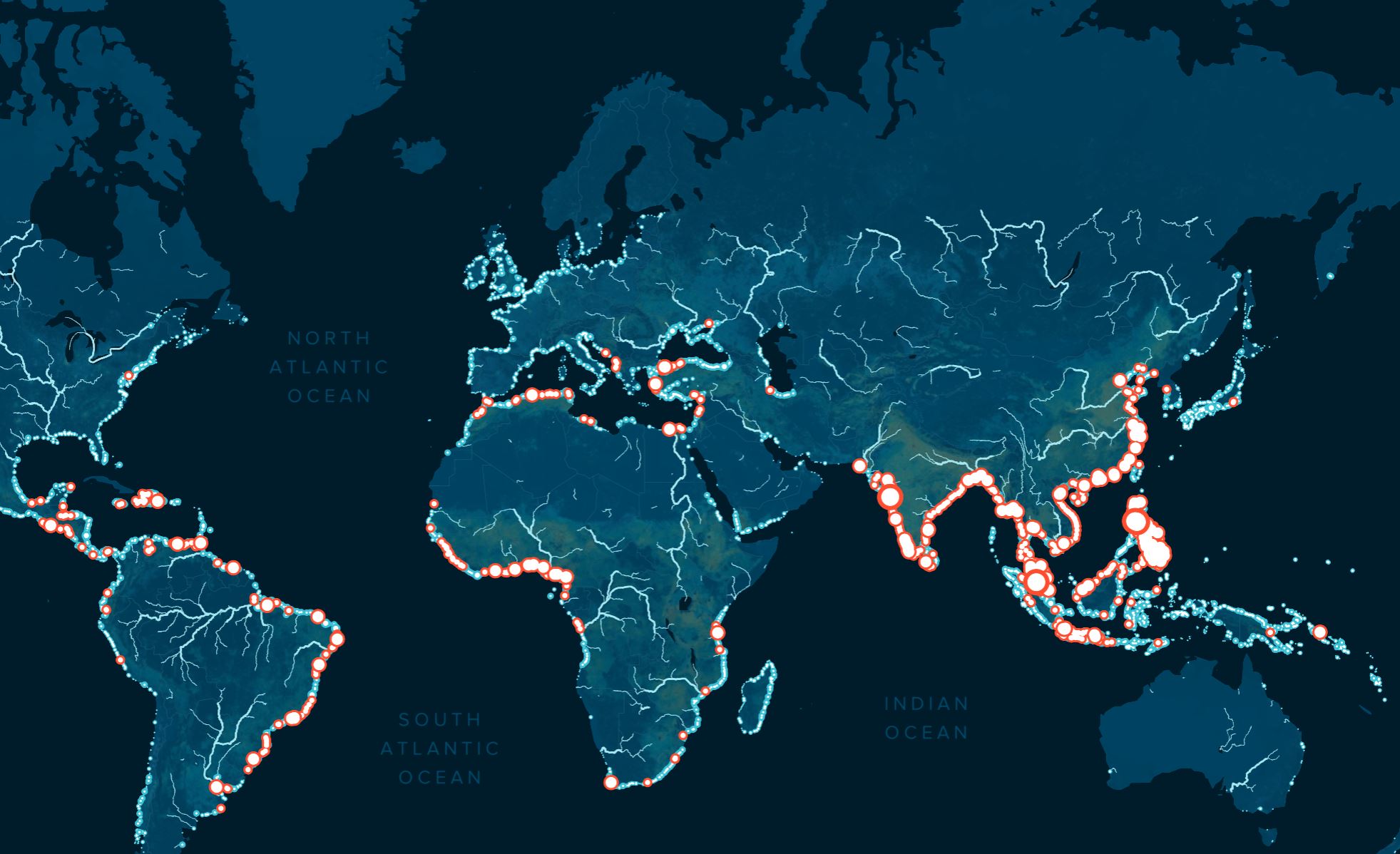
Tracing plastic from 1,000 rivers to nearly 80% of ocean emissions
A thousand rivers, represented by the red dots on our map, account for nearly 80% of global annual riverine plastic emissions, between 0.8 and 2.7 million metric tons per year. The most polluting among them are small urban rivers. The remaining 20% is spread across 30,000 others, shown in blue. Understanding drives protection; this empirical, peer-reviewed data gives us a measurable starting point for action. For deeper context, see our piece on how ocean data calibrates the energy transition, published with the World Economic Forum.
Tracking Plastic's Reach: Ocean Intelligence from Remote Waters.
Plastic debris doesn't stay where we drop it. New tracking from remote waters shows how far it travels, and the data is telling a clearer story than ever before. This kind of ocean intelligence turns scattered observations into something measurable, something we can act on. It's a reminder that the problem isn't out of sight, just out of sightlines. For readers drawn to the unseen, our piece on unidentified marine life offers a complementary glimpse into what else moves beneath the surface.