marine biodiversity
68 stories filed under marine biodiversity on World Data Ocean. The newest of them: “Enforcement Begins: Real-Time Data for the High Seas Treaty.”, “Marine Genomics: Bridging Biodiversity, Biotechnology, and Sustainable Ocean Use”, and “Governing the Ocean: Balancing Ecology, Resources, and Global Interests.”. The High Seas Treaty marks a significant milestone for ocean conservation, yet a signed agreement is merely the starting point. In "Blue Genes, Green Promises," we explore the intersection of marine genetics and biotechnology, emphasizing the vital role these genetic sequences play in biodiversity and sustainable development. A Global Hub for Ocean Intelligence 4 World Data Ocean is a centralized digital platform where researchers, scientists, and ocean enthusiasts converge to… The list below is every marine biodiversity story on World Data Ocean, newest first.

Enforcement Begins: Real-Time Data for the High Seas Treaty.
The High Seas Treaty marks a significant milestone for ocean conservation, yet a signed agreement is merely the starting point. To ensure effective enforcement, we must leverage innovative data portals that provide transparent, real-time insights into our oceans. Validated scientific data is crucial for tracking marine health and ensuring accountability. By developing digital infrastructure—essential tools for monitoring biodiversity and deep-sea conditions—we aim to turn treaty promises into tangible protections.

Marine Genomics: Bridging Biodiversity, Biotechnology, and Sustainable Ocean Use
In "Blue Genes, Green Promises," we explore the intersection of marine genetics and biotechnology, emphasizing the vital role these genetic sequences play in biodiversity and sustainable development. By analyzing the Marine Bioprospecting Patent Database, we uncover how marine-derived genes are utilized across healthcare, agriculture, and industrial sectors. This study highlights the contributions of various actors, revealing a complex landscape of innovation that can align with sustainability goals or pose environmental challenges.
Governing the Ocean: Balancing Ecology, Resources, and Global Interests.
Global maritime security governance is a systematic approach to addressing the multifaceted challenges of our oceans through rule-making, interest coordination, and technology application. This framework aims to balance ecological protection, resource utilization, and the diverse rights of nations at varying development stages. As the complexities of the Anthropocene evolve, the integration of digital intelligence technologies, such as the "Digital Twin Ocean," has become increasingly relevant.
AI-Powered Fish Identification Boosts Mediterranean Biodiversity Monitoring
Citizen science initiatives are vital for large-scale monitoring of marine biodiversity, particularly in the Mediterranean Sea, a region facing significant ecological challenges. To improve the reliability of species observations from non-expert contributors, this study introduces MEDFISH101, a dataset of approximately 70,000 validated images of 101 fish species. Utilizing advanced transfer learning techniques, we developed a deep learning model, DINOv2-G, achieving a Top-1 accuracy of 94.12% in species identification.
DNA Barcoding Illuminates Diversity of Cryptic Marine Molluscs
We are pleased to announce the launch of the first global DNA barcode reference library for Solenogastres, a group of shell-less, vermiform marine molluscs whose diversity remains underexplored. This comprehensive resource includes 655 newly generated sequences alongside previously published data, resulting in barcodes for 325 aplacophoran species. By integrating molecular data with morphological insights, this initiative enhances the understanding of Solenogastres' systematics and ecology. For further insights into marine biodiversity, explore our article on kelp zoospore motility, which underscores the interconnectedness of marine ecosystems.
Sargassum's Role: Understanding Biodiversity and Sustainable Use in the Atlantic.
The vast holopelagic Sargassum assemblages within the Great Atlantic Sargassum Belt (GASB) play a crucial role as habitats for marine fauna, yet the ecological impacts of these communities remain inadequately understood. This study employs advanced genomic methods to examine prokaryotic and eukaryotic communities associated with wild and cultivated Sargassum, revealing unique biodiversity and ecological functions, including nitrogen fixation by Rivularia spp. The findings emphasize the need for sustainable management practices for Sargassum, complementing insights from related research on storm surge forecasting in coastal areas.
Balancing Tourism and Protection: Marine Protected Areas in Macaronesia
The global decline of marine biodiversity necessitates enhanced governance for marine protected areas (MPAs), particularly in Macaronesia, where tourism drives economic growth. However, increasing visitor numbers exert pressure on fragile island ecosystems, underscoring the need for sustainable tourism models. This study examines the institutional and legal frameworks that shape ecotourism within Macaronesia's MPAs, revealing varying governance capacities across the Azores, Madeira, the Canary Islands, and Cabo Verde.
Five Years of Data Reveal Genetic Shifts in Port Species.
This study explores the seasonal dynamics and genetic resilience of non-indigenous species (NIS) in port communities through a comprehensive five-year metabarcoding survey in a northwestern Mediterranean port. By analyzing 2,190 metazoan Molecular Operational Taxonomic Units (MOTUs), including 75 NIS, researchers uncovered significant seasonal patterns in community composition and structure. The findings reveal that despite their limited species richness, NIS exert a substantial influence on community dynamics, exhibiting high genetic diversity and resilience.

IMO Advances Maritime Sustainability Through Data-Driven Ocean Protection.
The International Maritime Organization (IMO) is advancing its efforts to address ship emissions, pollution, and ocean protection. The Committee will reconvene for its Second Extraordinary Session on Friday, December 4, 2026, pending confirmation by the 85th session. This session aims to build on previous discussions and foster collaborative solutions to mitigate maritime environmental impacts. By prioritizing scientific integrity and global cooperation, the IMO seeks to enhance regulatory frameworks that promote sustainable practices within the shipping industry, ultimately safeguarding our oceans for future generations.
Environmental Gradients Shape Sea Star Diversity in Magellan Province Ecosystem
Environmental gradients significantly influence Asteroidea species turnover in the Magellan province, one of the most intricate marine landscapes globally. Our study examined sea star assemblages across 93 sampling stations within the Chiloense, Kaweskar, and Magallanes ecoregions, revealing distinct latitudinal and bathymetric patterns in richness and diversity. Key predictors identified include latitude and depth, with temperature playing a secondary role. Notably, high β-diversity values indicate substantial species turnover, emphasizing the importance of geographic and environmental factors in shaping benthic communities. These insights are vital for understanding
Citizen Science Highlights Elasmobranch Conservation Needs in Mozambique’s Waters
This study evaluates two decades of citizen science contributions to elasmobranch records along the Mozambican coast, highlighting the role of platforms like iNaturalist in addressing knowledge gaps in the Western Indian Ocean. By analyzing 408 records from 2007 to 2025, we documented 44 species, revealing significant increases in data collection, particularly since 2019. While a high percentage of species are classified as threatened, spatial biases in data reflect inconsistencies in sampling across regions.
Guiding Marine Nursery Management: A Data-Driven Tiering Approach
This decision tree serves as a comprehensive guide for precautionary and adaptive tiering in the identification and management of marine nurseries, vital habitats for early-stage marine species. By categorizing nurseries into four tiers—Candidate, Putative, Confirmed, and Refined—this framework addresses the complexities of ecological management while considering factors such as socioeconomic importance and data availability.
Microplastics in Shallow Seas: Flood Events Amplify Ecological Risk.
The increasing contamination of aquatic organisms by microplastics (MPs) poses significant ecological challenges, particularly in shallow marine habitats. This review examines the impact of extreme hydrologic events, such as severe flooding, on the transport and ecological risks associated with MPs. Riverine pathways serve as conduits for plastic pollution, linking terrestrial sources to biodiverse coastal ecosystems. Evidence indicates that intense precipitation events mobilize stored microplastics, leading to brief but concentrated pulses of contamination.
Balancing Innovation and Ocean Commons: IP in the BBNJ Agreement
The tension between intellectual property (IP) regimes and the benefit-sharing framework established under the BBNJ Agreement, which emphasizes the common heritage of humankind, is explored. It highlights how existing IP rules create barriers that hinder equitable access to marine genetic resources, particularly for states with limited scientific capacity. Through legal analysis, governance mechanisms like the clearing-house mechanism and the Capacity-Building and Transfer of Marine Technology Committee are evaluated.
Tracking Plankton Shifts: A Holistic View of the Mediterranean Sea
The Northwestern Mediterranean Sea is experiencing significant environmental changes due to climate variability and human activities. To assess the long-term impacts on marine ecosystems, the Mediterranean Ocean Observing System for the Environment (MOOSE) program employs multidisciplinary observations, integrating physical, chemical, and biological data. This study offers a comprehensive evaluation of planktonic communities, utilizing environmental genomics and high-resolution imaging across various plankton size fractions and depths.
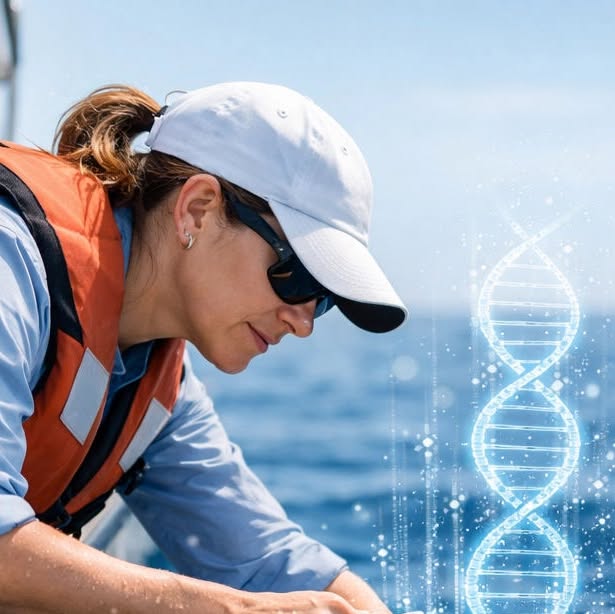
eDNA: Unlocking Ocean Biodiversity with Microscopic Samples
Did you know that a single 1.5-liter water sample can provide more insights into ocean biodiversity than traditional net surveys? Welcome to the transformative world of environmental DNA (eDNA) analysis. At World Data Ocean, we are harnessing these innovative datasets to empower researchers and policymakers in mapping thousands of marine species with unmatched accuracy. By utilizing advanced technology, we are enhancing the efficiency and accessibility of marine science, enabling real-time monitoring of ecosystem health and the discovery of elusive deep-sea life.

Arctic Metagaz: Damaged Tanker Towed to Safety Amid Mediterranean Concerns.
Libyan authorities have successfully towed the damaged Russian tanker, Arctic Metagaz, after it spent nearly three weeks adrift in the Mediterranean Sea. The vessel was left vulnerable following a drone strike, raising concerns about potential environmental hazards. In response, officials are relocating the tanker to a safer area off the coast of Zuwara, prioritizing the protection of marine ecosystems. This operation underscores the urgent need for proactive measures in maritime safety and environmental stewardship, particularly in regions prone to geopolitical tensions.
Italian Marine Monitoring: A Foundation for Ocean Intelligence and Climate Insights
Italy's coordinated effort to observe Essential Ocean, Climate, and Biodiversity Variables (EOVs, ECVs, EBVs) in the Mediterranean is pivotal for enhancing environmental assessments and policy development. This study analyzes the capabilities of Italy's marine monitoring system, involving fixed stations, buoys, and autonomous platforms, within the framework of the ITINERIS project. Findings reveal that 50% of the recognized 107 Essential Variables are actively monitored, with over 90% meeting international standards.
Long-Term Kelp Forest Resilience Revealed on Vancouver Island Coast
This study examines the centennial persistence of kelp forests along the West Coast of Vancouver Island, Canada, focusing on dynamic canopy-forming species such as bull kelp and giant kelp. Utilizing nearly 170 years of data, including historical British Admiralty charts and modern Sentinel-2 imagery, we analyze kelp distribution across four ecoregions. Our findings reveal that cooler, high-energy regions maintain a high persistence rate of approximately 88%, while warmer ecoregions show significantly lower persistence at 52%.
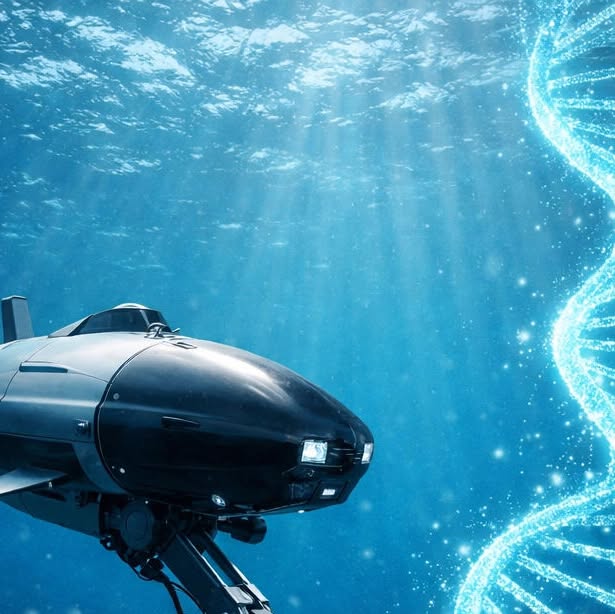
Unveiling Ocean Life: Environmental DNA and Autonomous Exploration
Ever wonder what lies beneath the ocean's surface without needing to catch a single fish? Welcome to the era of 'Ocean CSI.' At World Data Ocean, we are harnessing the power of environmental DNA (eDNA) to transform our understanding of marine ecosystems. By deploying autonomous underwater vehicles (AUVs) to collect water samples, we can detect DNA traces from marine life, enabling us to identify rare species and monitor biodiversity trends in real-time.