Global Ocean Observing System
3 stories filed under Global Ocean Observing System on World Data Ocean. The newest of them: “A calibrated ocean intelligence network requires closing critical monitoring gaps”, “Ocean's early warnings grow urgent as climate signals accelerate”, and “From orbit to ocean floor: integrating observations for Earth system predictions”. A calibrated ocean intelligence network cannot function with blind spots. The North Pacific's surface has warmed four times faster than the global average, a signal we can no longer ignore. A Global Hub for Ocean Intelligence 4 World Data Ocean is a centralized digital platform where researchers, scientists, and ocean enthusiasts converge to… The list below is every Global Ocean Observing System story on World Data Ocean, newest first.

A calibrated ocean intelligence network requires closing critical monitoring gaps
A calibrated ocean intelligence network cannot function with blind spots. On 5 November 2026 in Geneva, the call to close critical monitoring gaps becomes an operational necessity, not an aspiration. Real-time, integrated data from surface to seafloor is the foundation of measurable climate action. Understanding drives protection. Our recent coverage of how Gulf of Mexico eddies drive carbon deeper into the ocean illustrates exactly why these gaps matter for carbon sequestration science.
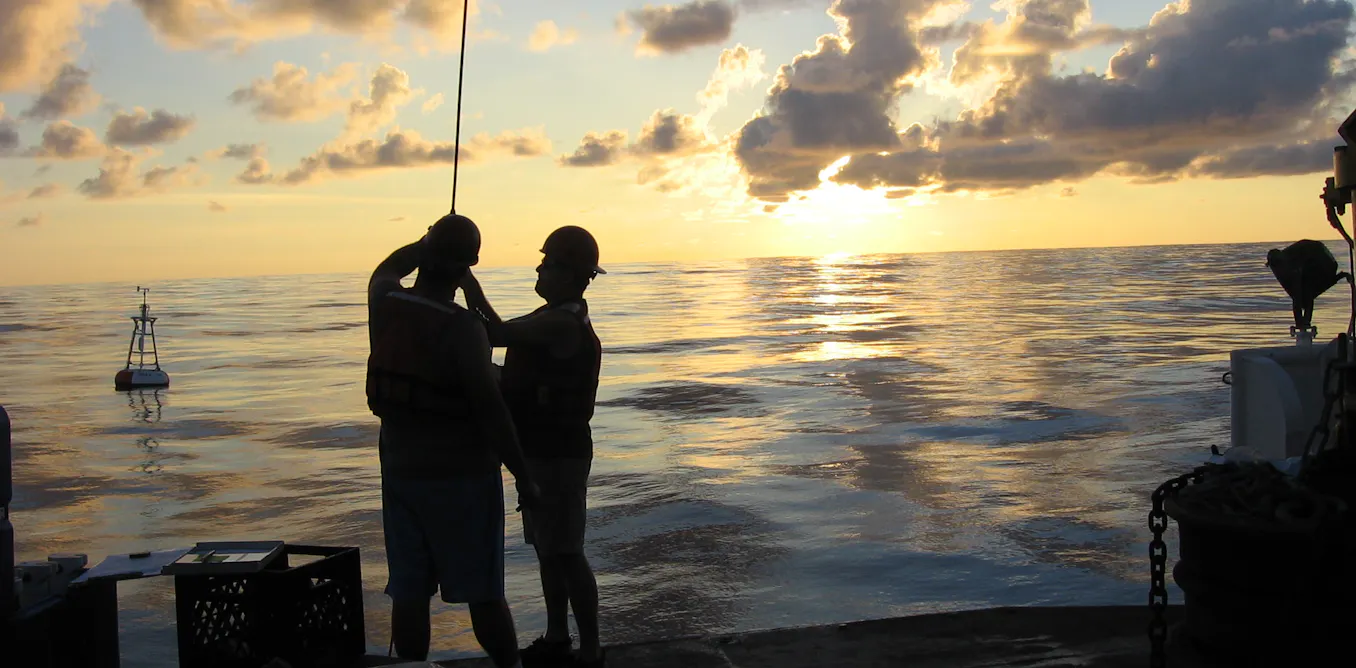
Ocean's early warnings grow urgent as climate signals accelerate
The North Pacific's surface has warmed four times faster than the global average, a signal we can no longer ignore. Ocean intelligence now shows climate indicators moving beyond modeled projections. These are not abstract trends; they are measurable, real-time shifts in a system we depend on. Understanding drives protection. Our related piece on ECCO‑Darwin's first multi‑decadal global ocean CO₂ flux estimates offers another calibrated look at how fast this change is actually happening.
From orbit to ocean floor: integrating observations for Earth system predictions
A satellite sees the ocean's surface; a drifting buoy feels its depths. The Global Ocean Observing System, convened by the World Meteorological Organization, now integrates these vantage points into a single, calibrated data ecosystem. This is not abstract science. It is the foundation for Earth system predictions that shape climate resilience and maritime safety. For deeper context, our related coverage on ocean stewardship explores how this data refines our responsibility to the sea.