genetic markers
genetic markers on World Data Ocean: a running collection of 2 stories we have gathered and hand-picked because they are worth your time. Every post here touches on genetic markers in some way — the news, the analysis, the deep dives, and the occasional surprise find. A Global Hub for Ocean Intelligence 4 World Data Ocean is a centralized digital platform where researchers, scientists, and ocean enthusiasts converge to explore, analyze, and… New stories are added to this page as we find them, so check back if you want to keep up with what is happening around genetic markers, or subscribe to the RSS feed to get them as soon as they are published. Browse the collection below, or head back to the homepage to see everything World Data Ocean is covering right now.

Multiple lines of evidence framework for quantifying ecosystem function and connectivity of offshore infrastructure: a rigs-to-reefs perspective
Decommissioning of offshore oil and gas infrastructure presents a critical challenge, hampered by inconsistent monitoring and uncertainty regarding ecological impacts. Our research introduces a Multiple Lines of Evidence framework to quantitatively assess ecosystem function and connectivity associated with these structures, facilitating informed decision-making regarding removal versus habitat retention. Integrating diverse methodologies—from environmental DNA to biophysical modeling—this framework provides a transparent, context-specific basis for evaluating ecological value.
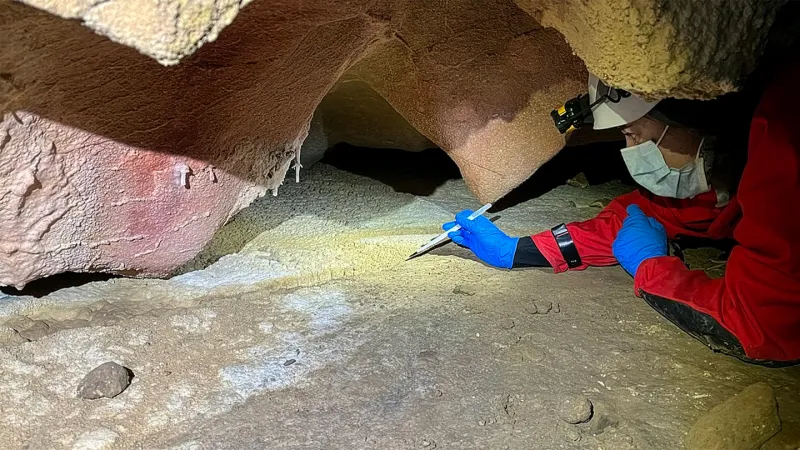
In painted caves, ancient human DNA clings to the walls
Recent research has yielded a groundbreaking discovery: ancient human DNA successfully recovered directly from cave walls. This marks the first instance of such retrieval, offering unprecedented potential to connect prehistoric cave paintings with their creators. The validated methodology, employing refined extraction techniques, promises to provide empirical data linking artistic expression to specific populations. This innovative approach to archaeological investigation could reshape our understanding of early human culture. For further context on the ethical considerations surrounding human remains research, see "Who owns your bones?".