fish
World Data Ocean keeps fish in one place: 18 stories so far. The section currently leads with “Validating Ultrasound as a Cost-Effective, Eco-Friendly Antifouling Method”, “Validated Beach Find in Costa Rica Points to Data Gap in Coastal Catfish Identification”, and “Navigating a Marine Studies BA: Pathways to a Marine Biology Career”. The core question underpinning this Swedish PhD research isn't whether ultrasound can shake barnacles off a hull, it's whether that vibration is a net gain for the ocean. A single validated beach find in Costa Rica is challenging what we think we know about coastal catfish identification. A Global Hub for Ocean Intelligence 4 World Data Ocean is a centralized digital platform where researchers, scientists, and ocean enthusiasts converge to… The list below is every fish story on World Data Ocean, newest first.
Validating Ultrasound as a Cost-Effective, Eco-Friendly Antifouling Method
The core question underpinning this Swedish PhD research isn't whether ultrasound can shake barnacles off a hull, it's whether that vibration is a net gain for the ocean. Validating antifouling requires more than lab efficacy; it demands a full lifecycle audit of energy costs, ecological noise pollution, and species-specific impacts. A rising population of sea lions observed off La Jolla Cove reminds us that marine life is already under acoustic and chemical stress. We need empirical data before calling this a green alternative.

Validated Beach Find in Costa Rica Points to Data Gap in Coastal Catfish Identification
A single validated beach find in Costa Rica is challenging what we think we know about coastal catfish identification. When a clear identification cannot be made, it signals a measurable gap in our empirical understanding of these species. This discovery underscores the need for integrated, real-time data collection. For deeper exploration of how unexpected findings connect to broader marine science, see our related piece on "Acoustic restoration: attracting marine life back to damaged reefs with sound."
Navigating a Marine Studies BA: Pathways to a Marine Biology Career
A marine studies BA does not have to close the door on a career in fish identification, though it does require strategic planning. The degree's interdisciplinary focus, blending policy and humanities with ocean science, can support your goal, especially if you pair it with targeted coursework and your six-year observational hobby. Population monitoring is a viable entry point, as it demands the very taxonomic skills you already practice.

Unidentified Specimen Found in Oahu Waters Sparks Ocean Data Inquiry
A single unidentified specimen recovered from Oahu waters has prompted a new round of data collection, a reminder that our ocean intelligence still holds gaps. The find is a useful nudge toward empirical rigor: when a species defies easy classification, the response should be calibrated observation, not speculation. We track climate indicators and integrated systems, yet the shoreline still surprises us.
Do Fish Experience Cold, or Simply Temperature Change?
A fish's world is not our world. When Ed Yong's *An Immense World* notes that most fish lack TRPM8 and can tolerate near-freezing water, it suggests they register temperature without the sting of cold we feel. That doesn't mean they lack preference; a betta's heater exists because warmth supports their biology, not necessarily their comfort. They are driven by metabolic necessity, not sensation.

Baseline OCP Levels Revealed in Tanzanian Coastal Waters: A Critical Assessment
Off the coast of Unguja Island, a new baseline reveals what persists beneath the surface. Our study detected nine of ten target organochlorine pesticides in Tanzanian coastal waters, with sediment levels of p,p′-DDT and dieldrin exceeding Canadian interim guidelines. The data signals both recent and legacy inputs, though small sample sizes mean spatial differences remain unresolved. What stands out is the descriptive, not definitive, nature of biota-to-sediment quotients, a cautious approach we respect.

Aquabots: Engaging Young Players with Real Ocean Science and Conservation.
Aquabots turns play into purpose. Built inside Roblox, the game sends players on drone-led coral restoration missions, pairs them with a battle system, and opens an aquarium where fish, corals, and fossils are explained through verified research. A trivia quiz rewards correct answers with in-game currency, keeping learning tied to action. The goal is direct: counter the platform's brainrot with something measurable. For those tracing how species persist, the fossil record offers context, including recent findings on feathered dinosaurs. Curiosity, here, is the real currency.
Southeast Florida Waters Yield Unexpected Fish Species Observations.
Routine surveys off Southeast Florida were expected to confirm known species, yet these waters delivered observations that defy existing distribution models. The findings suggest our understanding of regional marine life remains incomplete, and that is precisely why sustained monitoring matters. Observations like these are not anomalies to dismiss but empirical signals to investigate. They remind us that ocean intelligence grows through calibrated, real-time data collection, not assumption.
Oarfish Cuisine: Unraveling the Diet of a Deep-Sea Giant
A deep-sea giant with a diet that remains stubbornly out of focus, the oarfish presents a unique challenge for your ceramic work. While squid are indeed part of their menu, pinning down a single species is rare, as their feeding is opportunistic rather than specialized. You can confidently sculpt a squid without locking onto a precise genus.
Ocean Depth Limits: How Far Can Surface Fish Really Swim?
A curious question from *Finding Nemo* touches on a real oceanographic principle: depth stratification. Surface-dwelling species like clownfish and blue tangs are adapted to specific pressure zones, and their swim bladders are calibrated for that environment. The anglerfish's domain, by contrast, demands physiological adaptations that these fish simply lack. It is a practical example of how marine life is partitioned by depth, a concept worth exploring further in our piece on integrated subsea cables, which highlights how we map these very ecosystems.

Unexpected Trust: A Curious Encounter with a Lake Dweller in Poland
A small fish at Kręcko Lake decided it had found its people. During a festival in Garbicz, Poland, this little lake dweller swam up, lingered, and refused to leave, even when hands were pulled away. Its habit of popping to the surface, as if catching a breath, only added to the charm. While we can't identify the species, its trusting behavior raises a genuine question about wild fish curiosity. It is a reminder that unexpected encounters often hold the most honest data.
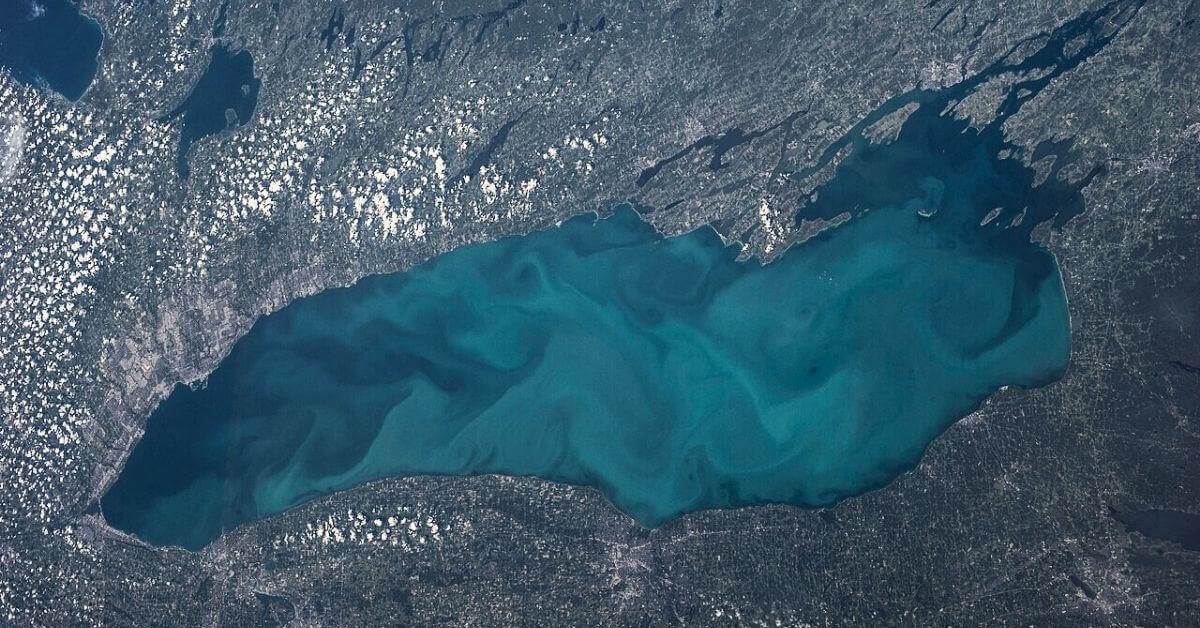
Geopolitical Shifts: Lake Ontario’s Name Sparks Transnational Data Debate.
A four-century-old name now anchors a transnational data dispute. The Canadian Prime Minister's stance, reaffirmed on X, is clear: Lake Ontario remains Lake Ontario, despite pressure to rename it. This is not merely cartographic nostalgia. It is a question of who controls the narrative of shared waters. Names carry empirical weight in ocean intelligence. We see similar tensions in the Strait of Hormuz, where geopolitical posturing shapes maritime data flows.

Seeking Identification: Mystery Sculpin Spotted Near Ketchikan, Alaska
A mystery sculpin has surfaced near Ketchikan, Alaska, and the sighting is worth a closer look. Submitted by /u/Competitive-Ad750, this identification request turns a single observation into a moment of shared inquiry. We treat such reports as data points, small but measurable contributions to a larger picture of nearshore biodiversity. For context on how Alaska's marine systems are shifting, readers may also explore our piece on Cascadia's Subduction Zone Reveals a Fragmented Tectonic Process. Every record helps calibrate what we know.

Unidentified Fish Found in Massachusetts Intertidal Zone Sparks Curiosity
A palm-sized fish in the Massachusetts intertidal zone has sparked a familiar kind of curiosity. The observer, more at home with algae and shorebirds, noted the specimen's odd look for a flounder, and they're right to pause. Such sightings remind us that even well-trodden shorelines hold gaps in our data. Identifying this individual matters less than the question it raises. For those tracking similar puzzles, our piece on an unexpected chiton discovery in Puerto Rico shows how a single observation can challenge distribution models.

A Tiny Ghost Pipefish: New Species Echoes Sesame Street's Snuffleupagus
A tiny new species of ghost pipefish has surfaced, and its resemblance to Sesame Street's Snuffleupagus is as charming as it is scientifically intriguing. The discovery reminds us that ocean intelligence still holds countless surprises, even in well-trodden waters. While this find is a delight, it also underscores the need for validated, peer-reviewed cataloging of marine life.

Unidentified Marine Specimen Washes Ashore in Maceió, Brazil
A single unidentified specimen has appeared on Cruz das Almas Beach in Maceió, Brazil, prompting curiosity from a local resident who found it and noted a faint fishy smell, likely from its time in the sand. While such strandings often involve known species, this one resists easy classification from the description alone. It is a reminder that our ocean intelligence still has gaps. For context on how we track marine life across vast distances, see our related coverage on integrated subsea cables enhancing data transmission.

Following Dolphins: Unidentified Sharks Observed in Raja Ampat
Four small sharks shadowed a pod of dolphins through Raja Ampat's blue water, yet their dorsal fins carried no white edge. The observer's first guess, grey reef sharks, now feels uncertain, and they are right to question it. Silky sharks are a plausible call, though juvenile scalloped hammerheads also fit the bill. Field identification rewards this kind of scrutiny, the difference between assumption and evidence.

Mysterious Vertebrae Found: Fish or Harbor Porpoise? Ocean Data Sought.
A single vertebra, small enough to fit in a palm, has sparked a quiet taxonomic puzzle. The finder's initial photo search suggested a large bony fish, yet a closer look hints at something warmer-blooded. Their theory of a harbor porpoise is reasonable, though the match remains imperfect. We appreciate the call for open data; this is exactly how community observations refine our understanding. For those tracking similar marine mysteries, our piece on the Port Phillip Bay structure offers a useful comparison.