diving
diving at World Data Ocean is a file of 8 stories. The newest of them: “Shallow-water coral sighting near Naxos raises climate questions”, “Unidentified Marine Life Observed in South Florida Waters”, and “Unexplained Acoustic Event Detected in Southern Italian Waters”. A single frame of pale tissue on a sunlit stone, twenty meters from a Naxos beach, is the kind of sighting that turns a casual swim into a data point. A community post about unidentified marine life in South Florida waters raises the kind of question that drives ocean intelligence forward. A Global Hub for Ocean Intelligence 4 World Data Ocean is a centralized digital platform where researchers, scientists, and ocean enthusiasts converge to… The list below is every diving story on World Data Ocean, newest first.

Shallow-water coral sighting near Naxos raises climate questions
A single frame of pale tissue on a sunlit stone, twenty meters from a Naxos beach, is the kind of sighting that turns a casual swim into a data point. The observer's uncertainty is valid, distinguishing a stressed coral from an encrusting algae or sponge requires calibrated eyes. Yet the location, depth, and timing align with shifting climate indicators. Whether this is a range expansion or a misidentification, the observation itself is measurable.

Unidentified Marine Life Observed in South Florida Waters
A community post about unidentified marine life in South Florida waters raises the kind of question that drives ocean intelligence forward. The observer's surprise at seeing these creatures "swing" in the water is a reminder that our understanding of marine ecosystems remains incomplete. Validated observation, even anecdotal, is a starting point for empirical inquiry. We encourage further reporting and documentation, as such data can contribute to a more integrated data ecosystem.
Unexplained Acoustic Event Detected in Southern Italian Waters
A sudden, sharp crack beneath the surface is not a typical feature of coastal waters, yet that is precisely what one swimmer reported off southern Italy. The sound was not a solitary event; it repeated for minutes, faded, then returned with the same intensity. The observer noted a directional quality, suggesting a source within the water column rather than a personal auditory anomaly. It is a compelling, empirical mystery.
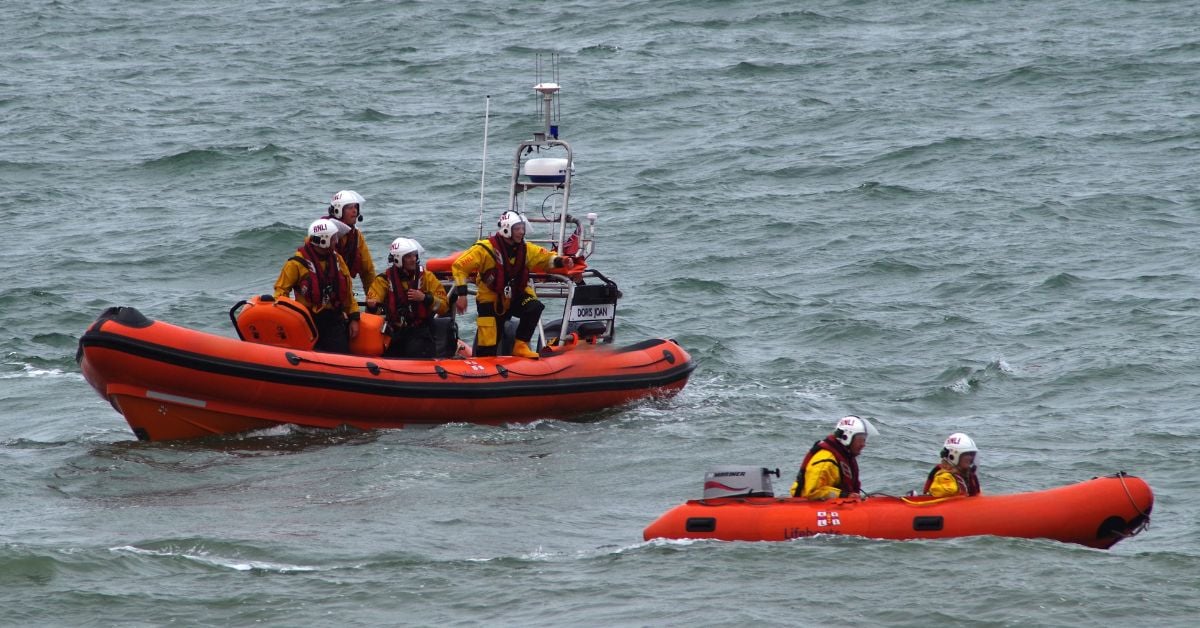
Recovery Efforts Underway for Capsized Indonesian Ferry, 129 Still Missing
The Java Sea recovery operation is now moving with deliberate precision as authorities prepare to right the capsized ferry, a necessary step in accounting for the 129 still missing. Six lives have been lost, and each hour matters. The operation demands the same empirical rigor we apply to any maritime investigation: calibrated, methodical, and transparent. This is not a spectacle; it is a responsibility.

Ocean Ingestion: Could a Whale Swallow a Diver Whole?
A sperm whale's throat is large enough to swallow a human, but the mechanics of such an event are far from cinematic. The animal's esophagus is designed for squid, not scuba gear, and its instinct would be to reject anything unfamiliar. Understanding these biological limits sharpens our respect for ocean life. For more on how we track such creatures, explore "Integrated Subsea Cables Enhance Data Transmission Across the Indian Ocean." Curiosity and precision drive real ocean intelligence.
Bridging the Gap: Oceanography Certificates to Enhance Your Chemistry Background
A bachelor's in chemistry is a strong foundation for oceanography, where the same quantitative rigor applies to seawater chemistry and climate indicators. For a year between degrees, a certificate in data analysis or GIS would complement your lab skills, as these are practical tools used in marine research. Given your diving plans, consider a seminar on ocean observation. Our related article, "Bridging Data Gaps: Integrating Citizen Science for Ocean Intelligence," offers a useful perspective on how field data is gathered.
Charting a Course: Exploring Marine Archaeology and Future Careers
The post from a 17-year-old uncertain about marine archaeology arrives at a pivotal moment. The student's instinct to blend a humanities background with ocean science is not a detour; it is a practical fusion. Marine archaeology demands exactly this integration of historical context and technical skill. The fear that AI will replace journalism is valid, but the field of underwater heritage needs human judgment for interpretation. This path is less about picking a side and more about combining strengths.

Retired Vessel Creates New Habitat, Bolstering Delaware’s Artificial Reef Program
A retired vessel now rests on Delaware's seabed, its purpose renewed as an artificial reef. DNREC's $285,000 investment, drawn from federal Sport Fish Restoration funds, turned the ship into a habitat where marine life can thrive. This is practical conservation, measured in structure and opportunity. It also echoes a broader truth we track closely: aging ships do not have to end in failure.