digital transformation
9 stories filed under digital transformation on World Data Ocean. The newest of them: “Validated innovation earns global recognition for maritime data solutions”, “Digitalization validated as measurable driver of maritime environmental value”, and “Digital insights for small-scale fisheries governance in Somalia”. Validated innovation earns global recognition. Supply chain digitalization is not an abstract goal, it is a measurable driver of environmental value in the maritime sector. A Global Hub for Ocean Intelligence 4 World Data Ocean is a centralized digital platform where researchers, scientists, and ocean enthusiasts converge to… The list below is every digital transformation story on World Data Ocean, newest first.
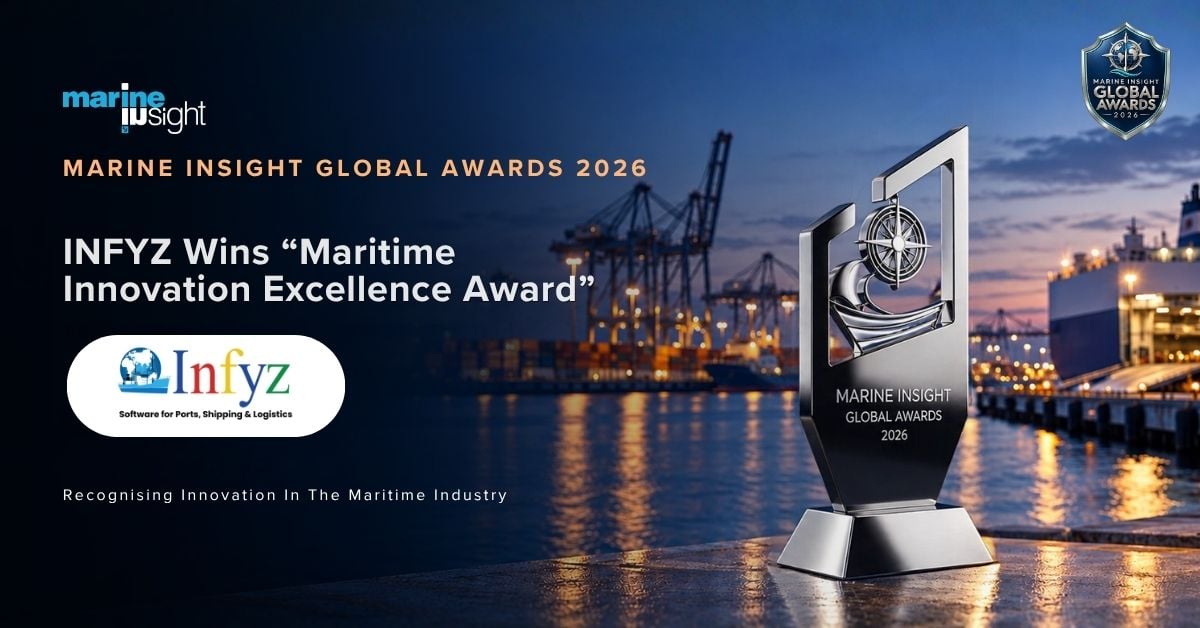
Validated innovation earns global recognition for maritime data solutions
Validated innovation earns global recognition. INFYZ Solutions Private Limited has won the Maritime Innovation Excellence Award at the Marine Insight Global Awards 2026 for its maritime data solutions. This award measures what matters: real-world impact over hype. A calibrated approach to ocean intelligence builds trust. For deeper context on how digitalization drives measurable environmental value, see our related analysis, "Digitalization validated as measurable driver of maritime environmental value."

Digitalization validated as measurable driver of maritime environmental value
Supply chain digitalization is not an abstract goal, it is a measurable driver of environmental value in the maritime sector. New empirical research confirms that digital tools enhance supply chain visibility and enable stronger green collaboration, though the pathways diverge internally. Visibility fuels both internal environmental management and green operations; supplier coordination primarily drives operations alone. Connecting these findings with our recent work on small-scale fisheries governance in Somalia reinforces one truth: digitalization creates tangible environmental returns when applied with precision.
Digital insights for small-scale fisheries governance in Somalia
Small-scale fisheries in Somalia sustain coastal livelihoods and food security, yet fragmented information and weak governance undermine effective management. This structured review of 104 peer-reviewed sources finds that digitalization can improve monitoring, coordination, and decision support, but lasting gains in governance remain uneven. Connectivity, digital literacy, and institutional trust matter most. For Somalia, the review identifies an information, governance gap and proposes a coordinated, accountable digital framework. Related coverage of climate-driven fish migration and new rules for shared stocks deepens this picture.
Optimizing Container Terminal Efficiency Through Integrated Crane and Truck Coordination
Container terminal efficiency hinges on the precise coordination of yard cranes and internal trucks, yet equipment waiting and prolonged operation times persist as constraints. This study tackles that challenge directly, introducing a mixed-integer linear programming model optimized through the NoisyNet-A3C algorithm. The results are compelling: a 23.9% reduction in crane operation time and a 21.7% cut in truck waiting at Xiamen Port's Haitian Terminal. This validated, data-driven approach offers a practical pathway toward operational energy optimization and sustainable port logistics.

AI Agents Accelerate Maritime Innovation at Marine Insight Summit 2026
Maritime innovation is moving from the theoretical to the practical. At the Marine Insight Summit 2026, AI Agents are taking center stage, with a partnership focused on role-specific tools designed to augment the human workforce. This is not about replacement; it is about calibration. The demonstrations will show how integrated, real-time intelligence can be applied directly to operational decisions. For context on how ports are evolving, our coverage of Paradip Port Designated a Mega Port offers a relevant look at infrastructure growth.
China’s Marine Governance: Aligning Law with International Ocean Standards
China's marine governance legal system has matured into a multi-tiered framework, yet it still strains under coordination gaps and uneven land-sea integration. This paper, grounded in legal text analysis and case studies, pinpoints those bottlenecks and charts a practical path forward, from legislative restructuring to forward-looking rules for digital and climate pressures. The stakes are global, and the need for calibrated, interoperable standards is immediate. For broader context on regional maritime pressures, see our coverage of Gulf of Oman STS transfers.

Integrated Data Drives Port Efficiency and Digital Transformation.
Port efficiency depends on how well data moves between ship, shore, and terminal. Marine Insight's global reach combined with Infyz's AI-driven operational expertise creates a practical path toward digital transformation. This collaboration prioritizes measurable outcomes over hype. For readers tracking maritime security's broader impact, our coverage of recent interdictions, including "Maritime Interdictions Yield 25,000 Pounds of Cocaine, Supporting Ocean Security," reinforces the same principle: integrated intelligence drives real-world results. Understanding drives protection, and here, it also drives throughput.

Accelerating Maritime Transition: Marine Insight and Azolla Partner for Ocean Intelligence.
Decarbonization demands more than ambition; it demands coordinated action. Marine Insight and Azolla have formed a strategic alliance to accelerate the maritime transition, pairing Marine Insight's global reach with Azolla's technical depth in vessel performance and regulatory compliance. This partnership is a practical step toward measurable progress. For those tracking the regulatory side of this shift, our related piece on validating onboard emissions data for LNG shipping offers a useful parallel. The transition is complex, but integrated data ecosystems make it navigable.

Integrated Maritime Collaboration: India and Panama Enhance Global Logistics.
India and Panama have agreed to deepen maritime collaboration, a move that strengthens global logistics networks. The bilateral talks between India's Minister of Ports and Panama's Minister of Foreign Affairs signal a pragmatic step toward integrating supply chains across two strategic ocean regions. This partnership matters because logistics resilience depends on such alliances. For readers tracking port infrastructure progress, our earlier coverage of India's ₹13 crore seafarer welfare hub at Mormugao Port offers useful context on regional investments.