coastal states
coastal states at World Data Ocean is a file of 6 stories. The newest of them: “Climate-Driven Fish Migration Demands New Rules for Sharing Shared Stocks”, “Cross-border radioactive risks test China's unified ocean code”, and “India Builds $1.5B Maritime Shield for War-Risk Coverage”. Climate-driven shifts in fish distribution are not a future scenario; they are a present legal fault line. Radioactive contamination does not respect maritime borders, and China's shift toward a unified legal code reflects that reality. A Global Hub for Ocean Intelligence 4 World Data Ocean is a centralized digital platform where researchers, scientists, and ocean enthusiasts converge to… The list below is every coastal states story on World Data Ocean, newest first.

Climate-Driven Fish Migration Demands New Rules for Sharing Shared Stocks
Climate-driven shifts in fish distribution are not a future scenario; they are a present legal fault line. The old bargain, allocation based on historical catch records and stable stock ranges, is cracking under accelerating ecological change. The existing framework, anchored in UNCLOS and the UNFSA, holds the normative tools, cooperation, precaution, and equity, to respond. The challenge is institutional, not legal. Consensus-based rigidity within RFMOs is the binding constraint. A Climate-Adaptive Fisheries Allocation Framework offers a pragmatic, legally grounded path forward.
Cross-border radioactive risks test China's unified ocean code
Radioactive contamination does not respect maritime borders, and China's shift toward a unified legal code reflects that reality. The Ecological and Environmental Code now bans radioactive discharge and waste disposal at sea, while extending domestic law to overseas conduct that threatens Chinese waters. That is a meaningful step, but enforcement gaps remain, unclear procedures, vague regulatory scope, and weak coordination weaken its reach. The framework is promising, yet implementation, not intent, will determine whether it truly protects the ocean.
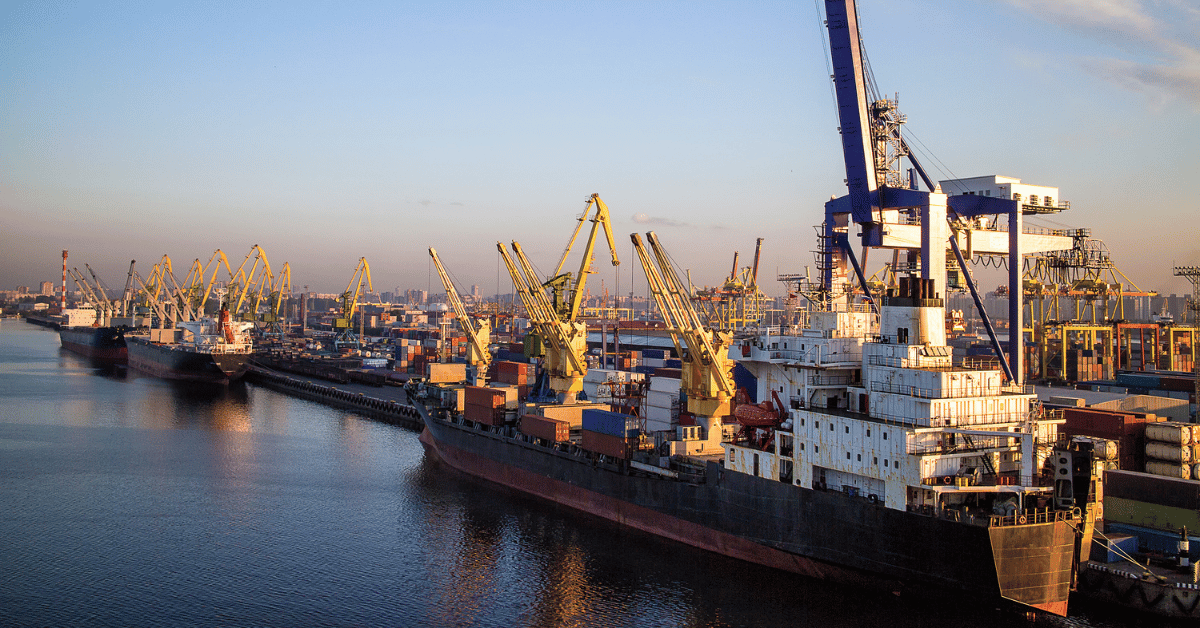
India Builds $1.5B Maritime Shield for War-Risk Coverage
India's Bharat Maritime Insurance Pool, a $1.5 billion domestic shield against war risks and cargo losses, marks a calibrated step toward self-reliance in marine coverage. This is not alarmist hedging; it is empirical risk management. When global supply chains face volatility, homegrown underwriting strengthens resilience. For deeper context on how technology is reshaping maritime security, see our coverage of RINA's Singapore Hub advancing digital twins and AI for ocean decarbonisation. Understanding drives protection.

Maritime Security Concerns Rise: Gulf of Aden Sees Renewed Piracy Risks
The Gulf of Aden's renewed piracy risk demands immediate attention. IMO Secretary-General Mr. Arsenio Dominguez spoke out after the SEAMULL was hijacked on 20 August 2026, a stark reminder that maritime threats remain persistent. This is not a distant problem; it directly endangers crews and global trade routes. Measured, decisive action is required to protect these waters. For broader context on regional security efforts, our related coverage on the eighty nations urging the reopening of the Strait of Hormuz offers critical perspective.
Governing Carbon Capture Residues: A Framework for Safe Sea Disposal
Onboard carbon capture is not the end of the story; it is the beginning of a new waste stream. The shift from captured gas to calcium-rich solids at sea creates a governance gap that current rules do not anticipate. This study rightly moves the conversation beyond technical feasibility to legal classification, proposing a precautionary framework that prioritizes accountability and environmental thresholds. It is a measured, necessary step for responsible innovation.

Safeguarding Seas: IMO Council Underscores Navigation and Seafarer Safety.
The IMO Council closed its 137th session by reaffirming what should never be negotiable: the right to safe passage. Safeguarding Seas: IMO Council Underscores Navigation and Seafarer Safety reflects a measured, necessary stance amid rising geopolitical friction. Navigation rights are not abstract; they are the backbone of global trade and humanitarian access. The Council's clarity is welcome, especially as pressure on chokepoints intensifies.