bioaccumulation
5 stories filed under bioaccumulation on World Data Ocean. The newest of them: “Prey fish nutrition shapes health risks for Indo-Pacific humpback dolphins”, “Microplastics in Egyptian seafood markets: A measurable signal for consumer risk”, and “Metal Bioaccumulation Patterns Revealed in Gulf of California Fish”. The nutritional quality of prey fish directly shapes health risks for Indo-Pacific humpback dolphins, a finding grounded in empirical, peer-reviewed data. Every sampled market along Egypt's Mediterranean and Red Sea coasts contained microplastics in edible invertebrates, with the highest concentrations found in Suez. A Global Hub for Ocean Intelligence 4 World Data Ocean is a centralized digital platform where researchers, scientists, and ocean enthusiasts converge to… The list below is every bioaccumulation story on World Data Ocean, newest first.

Prey fish nutrition shapes health risks for Indo-Pacific humpback dolphins
The nutritional quality of prey fish directly shapes health risks for Indo-Pacific humpback dolphins, a finding grounded in empirical, peer-reviewed data. This is not merely a food web observation, it is a calibrated, measurable link between diet and disease in a sentinel species. Understanding drives protection. For deeper context on how observation and biodiversity science inform marine health, see our related coverage of "Biodiversity and human pressure reshape marine ecosystem science."
Microplastics in Egyptian seafood markets: A measurable signal for consumer risk
Every sampled market along Egypt's Mediterranean and Red Sea coasts contained microplastics in edible invertebrates, with the highest concentrations found in Suez. That is a measurable signal for consumer risk, not a distant abstraction. The study's strength lies in its empirical grounding: 108 samples, 263 confirmed synthetic polymers, and clear polymer profiles varying by sea. Species-specific feeding habits drive accumulation, meaning risk is not uniform. This is the kind of calibrated, peer-reviewed evidence that turns concern into action.
Metal Bioaccumulation Patterns Revealed in Gulf of California Fish
Arsenic dominated metal accumulation in Gulf of California fish, yet its toxicity is likely dampened by the prevalence of organic forms. The study, covering species from distinct feeding guilds near La Paz and Santa Rosalía, links variability to diet and metabolic capacity. Essential metals like cobalt and manganese stayed near natural ranges, though seasonal runoff drove manganese peaks at Santa Rosalía. Selenium's high bioaccumulation signals potential trophic transfer. Location and species both shaped patterns, with historical mining influencing pollution indices.
Halogenated Flame Retardants: Tracking Distribution and Risk in Korean Coastal Waters
Along the Korean coast, the chemical fingerprints of flame retardants are changing. New measurements from sediment and bivalves at 50 locations confirm a clear shift: while legacy PBDEs and HBCDDs persist, alternatives like decabromodiphenyl ethane are taking their place, particularly near industrial hubs. This transition is not without consequence. BDE 47 shows a real potential to accumulate in biota, and localized hotspots of BDE 209 demand attention.
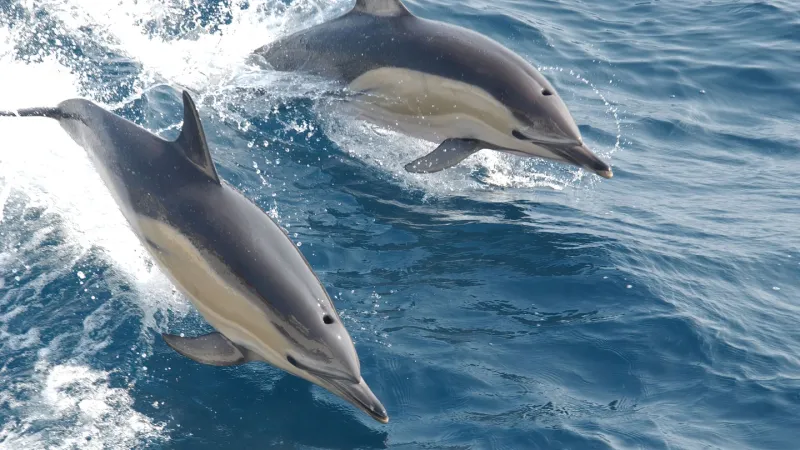
New Zealand Dolphins Show Accelerated Aging Linked to Environmental Contaminants
New Zealand's common dolphins are aging faster than their years, and the evidence points to a toxic burden we can no longer ignore. Trace metals and per- and polyfluoroalkyl substances, the so-called forever chemicals, are likely accelerating biological aging in these animals. This is more than a striking data point; it is a measurable indicator of ocean health that demands our attention.