Atlantic Meridional Overturning Circulation
5 stories filed under Atlantic Meridional Overturning Circulation on World Data Ocean. The newest of them: “AMOC's Atlantic shift carries measurable climate indicators for our shared ocean”, “New Atlantic Current Data Signals Weakening and Imminent Tipping Point”, and “Ocean's early warnings grow urgent as climate signals accelerate”. The Atlantic Meridional Overturning Circulation is not a distant abstraction, it is a measurable system whose shifts carry climate indicators we can now track in real time. The Atlantic Meridional Overturning Circulation is weakening, and new data suggests its collapse could come far sooner than models predicted. A Global Hub for Ocean Intelligence 4 World Data Ocean is a centralized digital platform where researchers, scientists, and ocean enthusiasts converge to… The list below is every Atlantic Meridional Overturning Circulation story on World Data Ocean, newest first.

AMOC's Atlantic shift carries measurable climate indicators for our shared ocean
The Atlantic Meridional Overturning Circulation is not a distant abstraction, it is a measurable system whose shifts carry climate indicators we can now track in real time. Understanding this circulation means understanding the pulse of our shared ocean. For deeper insight into how validated ocean intelligence is extending climate predictions, see our related coverage on data-driven global ocean modeling. The question is no longer whether we can observe these changes, but how we will respond.

New Atlantic Current Data Signals Weakening and Imminent Tipping Point
The Atlantic Meridional Overturning Circulation is weakening, and new data suggests its collapse could come far sooner than models predicted. Two recent studies signal an imminent tipping point with catastrophic consequences for global weather and climate. This is not speculation; it is a measurable, empirical shift in a system we rely on. Understanding drives protection. For deeper context on how we track such changes, see our coverage of five decades of data confirming a sustained warming trend in the Gulf of Mexico.

Ocean's early warnings grow urgent as climate signals accelerate
The North Pacific's surface has warmed four times faster than the global average, a signal we can no longer ignore. Ocean intelligence now shows climate indicators moving beyond modeled projections. These are not abstract trends; they are measurable, real-time shifts in a system we depend on. Understanding drives protection. Our related piece on ECCO‑Darwin's first multi‑decadal global ocean CO₂ flux estimates offers another calibrated look at how fast this change is actually happening.
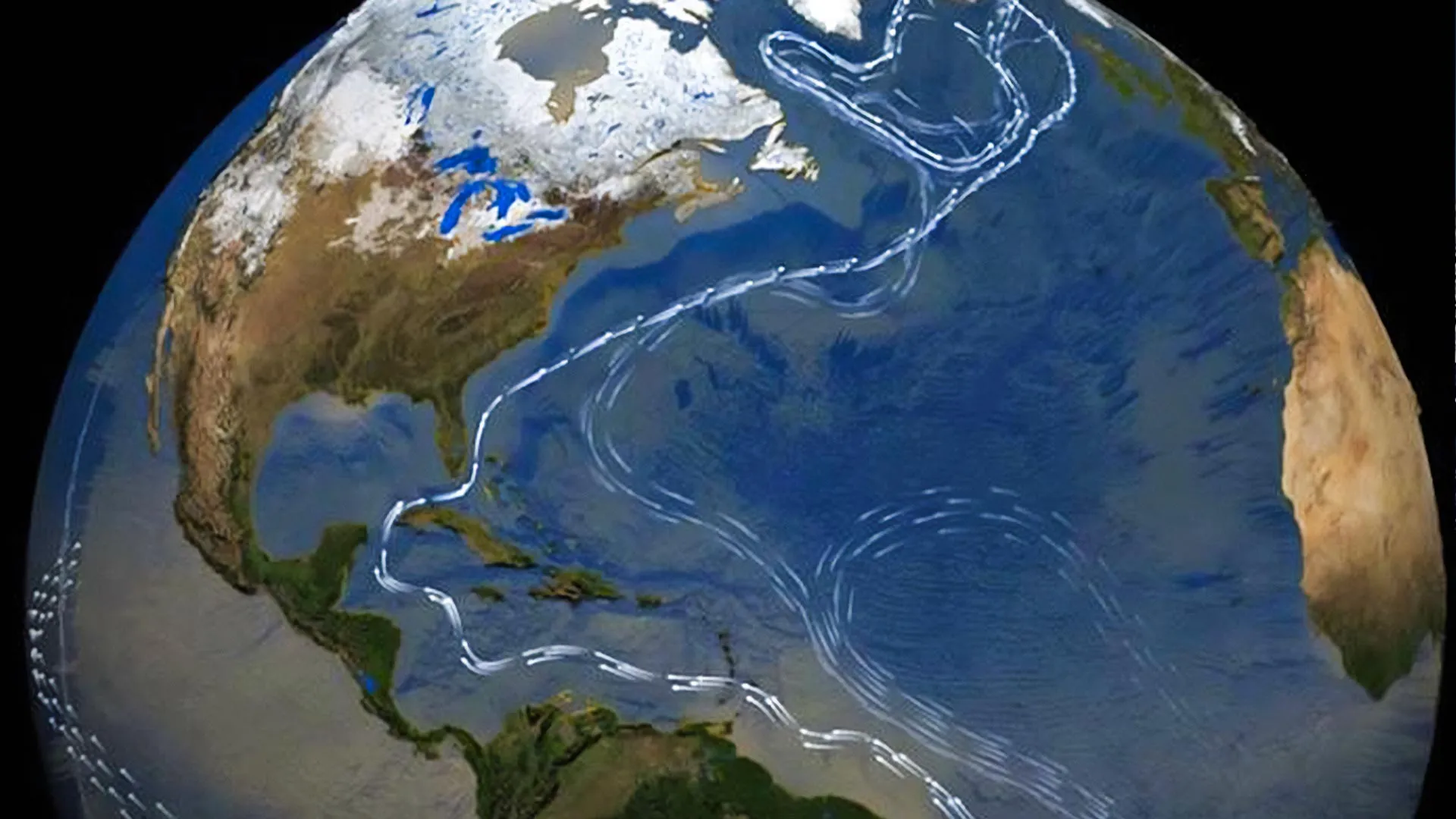
Atlantic Circulation Weakens: Global Climate Reshaping Predicted
For nearly two decades, the Atlantic Meridional Overturning Circulation has been weakening across a broad expanse of ocean, and the evidence is now firmly observational. This isn't a distant model projection; it's a measured slowdown with the potential to redraw weather patterns, storm tracks, and coastal sea levels around the basin. We treat this as a calibrated warning, not speculation. The data demands attention.

Rapid Warming Threatens Atlantic Circulation’s Stability
The pace of warming may be the deciding factor for the Atlantic Meridional Overturning Circulation. New research indicates that rapid temperature rise, similar to today's trajectory, can push this massive system past a tipping point far earlier than gradual change would allow. The finding reframes our understanding of climate thresholds. For a broader perspective on how we track these shifts, our related piece, "Atlantic Circulation Weakens: Global Climate Reshaping Predicted," offers additional context.