Argo floats
World Data Ocean keeps Argo floats in one place: 3 stories so far. The section currently leads with “DriftGuard enables real-time calibration correction across global ocean sensor networks”, “Ocean's early warnings grow urgent as climate signals accelerate”, and “Mediterranean Sea Temperature and Salinity Trends: A Longitudinal Data Assessment”. Undetected calibration drift silently corrupts temperature and salinity records from 15 to 20 percent of active Argo floats at any given moment, with correction workflows stretching three to six months. The North Pacific's surface has warmed four times faster than the global average, a signal we can no longer ignore. A Global Hub for Ocean Intelligence 4 World Data Ocean is a centralized digital platform where researchers, scientists, and ocean enthusiasts converge to… The list below is every Argo floats story on World Data Ocean, newest first.

DriftGuard enables real-time calibration correction across global ocean sensor networks
Undetected calibration drift silently corrupts temperature and salinity records from 15 to 20 percent of active Argo floats at any given moment, with correction workflows stretching three to six months. DriftGuard meets this urgency with a five-component autonomous framework that unifies graph-based spatial reasoning, temporal modelling, and LLM-driven correction into a single operational pipeline. It detects gradual drift an average of 84.7 readings earlier than standard methods.
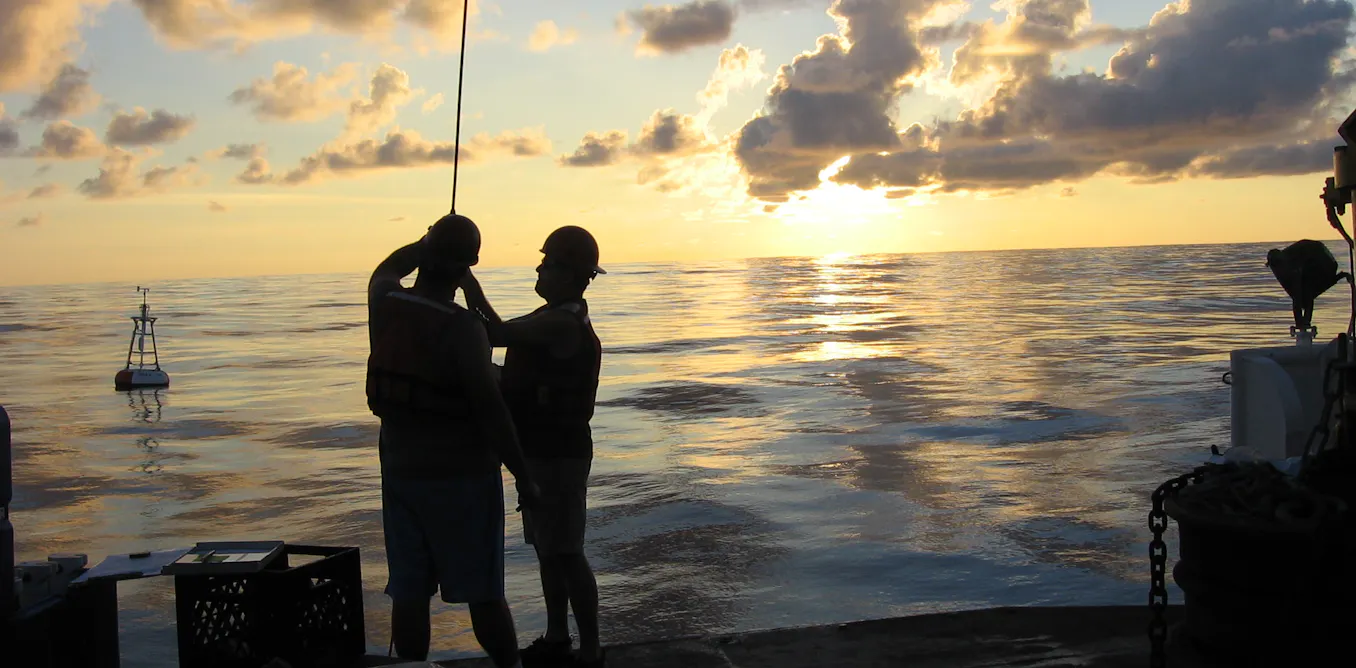
Ocean's early warnings grow urgent as climate signals accelerate
The North Pacific's surface has warmed four times faster than the global average, a signal we can no longer ignore. Ocean intelligence now shows climate indicators moving beyond modeled projections. These are not abstract trends; they are measurable, real-time shifts in a system we depend on. Understanding drives protection. Our related piece on ECCO‑Darwin's first multi‑decadal global ocean CO₂ flux estimates offers another calibrated look at how fast this change is actually happening.
Mediterranean Sea Temperature and Salinity Trends: A Longitudinal Data Assessment
The Mediterranean Sea is warming, not uniformly, but measurably. This longitudinal assessment of temperature and salinity trends from 2012 to 2025, based on Argo float profiles and reanalysis products, reveals surface warming of 0.8 to 0.9 °C per decade in the Western Mediterranean and Ionian basins. The signal is consistent, yet it is not singular. Freshening in the upper 100 meters contrasts with salinification in Levantine Intermediate Water, underscoring a complex thermohaline shift that demands continued, spatially dense monitoring.