U.S. Navy Destroyer Intercepts Iranian-Flagged Ship Attempting To Sail To Iran
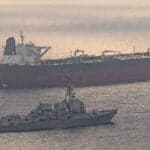


The United States Central Command (CENTCOM) said Friday that the guided-missile destroyer USS Rafael Peralta intercepted an Iranian-flagged vessel that was trying to sail to a port in Iran.
In a post on X, CENTCOM said the action took place on April 24 and was part of the US naval restrictions imposed earlier this month to limit shipping linked to Iran.
According to US officials, the vessel was stopped while heading toward Iranian territory.
The United States has increased enforcement of the blockade, with dozens of vessels already turned back or intercepted.
During a Department of War briefing, Chairman of the Joint Chiefs of Staff General Dan Caine said 34 ships had encountered the blockade and decided to turn around.
He said US forces would continue maritime interdiction operations against sanctioned vessels and ships linked to Iran’s “dark fleet.”
General Caine also referred to the earlier seizure of the motor vessel Touska. He said after repeated warnings, US Marines boarded the ship using helicopters and took custody of the vessel. He added the ship and crew remain in US custody.
He also gave details of other recent operations. On April 20, US forces intercepted the tanker Tiffany, a very large crude carrier carrying around 2 million barrels of what officials described as sanctioned Iranian oil.
On April 22, another tanker, Majestic X, also known as Ponix, was seized in the Indian Ocean under similar circumstances.
General Caine said both ships and their crews remain in US custody and said similar operations would continue in the Indian and Pacific Oceans.
He said the blockade is being enforced against ships of any nationality sailing to or from Iranian ports and that US forces are tracking vessels heading toward Iran as well as ships that left before the blockade began.
Analysis from Lloyd’s List Intelligence, cited by Reuters, showed only seven vessels transited the strait between April 22 and early April 23, six involved in Iran-related trade.
Traffic through the strategic waterway has fallen amid fears of confrontation. Disruption in the strait, through which around a fifth of the world’s oil and liquefied natural gas supplies move, has added pressure to global energy markets.
At the same time, diplomatic contacts between Washington and Tehran continue.
Efforts for a truce and back-channel talks are ongoing, though differences over sanctions, regional security and freedom of navigation have slowed progress.
Meanwhile, Iran’s Foreign Minister Abbas Araqchi arrived in Islamabad on Friday for meetings with Pakistani Prime Minister Shehbaz Sharif, Foreign Minister Ishaq Dar and Army chief Asim Munir.
Iranian Foreign Ministry spokesperson Esmaeil Baqaei said Araqchi would convey Iran’s position on ending the war with the United States and restoring peace in the region.
During the briefing, General Caine also marked the anniversary of the April 18, 1983 bombing of the US Embassy in Beirut, paying tribute to those killed and acknowledging the service members involved in current operations.
References: economictimes, moneycontrol
Want to read more?
Check out the full article on the original site