Brazil Investigates Abandoned Workboat Adrift for 20 Days After Crew Reports “Slave-Like” Conditions
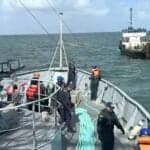


Brazilian authorities have started an investigation after a workboat was found drifting for more than 20 days off the coast of Amapá, with crew members reporting conditions described as “analogous to slavery”.
The vessel, Latifa, sailing under the Tanzanian flag, had left Cartagena in Colombia for Montevideo in Uruguay when it suffered a propulsion failure in late March.
After losing its ability to move, the vessel remained adrift offshore with very limited supplies.
The master sent a distress call soon after the breakdown, but the vessel was only brought into port on April 15.
By the time it was located, the crew had almost run out of food and drinking water.
The Brazilian Navy located the vessel after a search operation and reached it after several days at sea.
Navy personnel boarded the ship while it was still drifting and provided medical help along with essential supplies, including food and potable water.
The crew was reported to be under high levels of stress.
The ship could not continue its voyage as inspections found serious problems with the main engine and failures in the power generation system.
The Navy began towing operations on April 11 and brought the vessel to the Port of Santana four days later after covering around 580 kilometres.
There were eight crew members on board, including one Belgian and seven Venezuelans.
After the vessel arrived in port, Brazil’s Labour Prosecution Service carried out an inspection and found that the crew had been living and working in degrading conditions.
Officials reported long periods without proper food, restricted access to clean drinking water, and interruptions in electricity supply.
The vessel was also in poor hygienic condition, with signs of insect infestation. Authorities noted that the crew had been under both physical and psychological stress during the time at sea.
The Labour Prosecution Service has opened a civil inquiry to investigate the case. Initial findings point to possible material abandonment by the shipowner, including failure to provide basic supplies and support.
Authorities have informed the shipowner, who is required to arrange and pay for the crew’s return to their home countries. At the same time, different government agencies are working together to provide assistance, including access to legal support and social benefits.
The Federal Police have also completed immigration procedures for the crew, allowing them to stay in Brazil for a period of 60 to 90 days while the investigation continues.
The Latifa is a 250 dwt vessel built in 1945, making it one of the oldest ships still operating commercially. It was reportedly sold earlier this year and reflagged to Tanzania, which is listed as a high-risk flag under the Paris MoU due to frequent deficiencies.
Before the sale, the vessel had been used for salvage and pollution control work in Panama. Authorities are now looking into its ownership and background as part of the investigation.
According to the International Transport Workers’ Federation, 2025 saw the highest number of such cases, with around 1,000 vessels and about 6,000 seafarers affected. In many cases, crews are left without pay, food, or support.
Authorities in Brazil are continuing their investigation to determine responsibility and any possible legal action.
References: Newsminimalist, Europesays
Want to read more?
Check out the full article on the original site