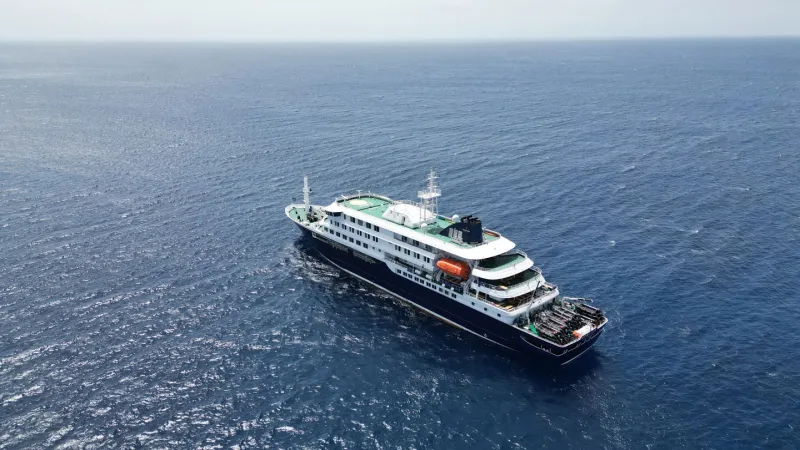
The recent hantavirus outbreak aboard a cruise ship underscores how terrestrial pathogens can infiltrate marine‑linked human systems, a scenario that challenges both public‑health surveillance and ocean‑borne disease monitoring. While the immediate focus is on tracing the vector that introduced the virus to the vessel and confirming whether any human‑to‑human transmission has occurred, the broader implication is a reminder that our integrated data ecosystem must extend beyond traditional marine indicators. The episode dovetails with research on aquatic health, such as the findings in Effects of probiotics, prebiotics, and synbiotics on immune function, disease resistance, digestive health, and stress management in fish culture, which illustrate how microbial dynamics in water can affect organism resilience. Likewise, the strategic perspective offered in Empowering small‑scale fisheries and aquaculture isn’t just about the tools: it’s about the intelligence behind them. At highlights the need for calibrated, real‑time intelligence that can anticipate and mitigate cross‑environment health threats. Together, these insights reinforce that ocean intelligence must be measurable, longitudinal, and peer‑reviewed to protect both marine life and the humans who travel through its domain.
From a scientific authority standpoint, the hantavirus case raises three critical questions. First, how robust are our current bio‑security protocols for vessels that operate at the intersection of land‑based ports and open ocean? Cruise ships routinely load supplies, crew, and passengers from diverse geographies, creating a conduit for pathogens that are otherwise confined to rodent reservoirs on shore. A validated, integrated monitoring framework—leveraging satellite‑derived climate indicators and onboard environmental sensors—could provide early warnings when anomalous microbial signatures appear. Second, the potential for human‑to‑human spread aboard densely populated ships demands a calibrated response plan that balances rapid isolation with the maintenance of essential services. Empirical data from previous outbreaks suggest that real‑time contact tracing, combined with longitudinal health monitoring of crew and passengers, can contain transmission before it escalates. Finally, the incident prompts a reassessment of our oceanic public‑health liaison structures. Historically, marine scientists and epidemiologists have operated in parallel silos; this event illustrates the necessity of a forward‑thinking, collaborative model where oceanic data feeds directly into health dashboards used by agencies such as the CDC and WHO.
The urgency of this outbreak also resonates with the broader climate‑change narrative. As ocean temperatures rise and ecosystems shift, the distribution of disease‑carrying vectors—both marine and terrestrial—may expand, increasing the probability of novel spillover events. This is not an alarmist projection but a measurable risk supported by peer‑reviewed climate‑impact studies. By integrating calibrated ocean‑health metrics with terrestrial disease surveillance, we can develop a more holistic, impact‑oriented strategy that safeguards both ecosystems and public health. Moreover, the episode highlights the responsibility of the maritime industry to adopt evidence‑based practices that are transparent and auditable, reinforcing trust with the global traveling public.
Looking ahead, the key to preventing similar incidents lies in strengthening the real‑time, cross‑disciplinary data pipelines that link oceanic observations with epidemiological models. As we refine our integrated data ecosystem, a pivotal question remains: can we achieve a validated, longitudinal monitoring network that reliably predicts pathogen movement across the land‑sea interface, thereby turning reactive crisis management into proactive stewardship? The answer will shape how we protect both the health of our oceans and the people who depend on them.