Was the ‘American cheetah’ a cheetah at all?
Our take
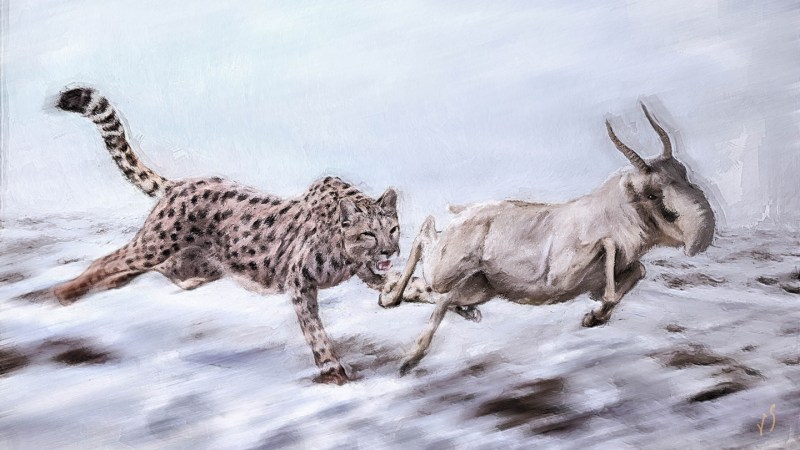
## Rethinking the 'American Cheetah': Ancient DNA Rewrites a North American Icon
The recent confirmation, through ancient DNA analysis, that *Miracinonyx trumani*, often dubbed the “American cheetah,” was not a cheetah at all, but more closely related to modern pumas, represents a significant shift in our understanding of North American megafauna. For decades, paleontologists have been captivated by this animal, distinguished by its slender build and long legs, which suggested a hunting style similar to that of African cheetahs. The moniker “American cheetah” stuck, fueled by comparisons to its faster, spotted cousins across the globe. However, this new genetic evidence, published in *Science*, decisively alters that narrative. The implications extend beyond simply correcting a common name; it challenges assumptions about predator-prey dynamics in the Pleistocene epoch and highlights the power of ancient DNA in revising our understanding of evolutionary history. This discovery builds upon previous work utilizing ancient DNA to illuminate the evolutionary relationships of extinct megafauna, such as the groundbreaking research on the woolly mammoth Woolly Mammoth Genome and the ongoing efforts to reconstruct the evolutionary tree of the saber-toothed cats Saber-Toothed Cat Evolution.
The study's findings are particularly compelling because they reveal a more varied diet for *Miracinonyx trumani* than previously hypothesized. Based on skeletal morphology and comparisons to modern cheetahs, it was assumed that this animal specialized in hunting swift-footed prey like horses and camels. However, the ancient DNA analysis, combined with isotopic analysis of fossilized bones, suggests a more opportunistic feeding strategy, incorporating a broader range of animals into its diet. This challenges the simplistic notion of specialized predators and underscores the ecological flexibility of extinct species. The ability to analyze ancient proteins and DNA provides a far richer picture than relying solely on skeletal remains, which can be misleading when inferring behavior and dietary habits. Furthermore, the genetic link to pumas raises questions about the evolutionary pressures that led to the distinct morphology of *Miracinonyx trumani*. Why did it evolve a cheetah-like body plan if it was genetically closer to a puma? Was it an adaptation to specific environmental conditions, or perhaps a result of convergent evolution – the independent development of similar traits in different species facing similar selective pressures?
This research exemplifies the increasingly vital role of paleogenomics in rewriting paleontological narratives. Traditional methods of phylogenetic reconstruction, based on morphological characteristics, are inherently limited by subjectivity and the potential for convergent evolution. Ancient DNA, however, provides a direct window into the genetic relationships between extinct and extant species, offering a far more robust and accurate understanding of evolutionary history. The success of this study also speaks to the increasing availability of well-preserved ancient DNA, thanks to advancements in extraction and sequencing technologies. The ability to retrieve and analyze genetic material from fossils allows us to move beyond speculation and build increasingly detailed and empirically validated models of past ecosystems. The integration of these genomic datasets with other forms of paleontological data, such as stable isotope analysis and biomechanical modeling, promises to revolutionize our understanding of the past.
Looking ahead, the focus will likely shift towards understanding the precise timing and mechanisms of divergence between *Miracinonyx trumani* and its puma relatives. Further research into the genomes of other North American carnivores could reveal additional surprising connections and reshape our understanding of the Pleistocene predator landscape. Ultimately, this reassessment of the “American cheetah” serves as a potent reminder of the dynamic nature of scientific knowledge and the power of new technologies to challenge long-held assumptions. What other iconic species, previously categorized based on superficial similarities, might reveal unexpected genetic histories upon closer genomic scrutiny?
Read on the original site
Open the publisher's page for the full experience