US Navy’s 100,000-Ton Nuclear Aircraft Carrier Ronald Reagan Returns To Fleet After 18-Month Overhaul
Our take
The return of the USS Ronald Reagan to the US Navy fleet marks a significant moment, not simply for naval readiness, but also for understanding the complexities of maintaining and operating advanced maritime assets in an increasingly challenging global environment. An 18-month overhaul for a nuclear-powered aircraft carrier of this magnitude—a vessel displacing over 100,000 tons—represents a substantial investment of resources and expertise. It underscores the demanding nature of these platforms and the critical need for continuous, validated maintenance schedules to ensure operational effectiveness. The Reagan's return follows similar, albeit shorter, overhauls of other Nimitz-class carriers, highlighting an ongoing effort to modernize and sustain the backbone of US naval power. Consider the broader implications of these maintenance cycles when evaluating the Navy’s overall capacity; a deeper dive into fleet readiness can be found in Naval Readiness Concerns. Further context on the complexities of nuclear propulsion systems within naval vessels can be explored in Nuclear Propulsion in the Navy.
The extended maintenance period for the Reagan, while routine, also signals the increasing sophistication of these vessels and the evolving challenges in their upkeep. Modern aircraft carriers are floating cities, integrating advanced radar systems, sophisticated electronic warfare capabilities, and, crucially, nuclear reactors. Maintaining these integrated systems demands a highly skilled workforce and access to specialized components, often requiring global supply chains. The 18-month timeframe likely incorporated upgrades beyond standard maintenance, potentially including improvements to combat systems, cybersecurity enhancements, and integration of new technologies. The ability to effectively calibrate and integrate these diverse systems is a testament to the Navy’s engineering capabilities and highlights the importance of longitudinal data collection and analysis during these overhauls. Such data provides empirical evidence for refining maintenance protocols and improving future operational performance. The sheer scale of the undertaking also necessitates a collaborative effort, bringing together civilian contractors, naval engineers, and specialized technicians – a tangible example of global collaboration in a high-stakes environment.
Beyond the immediate implications for US naval power projection, the Reagan’s return has relevance to broader discussions around ocean stewardship and maritime security. Aircraft carriers, while symbols of military strength, also operate within a complex ecosystem. Their operations impact marine environments, and their presence influences geopolitical dynamics. The meticulous maintenance and technological upgrades reflected in this overhaul emphasize a commitment to operational efficiency, which, in turn, can contribute to minimizing environmental impact and ensuring safer maritime operations. The integrated data ecosystem utilized to monitor and manage these vessels—from reactor performance to navigational data—represents a growing trend towards data-driven decision-making within naval operations, enabling more informed responses to potential threats and environmental challenges. This approach aligns with the growing need for ocean intelligence, leveraging real-time data to enhance situational awareness and promote responsible maritime practices.
Looking ahead, the ongoing maintenance and modernization of the Nimitz and Ford-class carriers will continue to be a crucial indicator of US naval capabilities and its ability to adapt to evolving threats. A key question to watch is how the Navy balances the need for maintaining existing assets with the development and deployment of next-generation naval platforms. The data collected during these overhauls, particularly concerning the performance of nuclear reactors and advanced combat systems, will be invaluable in informing future naval design and operational strategies. Furthermore, the increasing reliance on integrated data ecosystems within these vessels suggests a future where data analytics plays an even more central role in naval decision-making, potentially revolutionizing how these powerful assets are deployed and utilized.
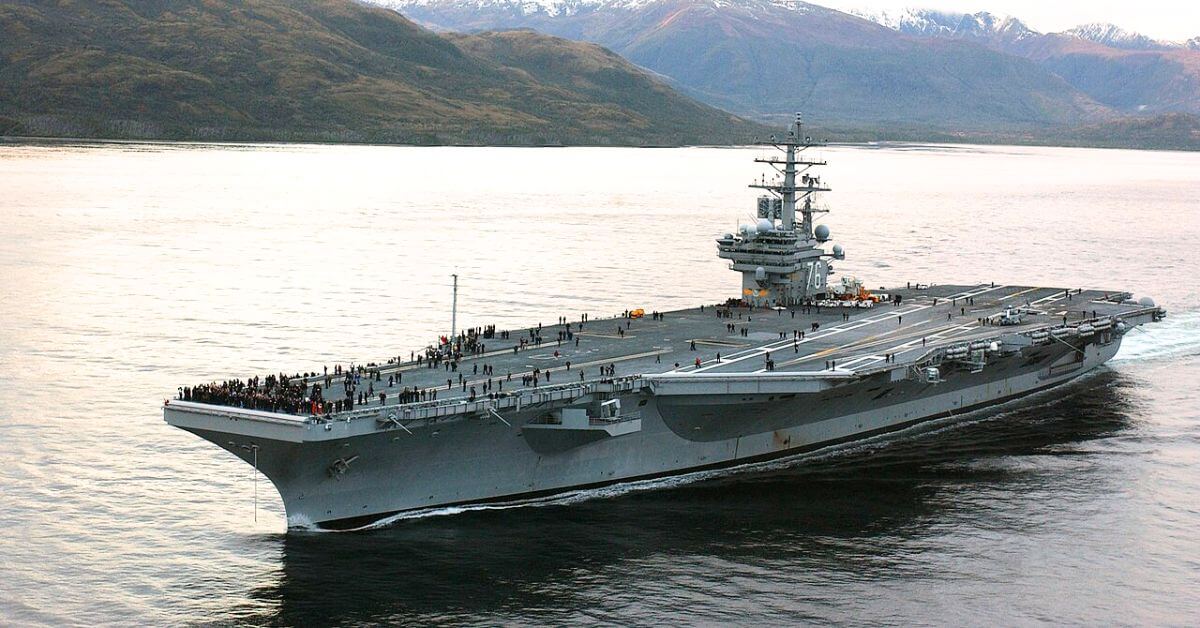
The US Navy aircraft carrier USS Ronald Reagan has returned to its operational fleet after an 18-month maintenance programme at Puget Sound Naval Shipyard in Washington.
The roughly 100,000-ton Nimitz-class nuclear-powered carrier underwent a Docked Planned Incremental Availability (DPIA), which involved repairs and upgrades across the ship.
Ronald Reagan entered the maintenance period in March 2025. It left the shipyard in early September 2026 and then underwent sea trials.
The Navy confirmed that the work was completed and the carrier returned to the fleet in September. However, it has not announced the carrier’s next deployment.
The DPIA was the first for Ronald Reagan since 2012.
The maintenance work covered several parts of the ship. It included repairs to the hull and flight deck, work on reactor-related systems and upgrades to its combat capabilities.
The Navy also worked on crew spaces. Ronald Reagan can have about 5,000 sailors aboard when deployed.
Maintaining a nuclear-powered aircraft carrier involves work on many systems. The ship has nuclear propulsion, aircraft operations, weapons, combat systems and other support facilities.
After leaving the shipyard in early September, Ronald Reagan went to sea for testing before completing the maintenance programme.
USS Ronald Reagan entered service in 2003. It is the second-youngest of the Navy’s 10 Nimitz-class carriers.
The carrier has spent many years operating in the Indo-Pacific.
From 2015, it was the U.S. Navy’s forward-deployed aircraft carrier based at Yokosuka, Japan. It operated with U.S. forces and took part in exercises with regional allies and partners.
In 2024, Ronald Reagan took part in Exercise Valiant Shield, a major multinational exercise involving U.S. forces and Japan’s Self-Defense Forces.
The carrier also took part in other operations across the Indo-Pacific before returning to the United States.
The U.S. Navy continues to maintain its Nimitz-class carriers while bringing the newer Ford-class carriers into the fleet.
References: interestingengineering
Read on the original site
Open the publisher's page for the full experience