U.S. Nearly Boarded Chinese Ship In Middle East After AI-Assisted Intelligence Error
Our take
## Our Take: The Perils and Promise of AI in Maritime Intelligence

The recent near-incident involving a U.S. Navy vessel and a Chinese cargo ship in the Middle East, triggered by an AI-assisted intelligence error, underscores a critical juncture in the evolving landscape of maritime security. While the situation was averted thanks to the intervention of experienced analysts, the event serves as a potent reminder of the inherent risks associated with over-reliance on automated systems, particularly in complex geopolitical environments. The core issue isn’t the technology itself, but the potential for algorithmic bias, flawed data inputs, and a diminished role for human judgment within critical decision-making processes. This incident echoes concerns previously raised about the integration of AI in various sectors, demanding a measured and rigorous approach to implementation and oversight. As detailed in AI and Maritime Security, the promise of enhanced situational awareness and predictive capabilities must be balanced against the potential for misinterpretation and escalation. The current reliance on data-driven analysis, while powerful, requires constant validation against real-world context and expert understanding.
The incident’s significance extends beyond a single near-miss. Maritime chokepoints like the Strait of Hormuz are vital arteries of global trade, and any disruption carries significant economic and strategic consequences. The increasing automation of intelligence gathering and analysis, driven by the desire for speed and efficiency, is rapidly changing how these waterways are monitored. However, as highlighted in The Growing Role of AI in Naval Operations, the complexity of maritime environments – including unpredictable weather patterns, ambiguous vessel behavior, and the presence of non-state actors – makes it difficult for AI to consistently discern between legitimate activity and potential threats. The fact that the error was caught before action demonstrates a crucial safeguard: a layered approach that prioritizes human oversight and validation. This incident emphasizes the need for robust validation protocols and continuous calibration of AI systems, ensuring they are integrated as tools to *augment*, rather than replace, human expertise. It also raises questions about the transparency and explainability of the AI algorithms employed, allowing analysts to understand the reasoning behind the system’s conclusions and identify potential biases.
The long-term implications of this event are profound. We are witnessing a rapid shift towards data-centric decision-making in maritime operations, fueled by the proliferation of sensors, satellite imagery, and other data streams. The ability to process and analyze this data in real-time is undeniably valuable, offering the potential for earlier threat detection and more effective resource allocation. However, the incident highlights the critical need for a holistic approach that integrates AI with human intelligence, incorporating domain expertise, cultural understanding, and a nuanced appreciation of geopolitical dynamics. The development of “ocean intelligence” – a concept World Data Ocean champions – demands not just the collection and analysis of data, but also the contextualization of that data within a broader understanding of ocean systems and human activity. Furthermore, the incident reinforces the importance of international collaboration and data sharing in maritime security. Misinterpretations and errors are more likely to occur in environments characterized by mistrust and information asymmetry. As discussed in Data Sharing Challenges in Maritime Security, establishing common standards and protocols for data exchange is essential for building trust and enhancing overall maritime safety and security.
Looking ahead, the question isn't whether AI will continue to play an increasingly important role in maritime intelligence – it clearly will – but rather *how* we integrate it responsibly and effectively. The focus must shift from simply maximizing algorithmic efficiency to prioritizing human-machine collaboration, ensuring that AI serves as a powerful tool to enhance, rather than compromise, human judgment. The incident provides a valuable, albeit cautionary, lesson: the pursuit of technological innovation must be tempered by a commitment to scientific rigor, ethical considerations, and a deep understanding of the complexities of the maritime domain. What mechanisms will be developed to ensure ongoing validation and calibration of AI-driven maritime intelligence systems, and how can we foster greater transparency and accountability in their deployment?
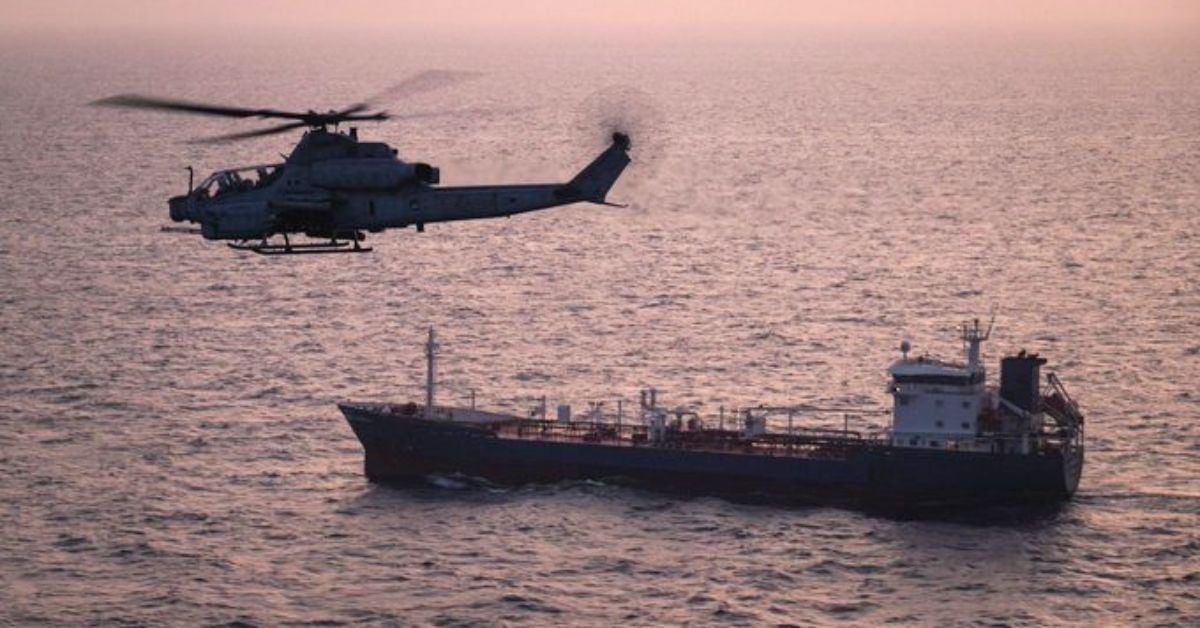
The U.S. military came close to intercepting and boarding a Chinese vessel in the Middle East this spring after an intelligence report wrongly said the ship was carrying components linked to a nuclear weapons programme, CNN reported.
The intelligence came from the U.S. Special Operations Command Pacific in Hawaii, CNN reported.
An analyst used a chatbot to examine information about the Chinese vessel’s manifest. The material included publicly available information, classified signals intelligence and other data held by the U.S. government.
The AI system wrongly identified the cargo as components linked to a nuclear weapons programme. The analyst then used the system to help prepare the findings as a standard intelligence report.
The report was circulated through military channels but was later found to be wrong.
One source described the assessment as “entirely false” and said it had “almost started a war”, according to CNN.
The intelligence report led the U.S. military to prepare an operation to stop the vessel.
According to CNN, U.S. military aircraft were already airborne while armed personnel prepared to board the Chinese ship.
The operation was stopped after more experienced analysts and subject-matter experts reviewed the information behind the report and found that the AI-generated identification of the cargo was wrong.
CNN reported that the error was discovered as the operation was about to begin. The identity of the vessel and its actual cargo have not been disclosed.
A U.S. attempt to stop and board a Chinese commercial vessel could have created a direct confrontation between Washington and Beijing. The incident took place during the ongoing conflict with Iran.
The operation, however, was called off after the intelligence was found to be inaccurate.
US military expands AI use
The Pentagon has been using AI across military operations. Its January 2026 AI strategy calls for faster integration of AI capabilities across warfighting, intelligence and other missions, including the GenAI.mil initiative.
The U.S. military has said AI can help process large amounts of information and support faster decision-making.
In January, Defence Secretary Pete Hegseth announced an “Artificial Intelligence Acceleration Strategy” aimed at expanding AI use across the U.S. Department of Defense and reducing bureaucratic barriers.
GenAI.mil is intended to give military and civilian personnel access to commercial AI models. An accompanying memo called for AI models to be made available across the department at different classification levels.
Concerns over AI-generated intelligence
Sources cited by CNN said AI use across the U.S. government remains decentralised, with different organisations using different systems and following different safety rules and restrictions.
Officials have also raised concerns about the lack of a common standard for checking AI-generated information before it is distributed.
Some sources told CNN that younger analysts may be more likely to accept AI-generated information without enough scrutiny.
Other intelligence officials have warned that pressure to produce information faster could result in assessments being distributed before they have been properly checked.
A former senior U.S. official familiar with military AI systems told CNN that some internal tools are closely based on commercial AI technology.
The former official said these systems can combine open-source information with classified signals intelligence. That combination, the official said, can make incorrect conclusions appear more reliable.
References: India Today, The Independent
Read on the original site
Open the publisher's page for the full experience