U.S Navy’s $200 Million MQ-4C Triton Drone Goes Missing Over Strait Of Hormuz
Our take
The recent disappearance of the U.S. Navy's $200 million MQ-4C Triton drone during a routine intelligence mission in the Persian Gulf and Strait of Hormuz raises significant questions about both technological reliability and geopolitical stakes in a region that is already fraught with tension. This incident not only highlights the vulnerabilities inherent in advanced military technology but also underscores the importance of maintaining robust surveillance capabilities in a zone critical to global trade and security. For instance, the need for strategic investment in the ocean economy is more relevant than ever, as highlighted in our article, World Economic Forum: Here's why we need Strategic investment in the Ocean economy.
The Triton drone, designed for high-altitude, long-endurance missions, represents a significant advancement in maritime surveillance technology. However, its loss brings to light concerns regarding operational readiness and the potential implications of such incidents. The Strait of Hormuz is a vital waterway, with approximately one-fifth of the world's oil supply passing through it. The absence of real-time data from such surveillance assets could create gaps in situational awareness, potentially emboldening hostile actors in the region. The intricate balance of power in these waters necessitates a reliable intelligence apparatus, not just for military operations but also for safeguarding international trade routes.
Moreover, this incident coincides with broader discussions on the ocean's health and its crucial role in climate regulation. As noted in our article, Beneath the waves, the ocean holds a hidden record of our planet’s changing climate.. The oceans are not just a battleground for geopolitical maneuvering; they are also a vital component of the Earth's climate system, absorbing excess heat and carbon emissions. The implications of failing to monitor these environments effectively could extend beyond immediate security concerns, impacting global climate patterns and marine ecosystems.
The loss of the Triton drone should serve as a call to action for both military and scientific communities to prioritize resilience in ocean monitoring technologies. As we move forward, it is imperative that we invest in integrated data ecosystems that can provide real-time, calibrated information about both maritime security and environmental health. This dual focus on military readiness and ecological stewardship is essential in addressing the multifaceted challenges posed by climate change and geopolitical instability.
In light of these circumstances, we must ask ourselves how we can enhance international collaboration to protect our oceans while ensuring that technological advancements in surveillance are both reliable and ethically deployed. The need for a comprehensive approach to ocean stewardship has never been more pressing, and the disappearance of the Triton drone serves as a stark reminder of the interconnectedness of security and environmental health. As we continue to explore these themes, the question remains: how can we better harness technological innovation to support both military and ecological objectives in a rapidly changing world?
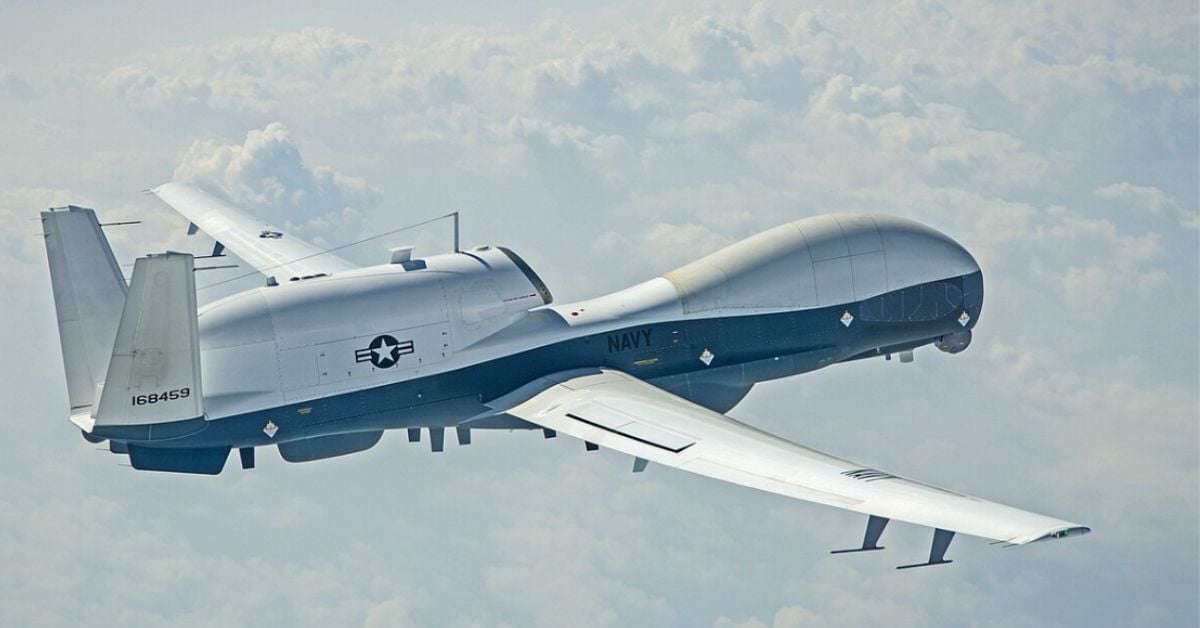
The $200 million MQ-4C Triton, a surveillance drone of the U.S. Navy, vanished during a routine intelligence mission in the Persian Gulf and Strait of Hormuz.
The incident occurred after it had completed its patrol and was returning to its base at Naval Air Station Sigonella, Italy.
The unmanned aircraft declared an in-flight emergency and sent the code 7700, after which it began to descend.
Then it mysteriously disappeared from the radar.
Some are saying that Iran might have shot it down, or it might have suffered from a technical failure, or simply could not be tracked when it entered a contested airspace, but nothing has been confirmed yet.
This is significant because MQ-4C Triton is one of the most advanced unmanned aircraft of the U.S Navy.
It is built to fly at high altitude, above 50,000 feet and can stay airborne for more than 24 hours. The uncrewed aircraft helps America monitor the vast oceans with the help of its extremely sensitive sensors and radar systems.
Given its capabilities, it is often called the U.S Navy’s “eyes over the ocean,” as it also supports patrolling aircraft and naval forces stationed in the Middle East and Indo-Pacific.
Till now, the U.S Navy or Pentagon have not issued any statement on the incident.
However, this is a loss for the Navy as the drone was one of its most strategic assets deployed in the region where the U.S is engaged in a tussle with Iran.
The naval warfare and ship attacks in the last few weeks have made the Strait of Hormuz the most militarised maritime chokepoint in the world.
The U.S is spending around $10,300 every second on this war, with munitions and missiles making up most of this amount, around $320 million daily, followed by air missions, which cost $245 million every day and naval action, adding another $155 million every 24 hours.
Missile defences, including THAAD, BMD interceptors and Patriot batteries, cost $95 million per day. The expenses on cyber operations and intelligence missions are $45 million, while logistics and personnel costs add $30 million every day.
Read on the original site
Open the publisher's page for the full experience