U.S Deploys Uncrewed Drone Speedboats As Part Of Its Operations Against Iran
Our take
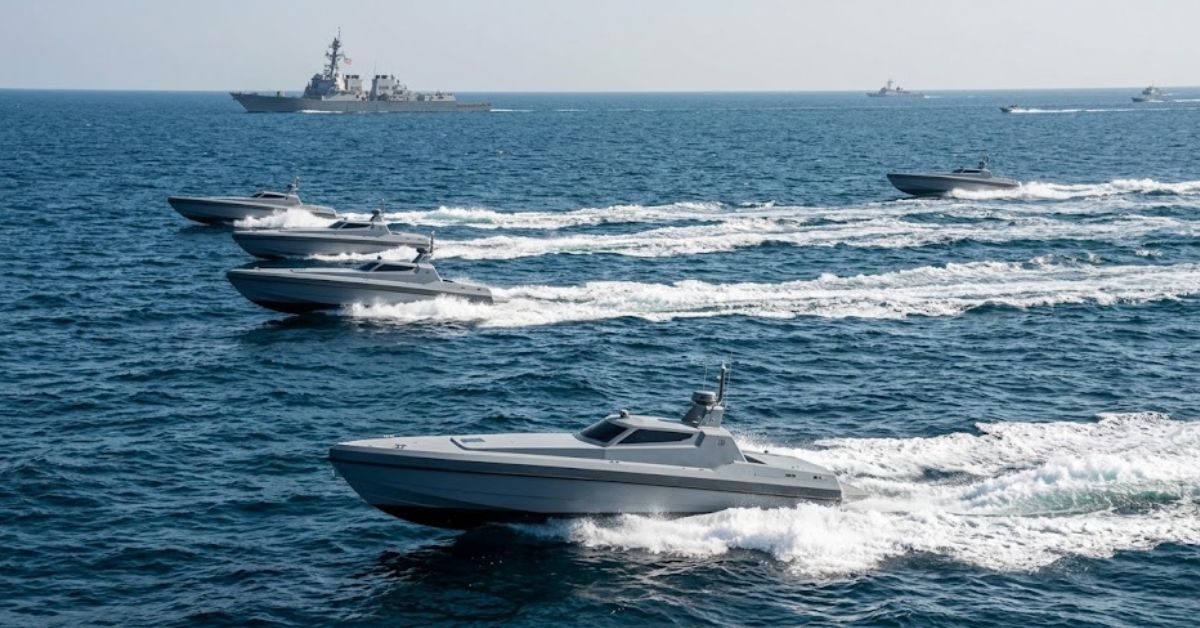
For the first time, the U.S Navy has deployed unmanned drone speedboats for patrolling critical areas as part of its offensive against Iran.
The Pentagon stated that this is the first time that the country has used such vessels in an active war-like situation.
These vessels can be used for surveillance or even kamikaze strikes, which have never been used before in such a strategic manner and in a critical mission.
The decision to deploy them came after the Navy suffered several setbacks while trying to forge a fleet of uncrewed surface vessels for years, per Reuters.
Tim Hawkins, a Pentagon spokesperson for Central Command, said that these ships are constructed by BlackSea and are known as the Global Autonomous Reconnaissance Craft, or GARC.
They are being used for patrols as part of the US campaign against Iran, dubbed ‘Operation Epic Fury,’ he added.
He also said that the United States is relying on unmanned systems, including surface drone assets, in the Middle East conflict.
The GARC have been operational for more than 450 hours and covered over 2200 nm while patrolling the sensitive areas, as part of Operation Epic Fury,” Hawkins said.
Read on the original site
Open the publisher's page for the full experience