U.S Coast Guard Responds To 3 Containers That Fell Overboard At Port Of Los Angeles During Cargo Operations
Our take
## Our Take: Container Loss at Port of Los Angeles – A Symptom of Systemic Strain
The recent incident involving three containers lost overboard at the Port of Los Angeles during cargo operations, prompting a Coast Guard response, underscores a growing concern within the global maritime ecosystem: the increasing fragility of supply chain infrastructure. While isolated incidents of container loss are not unprecedented, the frequency appears to be trending upwards, signaling deeper systemic pressures. This event, while seemingly localized, contributes to a larger narrative of escalating operational risks and environmental vulnerabilities within our integrated data ecosystem. The Port of Los Angeles, as one of the busiest container ports globally, is particularly susceptible to these challenges, operating at near-peak capacity for extended periods. This incident is a reminder of the complex interplay of factors, including weather conditions, vessel maneuvering, and the sheer volume of cargo being handled, that can lead to such losses. For further context on the challenges of port congestion, see Port Congestion Remains a Global Headache. Understanding the root causes requires a longitudinal analysis of operational data, including vessel traffic patterns, cargo weight distribution, and environmental conditions. We also need to consider the implications for ocean intelligence; accurately tracking and predicting these events is crucial for mitigation and response. Examining similar incidents, like the Maersk Essen container spill in 2021, highlights the potential for widespread environmental damage and economic disruption Maersk Essen Incident Analysis.
The immediate consequence of container loss is, of course, the potential release of cargo into the marine environment. The contents of these containers are currently unknown, but the potential for pollution – from plastics to hazardous materials – is a significant concern. The Coast Guard’s response, focused on recovery and mitigation, is a necessary first step, but it highlights the reactive nature of current protocols. A more proactive approach requires enhanced real-time monitoring and predictive modeling. Our integrated data ecosystem aims to provide precisely this capability, leveraging calibrated sensor networks and empirical data analysis to identify potential risks before they manifest. The incident also emphasizes the need for improved container securing practices, both during loading and transit. While regulations exist, enforcement and adherence remain inconsistent across the industry. Furthermore, the sheer scale of global trade places immense pressure on port infrastructure and operational procedures, making human error and equipment malfunction more likely. Peer-reviewed research consistently demonstrates a correlation between increased cargo volume and a higher incidence of container loss; this reinforces the need for robust risk assessment frameworks and continuous improvement initiatives.
Beyond the immediate environmental and operational impacts, this incident contributes to a broader conversation about the sustainability of current global trade practices. The reliance on massive container ships and sprawling port complexes generates significant carbon emissions and exacerbates environmental degradation. The economic cost of container loss, encompassing cargo value, cleanup expenses, and reputational damage, is also substantial. While technological innovation – such as automated container handling systems and advanced vessel navigation technologies – offers potential solutions, these require significant investment and widespread adoption. A truly sustainable approach demands a holistic perspective, integrating environmental considerations into every stage of the supply chain, from production to delivery. This includes exploring alternative transportation modes, optimizing cargo loading strategies, and implementing stricter environmental regulations. The data points generated from incidents like this are vital for calibrating our models and refining our understanding of the complex dynamics at play.
Looking ahead, the increasing frequency of incidents like this necessitates a fundamental shift in how we approach maritime risk management. The focus must move beyond reactive responses to proactive prevention. Can we develop predictive models, leveraging real-time data streams and machine learning algorithms, to accurately forecast container loss events and implement preventative measures? The potential for leveraging ocean intelligence to enhance maritime safety and environmental protection is significant, but it requires a concerted effort from researchers, policymakers, and industry stakeholders. The question remains: will the maritime industry embrace a data-driven, preventative approach, or will we continue to respond to crises after they occur?
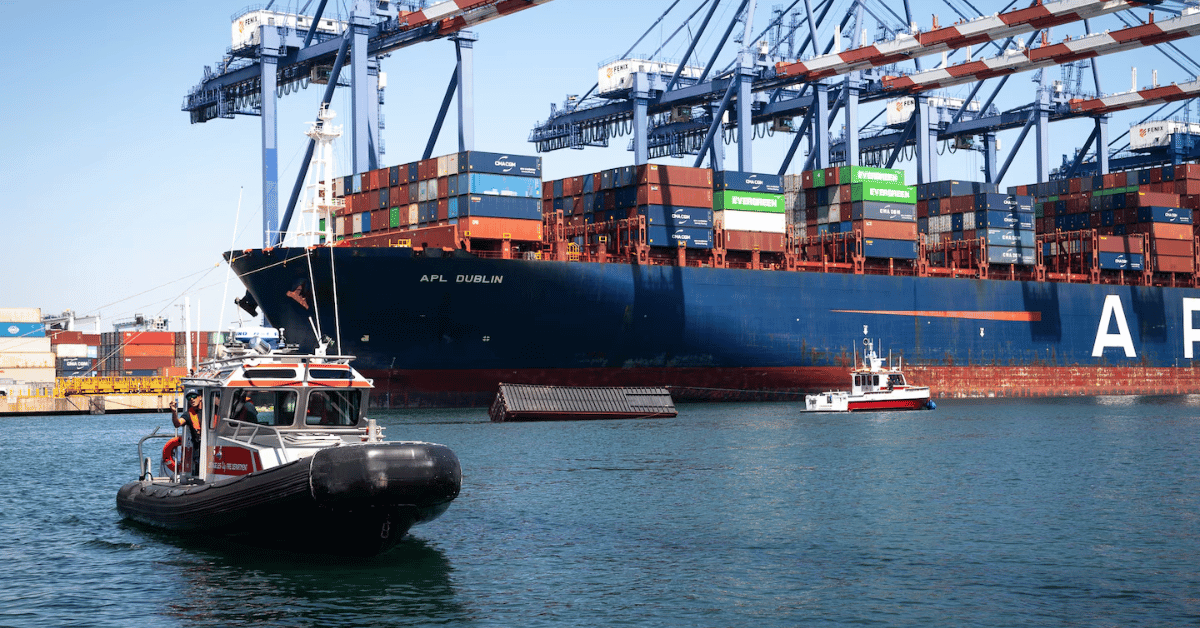
The Coast Guard, in coordination with Los Angeles City Fire and Los Angeles Port Police, is responding to three 40-ft containers that fell into the water near Berth 302 at the Port of Los Angeles during container ship cargo operations.
At approximately 11:20 a.m., Coast Guard Sector Los Angeles-Long Beach watch standers were alerted to the incident and launched Station Los Angeles Long Beach to establish a 400-yard safety zone in the vicinity of the incident.
Two of the containers are submerged, and their locations are marked. The other container has been removed from the water. According to the ship’s manifest, the containers’ contents are listed as non-hazardous.
The Coast Guard will provide more information as it becomes available.
Press Release
Read on the original site
Open the publisher's page for the full experience