Top 10 Oldest Maritime Museums You Must Visit
Our take

The article "Top 10 Oldest Maritime Museums You Must Visit" offers an intriguing glimpse into the rich tapestry of maritime heritage that spans centuries and continents. These institutions, from Rotterdam’s Living Port to San Diego’s Star of India, serve not just as repositories of artifacts, but as vibrant centers for education and collaboration. They embody the essence of ocean stewardship by fostering an appreciation of our seafaring past, which is critical in understanding our present and future relationship with the oceans. As we explore these maritime museums, it is essential to recognize their role in promoting scientific literacy and environmental awareness, akin to the insights shared in our own pieces like Islands of biodiversity created by remote Arctic kelp forests of the central Kitikmeot Sea and Giant squid discovery uncovers a hidden deep-sea world off Australia.
Visiting these maritime museums offers more than just a historical perspective; it allows individuals to engage with the stories of exploration, innovation, and the diverse cultures that have thrived along coastlines throughout history. Each museum presents a unique narrative that reflects the evolution of seafaring, highlighting the scientific advancements that have propelled human understanding of the oceans. Through curated exhibits, visitors are invited to consider the implications of maritime activities on marine ecosystems and coastal communities. This is particularly relevant in today’s context, where climate change and ocean health are pressing global challenges. By contextualizing these issues within the framework of our maritime legacy, museums encourage a sense of shared responsibility for the stewardship of our oceans.
The importance of these institutions extends beyond their historical artifacts; they are also platforms for fostering innovation and collaboration among researchers, policymakers, and the public. The integration of technology in exhibit design and educational programs can enhance the visitor experience, making complex scientific concepts more accessible. As institutions dedicated to the preservation of maritime culture, they also play a pivotal role in supporting ongoing research and exploration. For instance, the findings in our article on Female rats like a different kind of tickling than males highlight the necessity of interdisciplinary approaches to understanding complex biological and ecological interactions, a perspective that can be mirrored in maritime research.
As we look toward the future, the potential of maritime museums to contribute to ocean literacy and awareness cannot be overstated. These institutions are not just about preserving the past; they are catalysts for change, inspiring future generations to engage with and protect our oceans. The stories they tell and the knowledge they share can galvanize action and foster a deeper connection to the marine environment. In a time when ocean health is increasingly under threat, the question remains: How can maritime museums further leverage their unique position to inspire action and promote scientific inquiry among a broader audience? The answer may hold the key to advancing our collective efforts in ocean stewardship and sustainability.

Maritime Museums preserve nautical artefacts and promote maritime history tourism. Some of the oldest maritime museums date back to the early 20th century and are home to famous historic ship exhibits, exploration narratives, becoming top nautical heritage sites. They portray the naval architecture and the seafaring traditions of ancient and medieval coastal communities, which depended on the sea for their livelihood.
Thanks to advancements in maritime archaeology and maritime conservation methods, we can get a glimpse of our rich maritime heritage.
The most iconic maritime museums feature interactive installations and curator-led tours. Additionally, museums like the Maritime Museum of Denmark and the National Maritime Museum in Britain were established in the 1900s to portray the nation’s naval achievements.
Many such museums were established after the Second World War as nations decided to preserve their naval history, war victories, memorable stories, etc., for future generations.
The oldest maritime museums continue to honour the maritime legacies of the nations and communities that ordered their construction while serving as windows into their rich and vivid maritime history.
The 10 oldest maritime museums in the world are mentioned in this article.
| Museum Name | Year of Establishment | Country | Must See Ship/Exhibit |
|---|---|---|---|
| Montauk Point Lighthouse Museum | 1792 | USA | The 1796 Lighthouse Tower |
| Maritime Museum Rotterdam | 1874 | Netherlands | Mataró Model & The Living "Leuvehaven" Port |
| Norwegian Maritime Museum | 1914 | Norway | Stokkebåten (Norway's oldest boat, 200 B.C.) |
| M/S Maritime Museum of Denmark | 1915 | Denmark | The Dry Dock Gallery |
| Mystic Seaport Museum | 1929 | USA | Charles W. Morgan (Last wooden whaling ship) |
| National Maritime Museum, Greenwich | 1937 | UK | Nelson’s Trafalgar Coat & Turner’s Paintings |
| Maritime Museum of San Diego | 1948 | USA | Star of India (World's Oldest Active Sailing Ship) |
| Vancouver Maritime Museum | 1959 | Canada | St. Roch (Arctic Exploration Vessel) |
| Cantabrian Maritime Museum | 1978 | Spain | Whale Skeletons & Giant Squid Exhibit |
| Australian National Maritime Museum | 1991 | Australia | HMAS Onslow (Cold War Submarine) |
1. Montauk Point Lighthouse Museum
Situated at the easternmost point of Long Island, New York, this historic lighthouse was commissioned in 1792 by President George Washington. The lighthouse is the oldest in New York, and its museum portrays the history of the lighthouse and the region’s maritime heritage.
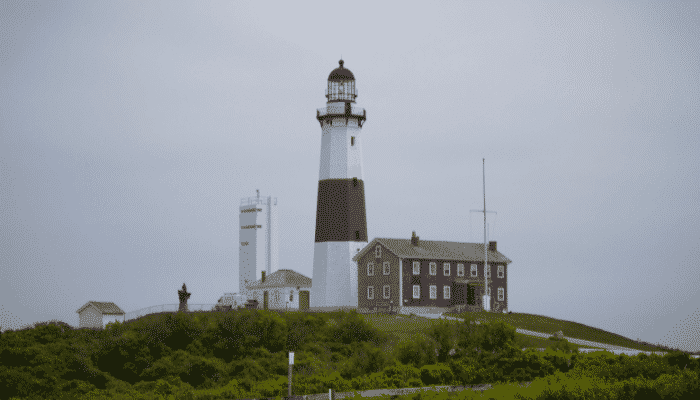
It also features exhibits showcasing the History of Montauk and its part in the Revolutionary War.
This 18th-century lighthouse overlooks the ocean, offering spectacular views. It has been a part of Long Island’s landscape for over 200 years and remains an important navigational tool for sailors.
The lighthouse tower is 34 m high and flashes light once every five seconds, which can be seen from 19 nautical miles. One can climb the 137 iron steps to enjoy the panoramic ocean views and the beautiful New York State coastline.
The museum is full of intriguing objects from the lighthouse’s past. It is open daily in summer and on the weekends in spring and November. The entrance fee is discounted for children and senior citizens.
2. Maritime Museum, Rotterdam
This historical museum in the Netherlands was established by Prince Henry in 1874. Next to the museum lies the Maritime Museum Harbour, which merged with the museum in 2014. The former has a unique collection of historic ships and cranes in remarkable condition.
The Museum has about 850,000 objects from 6 centuries, all portraying the rich maritime history. The changing exhibitions are categorised for three age groups, children, their parents and grandparents and showcase the maritime influence on our daily lives.

An important piece is the Mataro model, the oldest model ship in Europe. Other masterpieces include Itinerario by Jan Huygen van Linschoten, a travel journal, pen and ink drawings of Willem van de Velde, and Sea Charts by the Corpus Christi collection by Cartographer Joan Blaeu. This collection of East India Company charts was hidden in England for three centuries and was bought for millions by the Museum in 2006.
The Maritime Museum Rotterdam has evolved into a “Living Port” with the Leuvehaven redevelopment. The museum harbour now features operational steam tugs, 19th-century cranes and even grain elevators, so visitors don’t just see static objects but rather functional heritage. There are workshops where people can see shipwrights and blacksmiths working to maintain these old artefacts using traditional techniques.
This immersive approach ensures that the “smell of grease and steam” remains a tangible part of the city’s identity.
3. Norwegian Maritime Museum
This museum is situated at Bygdøynesveien on the Bygdøy peninsula in the western part of Oslo, Norway, near many other museums like the Viking Ship Museum and the Norwegian Museum of Cultural History.

It was founded in 1914 and was previously called Norsk Sjøfartsmuseum. There are exhibits on themes of coastal culture and maritime history, spanning topics like ship construction over different periods in history, fishing techniques, marine archaeology, etc.
It also has a collection of over 40 maritime paintings by distinguished artists. Ships Stavanger and Svanen are displayed. The former was designed by Colin Archer, while the 3-masted schooner Svanen was built in 1915-16 and was part of the Norwegian Merchant Fleet.
4. M/S Maritime Museum of Denmark
This maritime museum is located in the historic port city of Helsingør, Denmark and is said to be one of the oldest museums in the world.
It was established in 1915, and its collections depict Danish trade, maritime culture and shipping from the 15th century to the present. The museum was in Kronborg Castle but was shifted to a new underground space covering 7600 sq m. Designed by the Bjarke Ingels Group, this new space is centred around a former dry dock.
The museum has integrated 3D ship scanning technology into its exhibits, allowing visitors to see how vessels were constructed.
It houses model ships, a collection of over 33,000 photographs depicting almost all Danish vessels since 1880, paintings and other artefacts related to the Napoleonic Wars and Danish trade with India and China.

Galleries are also devoted to navigation, lighthouses, ship construction, the life of sailors and onboard equipment dating back to the 16th century.
5. Mystic Seaport Museum
Mystic Seaport Museum in Connecticut is the biggest maritime museum in the U.S, known for its vast collection of boats and sailing vessels. It comprises over 60 historic buildings, which were moved to the 19-acre site and restored.

Established as the Marine Historical Association in 1929, it gained fame after acquiring Charles W Morgan in 1914, the only surviving wooden whaling ship.
It was one of the first living history museums in the U.S. and continues to welcome about 250,000 people every year.
Mystic Seaport is focusing on long-term sustainability and environmental education, and is pioneering a model for sustainable maritime heritage, for preserving vessels like the Charles W. Morgan.
The Museum supports research through its library and runs the Frank C. Munson Institute of American Maritime Studies. It also conducts outreach programs, including history and sailing classes for the children in the nearby areas.
6. National Maritime Museum, Greenwich
The National Maritime Museum in Greenwich, London, is a part of the Royal Museums Greenwich. It was established within 200 acres in the Greenwich Royal Park in buildings previously occupied by the Royal Hospital School.
The museum is a cornerstone of “Maritime Greenwich,” a designated UNESCO World Heritage maritime site.

The Museum has over 2 million objects, including those depicting British maritime art and 17th-century Dutch Maritime art. There are manuscripts, official public records, plans, navigational instruments, ship models, timekeeping instruments, astronomical equipment, and much more. It also has paintings of Vice-Admiral Horatio Nelson and Captain James Cook.
The museum’s collection includes objects taken from the German Naval Academy Murwik after the Second World War. These included paintings, flags, models of ships, etc. Many criticise the museum for having what they call ‘looted art’; however, the museum regards them as ‘war trophies’.
It also has extensive digital maritime archives that allow researchers worldwide to trace merchant navy crew lists and 15th-century sea charts from the comfort of their homes.
7. Maritime Museum of San Diego
Established in 1948, the Maritime Museum of San Diego preserves one of the biggest collections of historic ships in the U.S. Its main attraction is the 1863 iron-hulled bark, the Star of India, the world’s oldest active sailing ship.

People are visiting the museum in 2026 to see this ship, which underwent preservation between 2024 and 2025 so that its 162-year-old hull can remain seaworthy.
Unlike most museum ships that are permanently grounded, the Star of India is maintained to sailing standard by a volunteer crew. Her 2025 birthday celebration marked her return to peak condition, reinforcing her status as a “living” vessel.
The museum also has a library onboard the 1898 ferryboat Berkeley, whose lower deck houses storerooms and workshops used to maintain the museum’s collection.
Some other prominent vessels in the museum’s collection include Californian, a replica of the 1847 cutter C.W Lawrence and the official tall ship of California.
The HMS Surprise, which is a 1970 replica of a Royal Navy Frigate, is popular among visitors, since it made an appearance in the movie Master and Commander: The Far Side of the World and also Pirates of the Caribbean: On Stranger Tides as the HMS Providence.
8. Vancouver Maritime Museum
This Museum presents the maritime history and heritage of Vancouver and the Canadian Arctic. It opened in 1959 and lies with Vanier Park west of False Creek on the Vancouver waterfront.

Its central attraction is the St.Roch, an Arctic exploration ship of the Royal Canadian Mounted Police. The Museum has many galleries of model ships, including a few made of cardboard and paper. It also has a bone model of the ship Vengeur du Peuple, built by French prisoners of war in the 1800s.
Among its outdoor supplies are the NASA research ship Ben Franklin and the boiler of the Pacific Northwest’s first steamship, the Beaver. It also has extensive material about the Canadian Pacific steamships and original hand-made charts from the exploration of Captain Cook in the Pacific.
There are workshops where people can watch the construction of ship models and replicas. The Museum also has a Children’s Maritime Discovery Centre.
9. Cantabrian Maritime Museum
The Cantabrian Museum in Santander Bay, Spain, was established as a tribute to this region’s rich maritime heritage since the sea has played a vital role in Santander’s history. The Museum was opened to the people in 1981; however, its origins go back to 1886.

Spread over 3000 square metres, the museum shows the relationship between man and the maritime world.
It is segregated into four sections depicting life at sea, fishermen and fisheries, the Cantabrian region and technological advancements. It has exhibits on shipbuilding, different kinds of local boats, navigation systems, water sports and cartography.
It also conducts temporary exhibitions and research projects ranging from investigations in marine biology to the use of sub-aquatic archaeology.
The museum’s research team has worked for years to protect the underwater cultural heritage, using advanced diving and sonar technology to investigate shipwrecks along the Cantabrian coast.
The main attraction is a whale skeleton and the giant squid. There are many models of ships and galleons going back to the 15th century. It also has an aquarium with local fish like sting rays, sharks and even turtles.
10. Australian National Maritime Museum
Designed by Philip Cox, this museum is situated in Darling Harbour, Sydney. It was scheduled to open in 1988; however, delays due to cost overruns and disagreements between the state and federal governments regarding funding pushed its opening to 1991.
It has seven main galleries that focus on the relations of Indigenous Australians with the sea, navigation in Australian waters, travel, and the naval defence of Australia.

Four additional galleries house temporary exhibits. It also has museum ships, the destroyer HMAS Vampire, submarine HMAS Onslow, and a replica of HM Bark Endeavour and Duyfken. Other historic ships are also berthed outside and can be seen, but not boarded by visitors.
The museum offers curator-led online exhibition tours, virtual talks, digital events, etc. One can also go on board or take a 360-degree virtual vessel tour.
In September 2026, the museum will host ICMM 2026 Sydney, the 22nd Biennial Congress. Under the theme “Maritime Museums in Action: Moving Forward with Courage and Conviction,” delegates from around the world will gather to address the industry’s most pressing challenges, including ocean literacy, the ethical preservation of underwater archaeology, and the integration of AI in collections care.
You might also like to read-
- The Biggest Maritime Museum in the World : The National Maritime Museum, UK
- 10 Best Maritime Museums in the World
- 5 Major U.S Aircraft Carrier Museum Ships
- The Museum Ship HMS Belfast
- 10 Buildings In The World Inspired By The Sails Of A Ship
Read on the original site
Open the publisher's page for the full experience