The Proof in the Code traces efforts to digitally verify mathematical truths
Our take
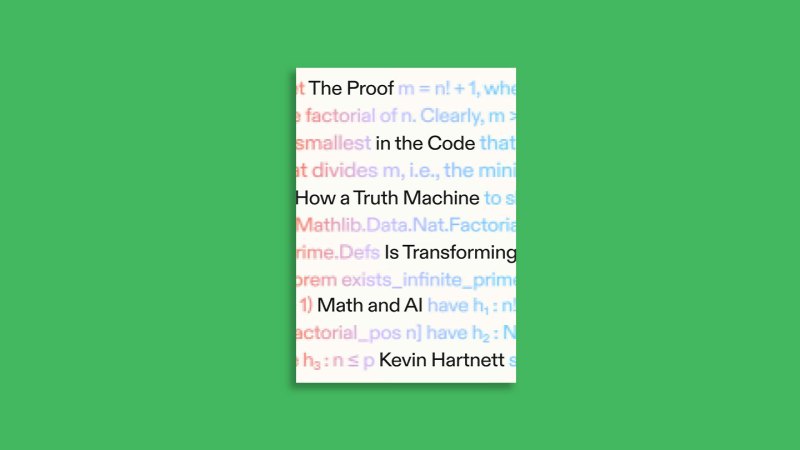
In a world increasingly reliant on technology, the intersection of mathematics and artificial intelligence (AI) offers profound implications for various fields, from scientific research to practical applications in computing. In his article, “The Proof in the Code,” journalist Kevin Hartnett delves into the transformative role that code-checking tools and AI play in verifying mathematical truths. This exploration is not merely an academic exercise; it represents a critical shift in how we approach complex problems, aligning with our broader commitment to innovation and global collaboration, much like the efforts seen in China’s Submerged AI Data Center Could ‘Influence Global Sustainable Computing’ and the advancements in threat intelligence as highlighted in Team Cymru Launches Pure Signal™ MCP Server, Bringing Agentic AI to the World’s Largest Threat Intelligence Data Ocean.
Hartnett’s discussion on code-checking tools reveals a pivotal trend in mathematics, where traditional methods of proof are being complemented or even supplanted by technological innovations. These tools not only confirm the validity of mathematical statements but also enhance the accessibility of complex concepts. By leveraging AI, mathematicians and researchers can tackle problems that were previously insurmountable, thus expanding the frontiers of knowledge. This evolution underscores the importance of integrated data ecosystems, where empirical evidence and real-time analysis converge to drive discovery. As we witness these changes, it is essential to recognize the broader implications for fields such as climate science, where accurate mathematical modeling can lead to better predictions and strategies for ocean stewardship.
Moreover, the accessibility of these tools democratizes mathematical inquiry, allowing a wider audience to engage with complex ideas. This shift is particularly relevant in an age where education and knowledge-sharing are paramount. The ease of verifying mathematical truths through code-checking not only empowers seasoned researchers but also invites students and enthusiasts to participate in this dialogue. It mirrors the ongoing conversations about intelligence in non-human species, as seen in discussions about sperm whales, where increased understanding of animal cognition can lead to enhanced conservation efforts. As Hartnett highlights the potential for AI in mathematics, we can extrapolate this to other domains, suggesting that similar technological advancements could foster a deeper understanding of our oceans and their ecosystems.
As we reflect on the implications of Hartnett's insights, it becomes clear that the integration of AI into the verification of mathematical truths is just the beginning. The potential for this technology to influence various sectors—from sustainable computing to environmental conservation—is substantial. As we consider the pathways ahead, one must ask: How will these advancements in mathematics and AI further our understanding of complex systems, not only in theoretical contexts but also in practical applications that impact our planet? The answers to this question could shape the next generation of innovation, underscoring the necessity for collaborative approaches to problem-solving in a rapidly evolving global landscape.
In conclusion, Hartnett’s exploration of code-checking tools and AI serves as a reminder of the power of technology to transform not just mathematics, but the very fabric of our understanding of the world. As we stand at the crossroads of innovation and responsibility, fostering a culture of inquiry and collaboration will be essential in tackling the challenges that lie ahead. The future may hold vast possibilities, but it will require our collective effort to navigate the complexities of knowledge and stewardship effectively.
Read on the original site
Open the publisher's page for the full experience