Rising seas could drown mangroves and release vast stores of carbon
Our take
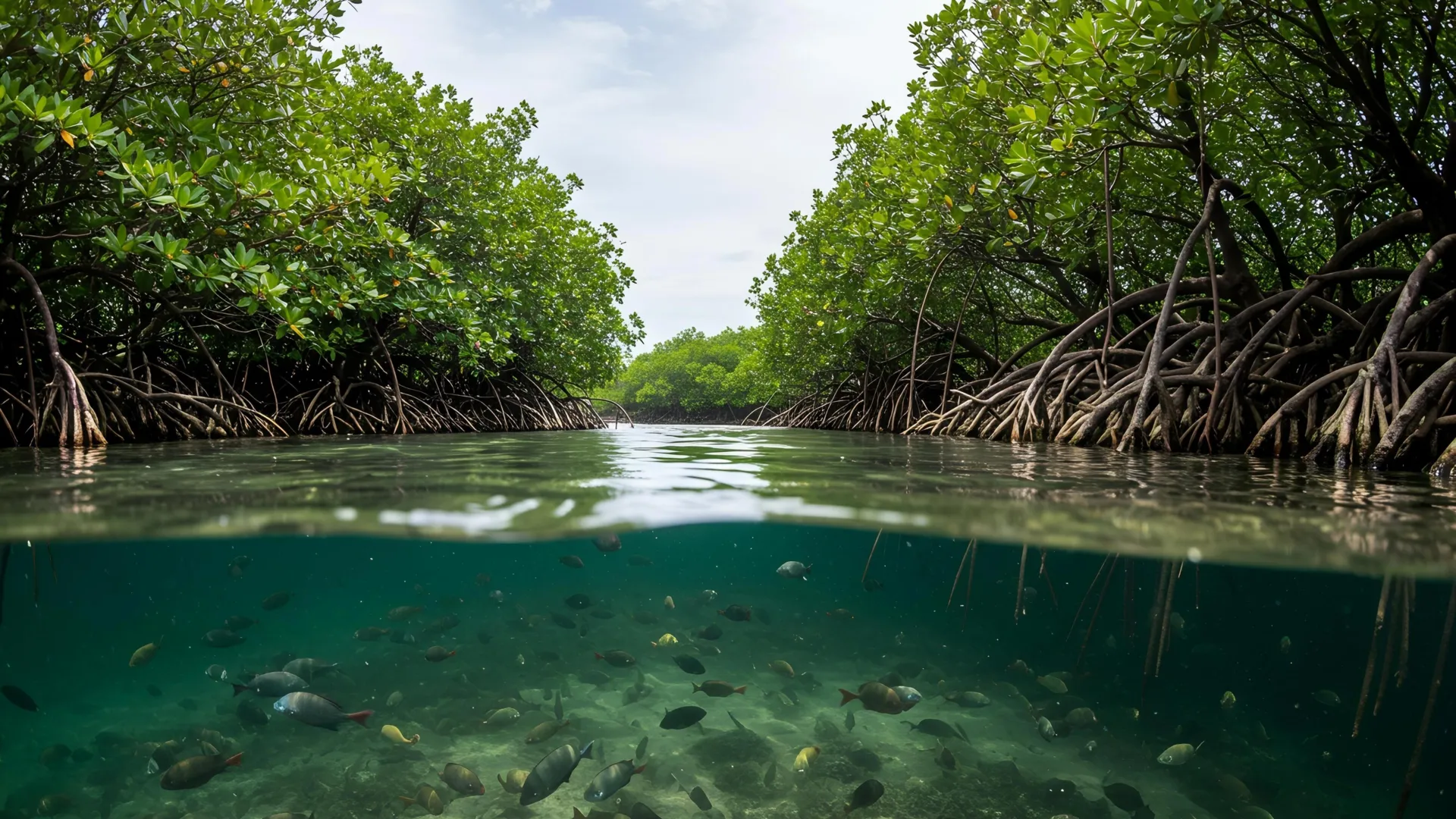
Mangrove forests have long been heralded as the “lungs” of our coastal zones, sequestering carbon at rates rivaling terrestrial rainforests and stabilising shorelines against erosion. Yet a recent peer‑reviewed analysis suggests that the very sea level rise that threatens to inundate low‑lying landscapes may paradoxically undermine this carbon‑sink function. As sea levels climb, the hydrological regime that sustains mangroves shifts from a controlled, periodic inundation to continuous flooding. When water remains above the canopy for extended periods, oxygen diffusion into the root zone is curtailed, leading to hypoxic stress, root rot, and ultimately mortality. The soils, rich in organic carbon, then become vulnerable to physical erosion or bioturbation, releasing stored carbon back into the atmosphere. This transformation from sink to source could ripple through global carbon budgets and destabilise climate mitigation pathways that rely on coastal ecosystems.
The implications extend beyond the carbon ledger. Mangroves are keystone habitats, supporting fisheries, protecting against storm surges, and fostering biodiversity. Their loss would therefore ripple through socio‑economic systems that depend on these services. Moreover, the study underscores the urgency of integrating real‑time ocean intelligence into coastal management. By monitoring sea level oscillations, salinity gradients, and sediment dynamics, we can calibrate adaptive strategies—such as elevating root systems, restoring sediment supply, or engineering controlled tidal flows—to preserve mangrove resilience. This aligns with our broader mission of fostering a collaborative, data‑driven approach to ocean stewardship, where empirical insights guide policy and practice in tandem.
Our own coverage has highlighted the technological frontier that makes such monitoring possible. In “Imagine a world where we can monitor the deepest corners of the ocean without ever leaving the shore,” we showcased how autonomous buoys and satellite swaths converge to deliver integrated data ecosystems. Similarly, “Ever wonder how we keep track of the ocean’s ‘rainforests’? Kelp forests are the unsung heroes of our coastlines” demonstrates how continuous, calibrated observations can illuminate subtle ecological shifts before they become catastrophic. These studies illustrate the power of longitudinal, real‑time datasets in predicting ecosystem thresholds and informing proactive interventions.
Looking ahead, the key question is how to translate these insights into scalable, policy‑ready tools. The study’s findings call for a paradigm shift where climate adaptation is embedded within coastal planning, not treated as an afterthought. Governments, NGOs, and private stakeholders must co‑create adaptive frameworks that allow mangroves to adjust their vertical growth trajectories in response to sea level trends. This could involve bioengineering techniques—such as transplanting seedlings to higher elevations—or sediment augmentation projects that mimic natural accretion processes. At the same time, international mechanisms must recognise mangroves as critical carbon stores, ensuring that carbon accounting frameworks capture both the sequestration benefits and the potential release risks highlighted by this research.
In sum, rising seas threaten to flip the narrative of mangroves from carbon sinks to carbon sources, a reversal that would undermine global climate targets and erode coastal resilience. By harnessing validated, integrated data streams and fostering cross‑sector collaboration, we can anticipate these tipping points and design interventions that keep mangroves alive and functional. The path forward demands that we treat ocean intelligence as a shared resource, calibrated through empirical rigor and deployed with purpose. As we refine our predictive models, the next critical step will be to ask: can we engineer mangrove ecosystems to rise with the sea, or must we redesign our coastlines altogether?
Read on the original site
Open the publisher's page for the full experience