NASA seems to be backing away from hunting for life on Mars
Our take
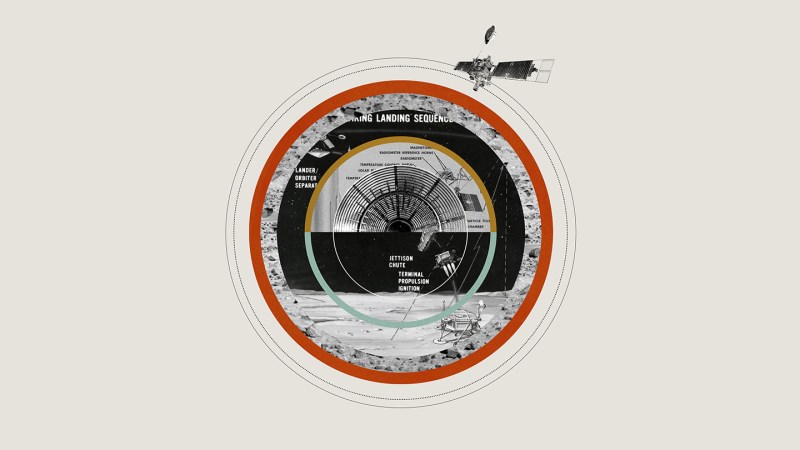
The recent news suggesting NASA is scaling back its direct pursuit of life on Mars, fifty years after the Viking 1 lander’s initial investigations, is a significant development worthy of careful consideration. While shifts in scientific priorities are commonplace, the implications for astrobiology and the broader search for extraterrestrial life are considerable. The refocusing of resources, reportedly towards robotic exploration and sample return missions without a dedicated life-detection instrument, signals a potential change in strategy, one that moves away from proactively seeking biosignatures and towards a more observational, data-gathering approach. This shift, while perhaps driven by budgetary constraints and the complexity of designing robust life-detection tools, risks missing potential discoveries that could fundamentally alter our understanding of life in the universe. It’s a reminder of the complex interplay between scientific ambition, technological feasibility, and political realities, a dynamic well-understood within the oceanographic community, as illustrated by efforts like Establishing a mechanism for the fair and equitable sharing of monetary benefits from the utilization of digital sequence information on marine genetic resources under the BBNJ Agreement, which highlights the challenges of balancing scientific exploration with equitable resource allocation.
The rationale behind this apparent pivot likely stems from the challenges encountered in interpreting the Viking results. While those experiments yielded intriguing, albeit ambiguous, data, definitive proof of Martian life remained elusive. Subsequent missions haven’t provided unequivocal evidence, leading some to question the value of dedicating extensive resources to a direct, and arguably difficult, search. However, dismissing the search for life entirely seems premature, especially given the ongoing discoveries of potentially habitable environments within our own solar system, from subsurface oceans on Europa and Enceladus to the possibility of past or present life in Martian aquifers. The complexities of detecting life – particularly life that may be drastically different from terrestrial organisms – are immense and require innovative approaches. Understanding the long-term consequences of environmental stressors on marine life, such as those explored in Short-term mechanisms, long-term consequences: transcriptomic insights into ocean acidification tolerance and stress in juvenile snow crab, provides valuable insight into how organisms adapt to extreme conditions, a knowledge base potentially applicable to understanding Martian life.
The decision also raises broader questions about the scope and direction of space exploration. Should NASA prioritize missions designed to return samples for detailed analysis on Earth, even if those samples aren't actively screened for life in situ? Or should it continue to invest in instruments specifically designed to detect biosignatures, even if the probability of success is uncertain? A balanced approach, integrating both strategies, might be the most prudent path forward. The imperative to protect genetic resources, exemplified by initiatives like ShellBank: traceability toolkit and global database of marine turtle DNA, underscores the importance of developing comprehensive data management and analysis tools – a lesson directly transferable to astrobiology. Effective data integration and rigorous validation are paramount, especially when dealing with potentially groundbreaking discoveries. The historical context of Viking, and the subsequent scrutiny of its results, serves as a potent reminder that claims of life beyond Earth require an exceptionally high degree of scientific rigor.
Ultimately, the scaling back of NASA’s dedicated Martian life-detection efforts represents a strategic recalibration, not necessarily a complete abandonment of the search. The agency’s focus on sample return missions, while not explicitly designed to hunt for life, could still yield unexpected discoveries if researchers carefully analyze the returned samples for subtle signs of past or present biological activity. The scientific community’s response will be critical, as will the ongoing development of innovative technologies capable of detecting extraterrestrial life in increasingly challenging environments. The question remains: will the redirection of resources inadvertently hinder the search for one of the most profound discoveries imaginable, or will it ultimately lead to a more robust and insightful understanding of our place in the cosmos?
Read on the original site
Open the publisher's page for the full experience