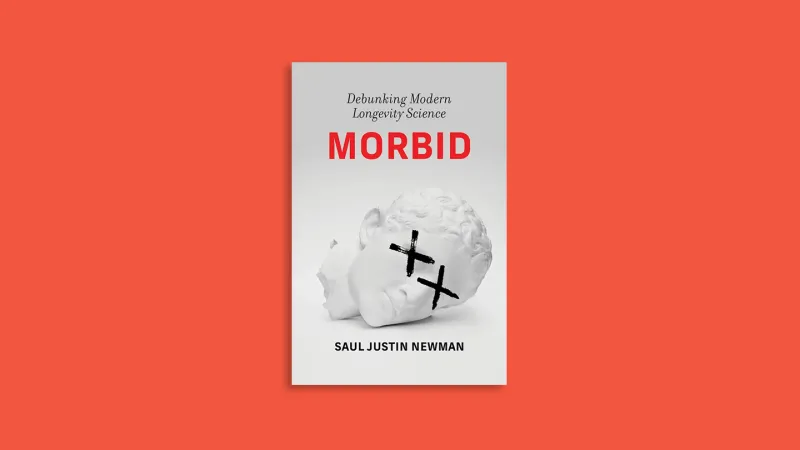
In a world increasingly obsessed with longevity and antiaging solutions, scientist Saul Justine Newman’s new book serves as a critical counterpoint to the hype that often surrounds this burgeoning industry. By debunking high-profile longevity research and the so-called "antiaging medicine," Newman invites us to scrutinize the empirical validity of claims that promise to extend our lifespans. This conversation is not just about individual health, but the broader implications for society, science, and how we approach the future of human life. It's a timely discussion, especially in an era where scientific integrity can sometimes be overshadowed by marketing buzz and sensationalism, echoing themes seen in our articles on citizen science and marine biodiversity, such as High-accuracy fish species identification using transfer learning on vision foundation models and Autonomous marine sensing.
Newman’s work emphasizes the necessity of rigorous, validated research in a field that often leans heavily on anecdotal evidence and celebrity endorsements. As the scientific community grapples with the complexities of aging and longevity, it is essential to distinguish between empirical data and marketing narratives that frequently capitalize on public anxieties about growing older. This distinction is not merely an academic exercise; it impacts public policy, funding for research initiatives, and ultimately the perception of what is feasible in the realm of health and wellness. In a time when misinformation can spread rapidly, Newman's insistence on a fact-based approach is a call to action for both scientists and consumers. It reminds us that our collective understanding of complex systems, much like those we see in ocean ecosystems, relies on validated and longitudinal studies.
Moreover, the implications extend beyond individual health to the fabric of our society. As we confront global challenges, including climate change and resource depletion, the urgency for credible science becomes ever more apparent. The conversation around aging intersects with broader societal issues, such as healthcare access and the economic burden of an aging population. By advocating for a more discerning approach to the claims surrounding antiaging, Newman encourages a culture of accountability and transparency that is essential for effective governance and policy-making. This mirrors the collaborative spirit we see in initiatives aimed at enhancing ocean health, such as those highlighted in our article on High-accuracy fish species identification using transfer learning on vision foundation models.
Looking ahead, the challenge lies in fostering a scientific dialogue that prioritizes evidence over hype across various fields, including both health and environmental sciences. As society becomes increasingly reliant on technology and innovation, it is crucial to remain vigilant about the narratives we propagate. The urgency of Newman's message is clear: we must question and analyze the information presented to us, ensuring that our decisions are rooted in credible science rather than sensationalism. As we continue to explore the intersections of health, technology, and environmental stewardship, one might ponder: how can we better integrate empirical research into public discourse to foster a more informed and responsible society? This remains a pivotal question that warrants our attention as we navigate the complexities of the future.