Israel Locates Wreck Of Arms-Smuggling Ship Sunk Off Mediterranean Coast After Deadly 1948 Clash
Our take
The recent discovery of the wreck of the *Altalena*, a vessel central to a pivotal and tragic moment in Israeli history, underscores the enduring complexities of maritime security and historical memory in the region. The ship, sunk in 1948 during a clash between Jewish factions amidst the nascent state's formation, carried weapons intended for the Irgun, a Zionist paramilitary organization. The event remains a source of contention and historical debate within Israel. The recovery of the wreck, located off the Mediterranean coast, represents a significant archaeological and historical find, offering potential insights into the ship’s construction, cargo, and the circumstances surrounding its sinking. This echoes recent discussions around regional maritime routes, as seen in [Iran, Oman Discuss Temporary Shipping Corridor Through Strait Of Hormuz], highlighting the persistent need for secure and navigable waterways in a volatile geopolitical landscape. Further, the recent acquisition of a German-built submarine by Israel, detailed in [Israel Receives Largest German-Built Attack Submarine Since WWII Worth $634 Million], demonstrates the nation’s continued investment in naval capabilities and its strategic focus on maritime defense.
The *Altalena* incident serves as a stark reminder of the internal conflicts that shaped Israel’s early years, a period characterized by immense political and military upheaval. Understanding the historical context is crucial for interpreting the current maritime security environment. The ship’s sinking, and the subsequent loss of life, contributed to deep divisions within the Jewish community and influenced the political trajectory of the new nation. The discovery of the wreck allows for a more tangible connection to this history, potentially prompting renewed examination of the events and their long-term consequences. The incident also provides a lens through which to examine the broader dynamics of arms smuggling and the challenges of controlling weapons flows in conflict zones, a concern that resonates with contemporary issues such as the recent attacks in the Red Sea, prompting calls for increased naval presence as detailed in [Indian Seafarers Union Urges PM Modi To Deploy Navy Warships After Red Sea Attack On Indian Ship]. The recovery effort itself will require careful coordination and technological expertise, highlighting the advancements in underwater archaeology and marine surveying.
From a broader perspective, the *Altalena* discovery exemplifies the intersection of historical narratives, maritime archaeology, and contemporary geopolitical concerns. The Mediterranean Sea has long been a crossroads of civilizations and a theater of conflict, and the wreck serves as a tangible link to this rich and often turbulent past. The technological capabilities required to locate and potentially salvage artifacts from the wreck – including sonar, remotely operated vehicles (ROVs), and advanced imaging systems – represent a significant evolution in underwater exploration. The data collected from the site will likely be analyzed using integrated data ecosystems and calibrated to provide a validated and measurable record of the ship’s final moments, furthering our understanding of naval history and maritime engineering practices of the era. The implications extend beyond historical analysis; it also reinforces the importance of ocean intelligence and the ability to monitor and understand activities beneath the surface.
Looking ahead, the recovery and preservation of artifacts from the *Altalena* wreck present both opportunities and challenges. The potential for public display and educational programs is considerable, but so is the responsibility to manage the site with sensitivity and respect for the historical significance of the event. The discovery raises a broader question: how can we leverage technological advancements to not only locate and document submerged historical sites but also to interpret and share their stories in a way that promotes understanding and reconciliation? The ongoing development of real-time data collection and analysis capabilities in maritime environments will be crucial for addressing these challenges and ensuring that these invaluable historical resources are protected for future generations.
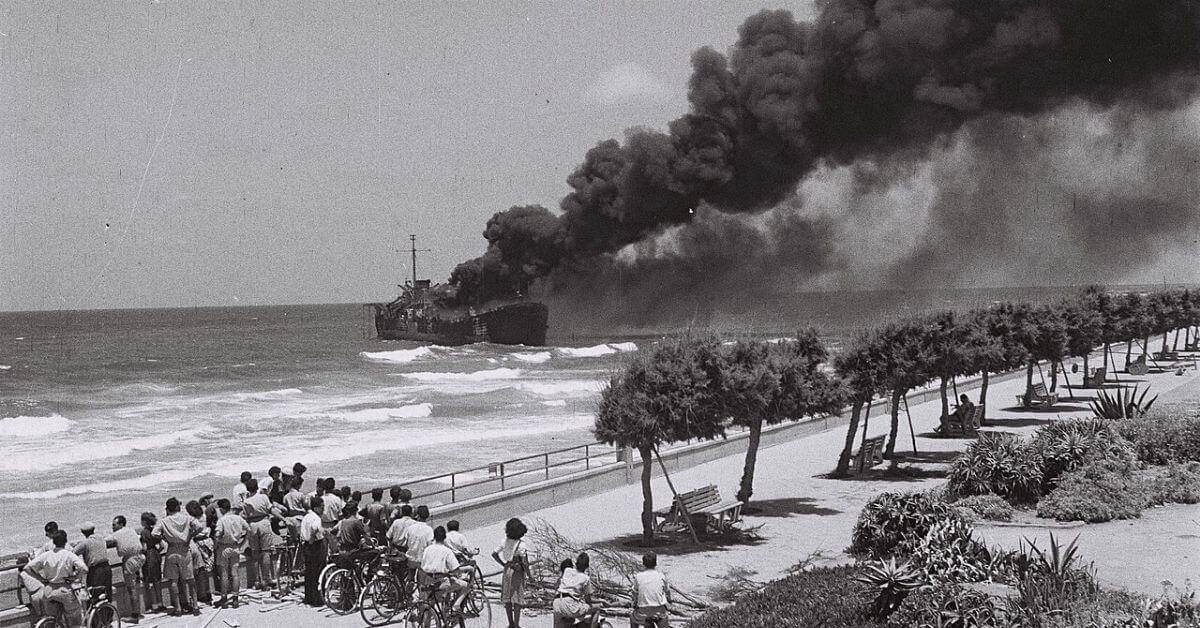
Israel has found the wreck of the Altalena, an arms ship that was sunk in 1948 after a deadly clash between Israel’s newly formed military and the right-wing Irgun militia.
The wreck was found 78 years later at a depth of 503 metres off Israel’s Mediterranean coast.
The discovery comes less than two months before Israel’s legislative elections on Oct. 27 and has brought the long-running dispute over the Altalena back into the political debate.
Heritage Minister Amichai Eliyahu and National Security Minister Itamar Ben-Gvir announced the discovery. Eliyahu said the ship was found intact at 12:30 a.m.
Prime Minister Benjamin Netanyahu praised the discovery. Netanyahu’s Likud party was founded by Menachem Begin, the Irgun leader who was involved in the Altalena affair.
Why the Altalena was sunk?
The Altalena left Marseille, France, in June 1948 carrying weapons, Jewish immigrants and fighters for the Irgun, a militant Zionist group.
The ship carried about 5,000 rifles, 450 machine guns and carts of ammunition. The weapons were meant for the Irgun, which had previously attacked British authorities and Palestinians.
At the time, Israel had just been established and was fighting neighbouring Arab countries. David Ben-Gurion, Israel’s first prime minister, was trying to bring the Jewish militias under one national military.
The Haganah, the main Jewish paramilitary force before Israel was established, became the core of the Israel Defense Forces.
The Irgun was also ordered to disband. However, Irgun representatives in Paris continued with the Altalena mission.
When Ben-Gurion learned about the weapons shipment, he ordered the ship and its cargo to be handed over to the new Israeli army. He wanted to prevent another armed group from challenging the authority of the new state.
Irgun leader Menachem Begin asked for some of the weapons to be given to Irgun units in Jerusalem.
16 Irgun members and three Israeli soldiers were killed. Begin then ordered his fighters to surrender. He said: “There will be no civil war with the enemy at our gates.”
Historians have said the confrontation could have developed into a civil war, but Begin’s decision helped prevent that from happening.
Ship was later sunk at sea
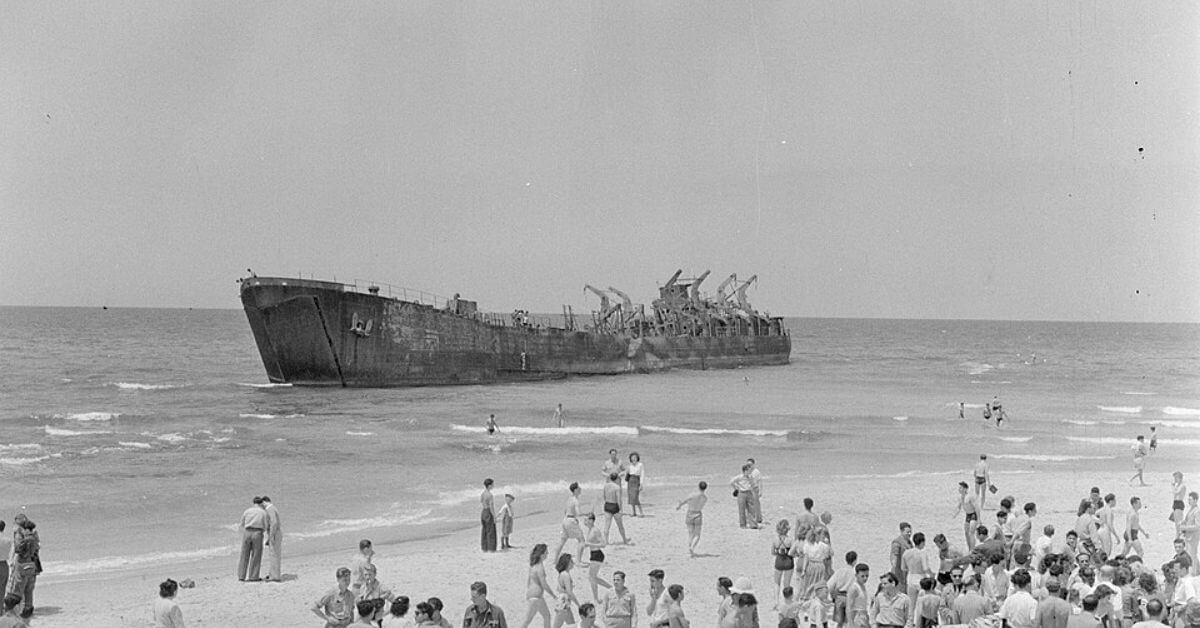
The Altalena was damaged during the fighting and remained off the Tel Aviv coast for nearly a year.
In 1949, it was refloated and towed about 15 miles out to sea before being sunk. The incident became a symbol of the political divide between Israel’s left and right.
Ben-Gurion accused the right of encouraging violence and attempting a coup, while the right accused the left of trying to remove its political opponents, according to University of Haifa historian Ofira Gruweis Kovalsky.
Begin became prime minister in 1977, marking the rise of Israel’s nationalist right and the decline of Ben-Gurion’s socialist camp.
The Altalena has remained an important symbol for Israel’s right.
In 2008, Israel built a monument on the Tel Aviv seafront to honour those killed in the Altalena affair. The country had also spent years searching for the wreck, including through some secret searches.
Discovery becomes part of election debate
The discovery has faced criticism from historians and commentators who say the Altalena is being used for political purposes ahead of the election.
Haaretz said the timing gave Netanyahu a chance to bring the old dispute back into the political debate and criticise the Israeli left.
Netanyahu has said he wants to raise the ship from the seabed and turn it into a symbol for future generations.
Historian Saul Friedlander has criticised the political use of the Altalena’s history.
Friedlander, a Holocaust historian, was 15 when he boarded the Altalena while trying to move to Israel. He was the only member of his family to survive World War Two. He was also a member of Habonim, a Zionist youth movement linked to Ben-Gurion.
Friedlander said the Altalena should not be used as election propaganda by the political right. He also said Begin had agreed to disband the Irgun and integrate its members into the Israeli military.
Can the wreck be raised?
Finding the Altalena does not mean that the ship can easily be brought back to the surface.
Ehud Galili, a maritime archaeology expert at the University of Haifa, said raising the ship would be very difficult and expensive.
The vessel weighs about 18,000 tonnes and appears to be partly buried in the clay seabed, Galili said.
He added that Israel does not currently have the equipment needed to carry out the operation.
How Israel found the Altalena?
Israel’s Heritage Ministry spent 1 million shekels, about $296,000, on the search for the wreck.
The ministry hired the Israel Oceanographic and Limnological Research Institute through the Survey of Israel, the state agency responsible for mapping.
Israel’s national research vessel, the Bat Galim, was used in the search with advanced technology to find the wreck.
References: france24, cbsnews
Read on the original site
Open the publisher's page for the full experience