How real is the Cyclops in ‘The Odyssey’?
Our take
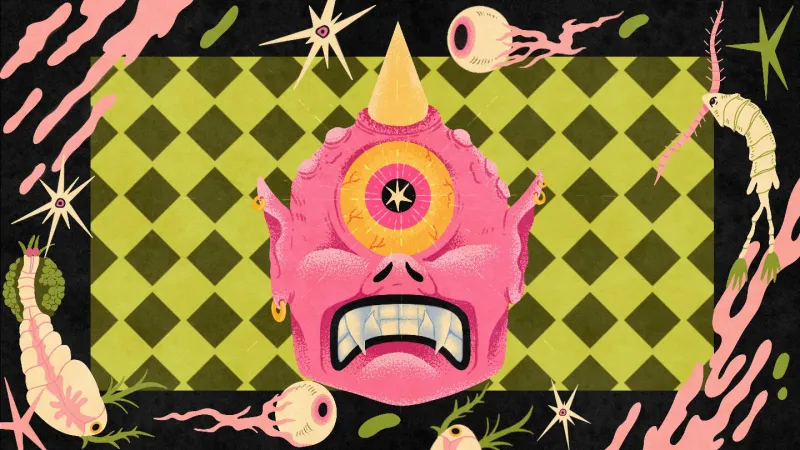
The resurgence of classical mythology in popular culture, exemplified by the upcoming film adaptation of *The Odyssey*, provides a fascinating lens through which to examine the intersection of ancient narratives and modern scientific understanding. The article’s central point – that the Cyclops, a monstrous figure of legend, may find a surprising parallel in the world of marine biology – is a compelling example of this convergence. It’s a reminder that even the most fantastical depictions of the natural world often contain echoes of real phenomena, albeit filtered through the prism of cultural storytelling. This echoes explorations of educational pathways found in articles like Transfer to some Institution in Florida, where individuals seek to understand established systems and find their place within them, just as scholars are now attempting to contextualize ancient myths. The notion that a being described as a giant, one-eyed humanoid might be inspired by observations of small crustaceans with single, prominent eyes is a testament to the human tendency to interpret the unfamiliar through existing frameworks.
The historical and cultural significance of the Cyclops myth is undeniable. Homer’s portrayal served as a potent symbol of the “other,” representing the dangers and unknowns encountered in exploration and expanding human territory. To now suggest that this fearsome creature might have roots in the observation of, say, ostracods – tiny, shelled crustaceans – is not to diminish the myth’s power, but rather to enrich our understanding of its origins. It highlights the potential for early seafarers and observers of the natural world to have incorporated real-life encounters into their narratives. Moreover, the very act of searching for scientific parallels to mythological figures demonstrates a commitment to rigorous investigation and a willingness to challenge established interpretations. It’s a process not unlike the exploratory missions documented in our “Beach Walk” piece Beach Walk, where careful observation of the environment can yield unexpected discoveries. The article's focus on the link between myth and observable reality underscores the importance of integrating diverse perspectives—scientific, historical, and cultural—to build a more comprehensive picture of our world.
The implications extend beyond simply understanding the origins of a single myth. It speaks to a broader pattern of how humans have historically used storytelling to grapple with the complexities of the natural world. Ancient narratives, often imbued with symbolic meaning, frequently reflect observations of animal behavior, geological formations, and oceanic phenomena. Deciphering these embedded clues requires a multidisciplinary approach, blending literary analysis with scientific inquiry. Consider, for instance, the challenges of accessing and interpreting data in a rapidly expanding digital landscape, as explored in VIMS. Just as ancient storytellers synthesized observations into compelling narratives, modern researchers are tasked with integrating vast datasets to discern patterns and draw meaningful conclusions. The parallels are striking: both endeavors require careful observation, critical analysis, and a commitment to clarifying complexity.
Ultimately, the re-evaluation of the Cyclops myth through a biological lens offers a valuable lesson in humility and intellectual curiosity. It reminds us that even the most seemingly fantastical tales can contain kernels of truth, and that the boundaries between myth and reality are often more porous than we might initially assume. As we continue to explore the vast and often mysterious ocean, a realm that served as inspiration for countless myths and legends, a crucial question emerges: what other fantastic creatures of folklore might have roots in real-world marine life, and what new insights into the natural world will be unlocked as we continue to investigate these connections?
Read on the original site
Open the publisher's page for the full experience