Engineered hookworms could one day dispense drugs from inside your gut
Our take
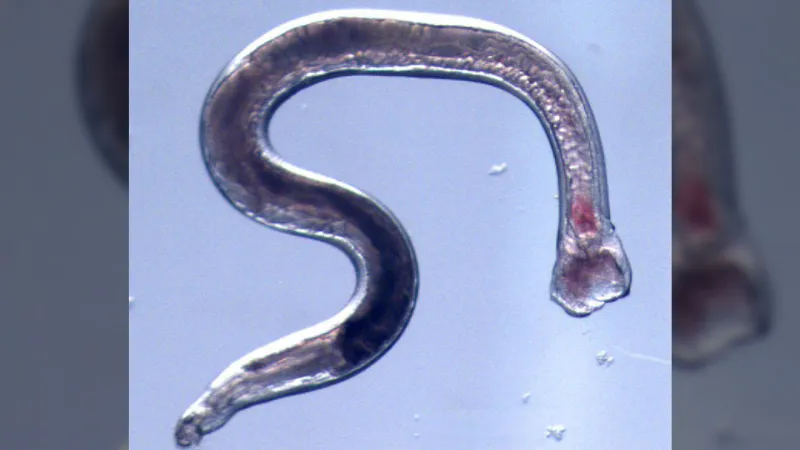
## Our Take: The Curious Promise of Parasitic Pharmacies
The recent announcement of genetically modified hookworms capable of acting as living drug delivery systems represents a genuinely intriguing, albeit unconventional, advancement in biomedical engineering. While the concept might initially provoke a visceral reaction, the underlying science holds significant potential, particularly for addressing challenges in drug administration and treatment of localized diseases. Researchers have successfully modified *Necator americanus*, a species typically associated with human infection, to express and release specific proteins. This initial demonstration, while preliminary, paves the way for a future where parasitic organisms could be harnessed to deliver targeted therapies directly within the gastrointestinal tract and potentially beyond. The implications extend far beyond simply replacing pills; this approach offers the possibility of sustained, localized drug release, minimizing systemic exposure and maximizing therapeutic efficacy. For those interested in the broader applications of genetic engineering in biological systems, examining recent work on engineered probiotics – bacteria designed to perform therapeutic functions within the gut – offers a useful comparison Engineering Probiotics. Furthermore, understanding the existing challenges and successes in targeted drug delivery systems, such as nanoparticles, provides a valuable context for evaluating the potential of this novel approach Targeted Drug Delivery.
The concept of utilizing parasites for therapeutic purposes isn't entirely new; helminthic therapy, the deliberate infection with parasitic worms, has shown surprising efficacy in treating certain autoimmune diseases. However, this engineered approach represents a significant departure, moving from a therapeutic effect derived from the parasite's presence to a precise, programmable drug delivery system. The crucial distinction lies in the degree of control. Traditional helminthic therapy relies on the host’s immune response to the parasite, a complex and often unpredictable process. Genetic modification allows for a calibrated and predictable release of therapeutic agents, opening up possibilities for treating conditions that are currently difficult to manage. The validation of this technique, of course, hinges on rigorous testing to ensure both efficacy and safety. Addressing the potential for unintended consequences, such as the parasites reverting to their original parasitic behavior or triggering unforeseen immune responses, will be paramount. The specific choice of *Necator americanus* is also noteworthy, given its relatively short lifespan and established understanding of its life cycle – factors that contribute to manageability during research and potential clinical application. Consider for example, the comparative research surrounding genetically altering other parasites, and the ethical considerations that arise Parasite Genetic Modification.
Looking beyond the immediate implications for gastrointestinal diseases, the potential for expanding this technology to other areas is considerable. While delivering drugs directly within the gut is the initial focus, researchers are already exploring the possibility of engineering parasites to migrate to other tissues and release their therapeutic payload there. This could revolutionize the treatment of localized cancers, inflammatory diseases, or even neurological disorders by enabling targeted drug delivery directly to the affected site. The integrated data ecosystem that supports advancements like this – encompassing genomics, proteomics, and detailed physiological modeling – is critical to both accelerating discovery and ensuring responsible development. The ability to analyze longitudinal data from both parasite and host systems will be essential for understanding the long-term effects and optimizing therapeutic strategies. Such integration requires robust, validated methodologies and careful calibration to accurately reflect biological realities. The empirical nature of this research, demanding rigorous validation and peer-reviewed publication, is essential to build trust and ensure its responsible application.
Ultimately, the prospect of parasitic pharmacies raises profound questions about our relationship with the natural world and the innovative ways we can leverage biological systems for human benefit. While significant challenges remain – addressing biosecurity concerns, refining drug release mechanisms, and proving long-term safety – the initial success in genetically modifying hookworms represents a compelling proof of concept. The question now becomes: how can we responsibly cultivate this nascent field, ensuring that the pursuit of therapeutic innovation doesn't compromise the integrity of our ecosystems or the well-being of future generations?
Read on the original site
Open the publisher's page for the full experience