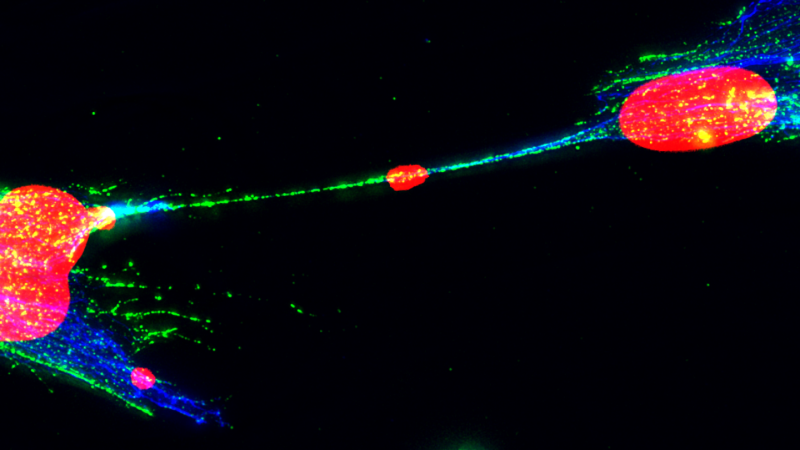
The recent discovery that damaged DNA can travel between human cells via tunneling nanotubes presents a compelling avenue for understanding cancer's intricacies. This phenomenon suggests that tumor DNA may not remain isolated within malignant cells but could spread to healthy cells, potentially altering their genetic makeup and contributing to tumorigenesis. This insight raises critical questions about the mechanisms of cancer progression and highlights an urgent need for further research in cellular communication.
Understanding the implications of such intercellular DNA transfer is crucial, as it can reshape our approaches to cancer treatment and prevention. For instance, if tumor DNA can instigate changes in surrounding healthy cells, it underscores the importance of early detection and targeted interventions. This finding echoes broader themes in biological research, such as those explored in our articles on the genetic diversity of cetaceans through environmental DNA sampling, as well as the establishment of global DNA barcode reference libraries for marine mollusks like Solenogastres. These studies illustrate the interconnectedness of genetic research across various species and environments, emphasizing the significance of comprehensive genetic understanding in both marine and human health.
The mechanisms by which DNA travels through tunneling nanotubes also highlight the sophisticated communication systems at play in biological organisms. Traditionally, cancer research has focused on the mutations and behavior of individual cells, but this new understanding suggests a more collaborative aspect of cellular behavior. Cells are not merely isolated entities; they interact and influence one another in complex ways. This interconnectivity could necessitate a paradigm shift in how we approach cancer therapies, moving towards strategies that consider the cellular ecosystem rather than targeting singular cells in isolation.
In the broader context of biological research, this revelation could have significant implications beyond cancer. It prompts a reevaluation of how we perceive genetic information exchange and its potential consequences for health and disease. As seen in our recent exploration of biodiversity and the ecological implications of Sargassum dynamics, understanding the nuances of genetic interactions can lead to more sustainable practices and innovative solutions in environmental management. The parallels between these studies underscore the importance of a holistic approach to scientific inquiry, where insights from one domain can inform another.
Looking ahead, the challenge remains: how will the scientific community leverage this knowledge to develop effective treatments? Will we see an increase in research focused on intercellular communication pathways, or will this discovery be relegated to a niche area of study? As we continue to unravel the complexities of cellular interactions, it becomes imperative to foster collaboration across disciplines. The intersection of genetics, ecology, and cancer research presents a rich landscape for innovation, and the potential outcomes could redefine our understanding of health and disease. This is a pivotal moment for scientists and medical professionals alike, as the implications of tunneling nanotubes and DNA transfer could lead to groundbreaking advancements in how we diagnose and treat cancer, ultimately shaping the future of medicine.