China Tests Deep-Sea Rocket Engines To Launch Nuclear Missiles From The Ocean Floor
Our take
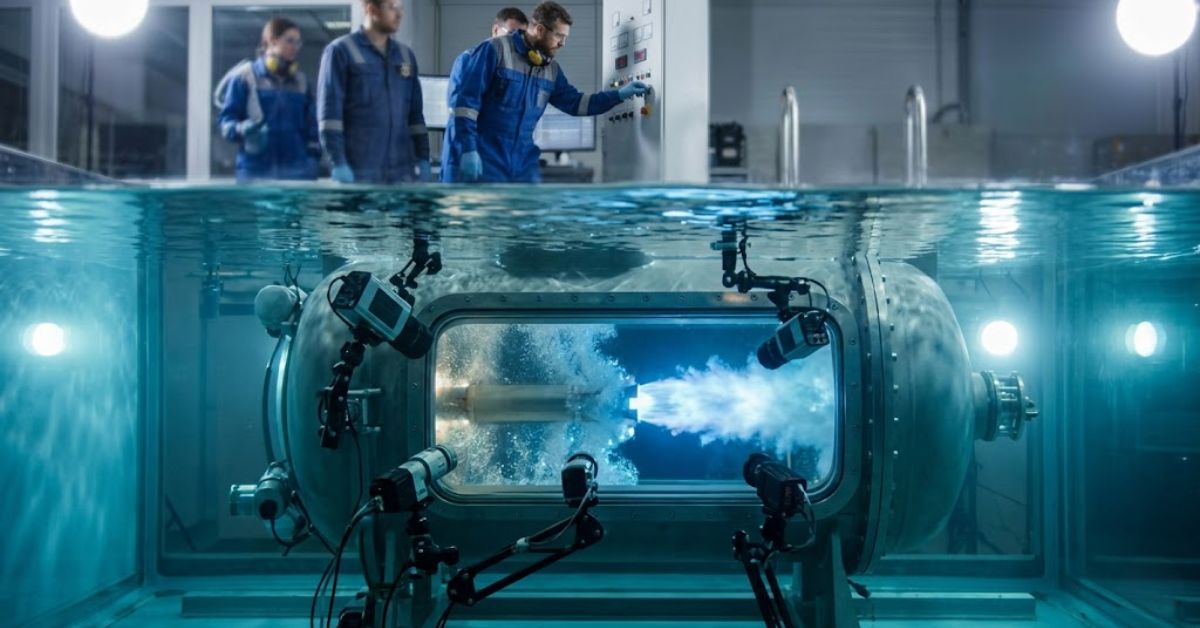
Researchers from the Mechano-Electrical Engineering Institute in Zhengzhou, China, tested a solid rocket engine under simulated pressures of 200 m underwater.
For this experiment, a system was created using compressed air and pressure tanks to recreate the crushing weight of the deep ocean, and it showed that reliable ignition and stable thrust are possible to achieve at such depths.
Ballistic Missiles, Julang or Trident, can only be launched from shallow waters; firing them from deeper waters can be advantageous, as the enemy cannot quickly track the exact submarine launch position.
SLBMs are important for nuclear deterrence, but launching them is difficult since they need a stable ascent and ignition to fight the forces of the ocean.
These systems are presently restricted to firing from shallow depths of 30 metres.
However, Chinese researchers are testing whether these weapons can be launched from greater ocean depths.
If successful, strategic regions like the South China Sea could become underwater launch platforms, boosting China’s naval capabilities, stealth and nuclear deterrence.
However, given the costs, tests of the new technology are being conducted at shallow depths of around 100 metres.
Additionally, solid rocket engines are the perfect source of power for naval weapons like deepwater missiles and guided mines.
The study also aimed to validate the feasibility of a new class of weapons permanently stationed on the deep seabed.
The experiment findings, published in the journal Tactical Missile Technology, are crucial for constructing safe and powerful engines for future submarine missiles and weapons that can be deployed on the ocean floor.
Read on the original site
Open the publisher's page for the full experience