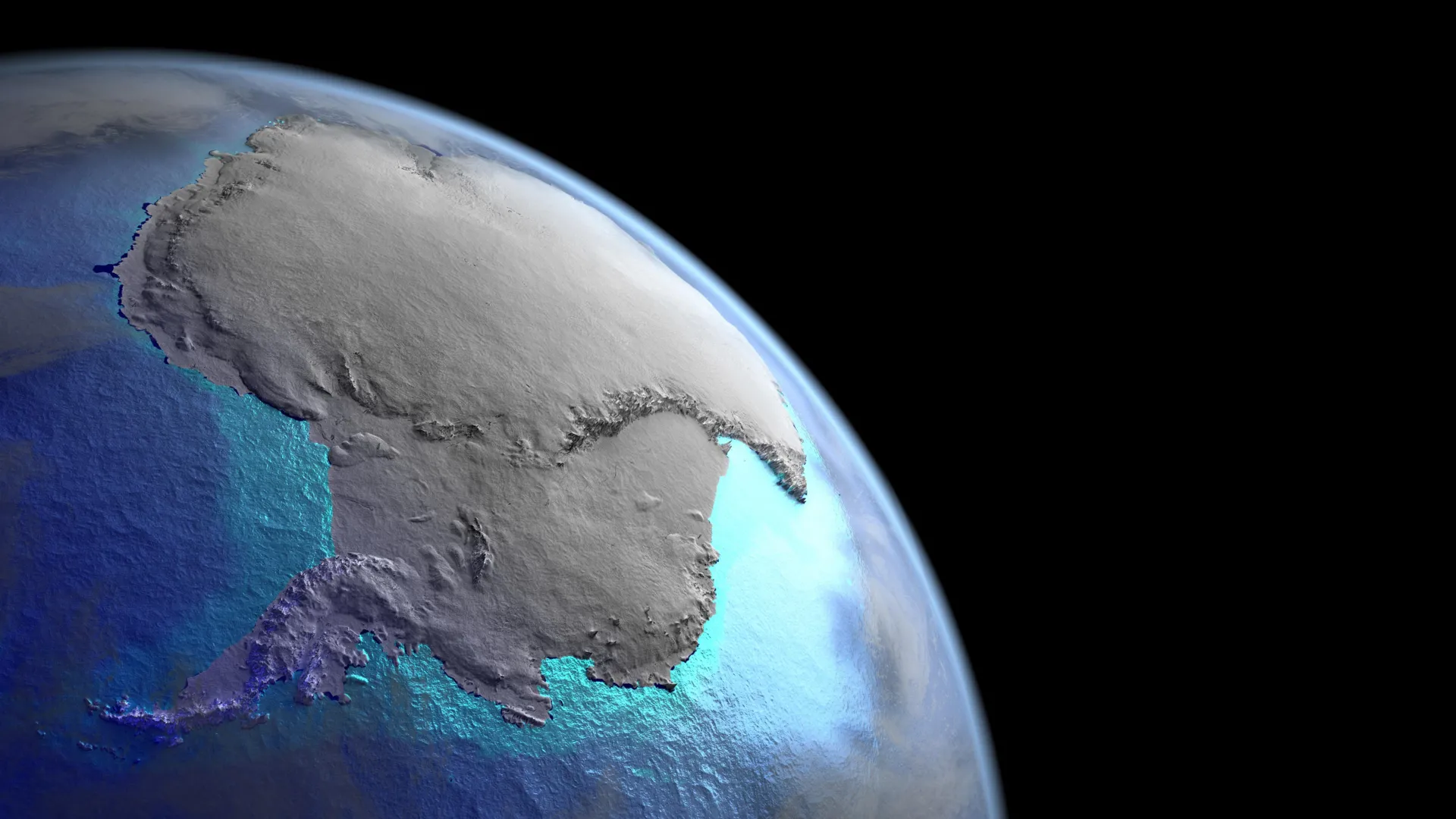
The recent discovery detailing the cause of Antarctica’s enigmatic “gravity hole” represents a significant advancement in our understanding of Earth’s deep interior dynamics, and highlights the power of innovative data analysis techniques. While the concept of variable gravity across the planet is established, pinpointing the origins of such anomalies has historically proven challenging. This research, leveraging earthquake data to generate a planetary "CT scan," provides unprecedented insight into the slow, tectonic processes occurring tens of millions of years ago. It’s a compelling illustration of how seemingly disparate fields – seismology, geophysics, and gravitational studies – can be integrated to reveal fundamental truths about our planet. The methodologies employed here resonate with World Data Ocean’s commitment to integrated data ecosystems, allowing for a more holistic and calibrated view of Earth's systems. Considering the broader challenges of ocean health, understanding these fundamental geological processes is crucial for accurately modeling and predicting future climate impacts, as evidenced by the urgent need to address plastic waste discharge to the global ocean [Plastic waste discharge to the global ocean constrained by seawater observations - Nature].
The finding that this gravity anomaly strengthened between 50 and 30 million years ago underscores the dynamic and evolving nature of Earth's mantle. The researchers’ reconstruction of this period suggests substantial shifts in mantle density and composition, likely driven by the subduction of tectonic plates. It’s important to note that this isn’t a sudden event; it’s the culmination of processes unfolding over vast geological timescales. Such long-term perspectives are essential for interpreting contemporary observations and developing robust predictive models. The sheer scale of these deep-Earth processes dwarfs many of the human-driven changes occurring on the surface, though the interplay between the two remains a critical area of investigation. This research also builds upon the understanding of the ocean's vastness and its complex systems, as detailed in "Top 10 Things You Didn’t Know About the Ocean - USGS (.gov)". Further research into how these deep-Earth processes influence surface phenomena, such as ocean currents and glacial stability, promises to reveal even more interconnected facets of the Earth system.
The innovative use of earthquake data to image the Earth’s interior is particularly noteworthy. Traditional methods often rely on seismic waves generated by artificial sources, which have limitations in terms of resolution and coverage. Utilizing naturally occurring earthquakes provides a more comprehensive and potentially higher-resolution view, effectively bypassing some of those limitations. The ability to “see” within the Earth in this way unlocks new avenues for investigating mantle convection, plate tectonics, and the distribution of materials within the planet. This resonates with World Data Ocean's dedication to forward-thinking technological innovation and leveraging real-time data for comprehensive Earth observation. Moreover, the implied process of data validation and peer-reviewed analysis solidifies the importance of empirical evidence in understanding complex systems, a principle exemplified in ongoing efforts addressing the Great Pacific Garbage Patch [The Great Pacific Garbage Patch - The Ocean Cleanup].
Looking ahead, the implications of this discovery extend beyond simply resolving a gravitational anomaly. It emphasizes the need for continued investment in deep Earth monitoring and advanced data analysis techniques. What other hidden dynamics are shaping our planet, operating on timescales beyond human comprehension? The ability to reconstruct past Earth states, as demonstrated in this study, offers a powerful tool for understanding present conditions and anticipating future changes. A crucial question arises: how might these deep-Earth processes interact with the accelerating effects of climate change, and could they either amplify or mitigate those impacts in ways we haven’t yet fully considered? The ongoing refinement of our ocean intelligence and integrated data ecosystem will be instrumental in addressing this complex challenge.