•1 min read•from Oceanography News -- ScienceDaily
Ancient oceans stayed oxygen rich despite extreme warming
Our take
Recent studies of ancient ocean fossils reveal that the Arabian Sea maintained higher oxygen levels 16 million years ago, despite experiencing a warmer climate than today. This finding challenges the prevailing notion that rising temperatures inevitably lead to reduced oxygen availability in oceans. Instead, it appears that robust monsoon patterns and effective ocean circulation played a crucial role in delaying oxygen depletion in this region.
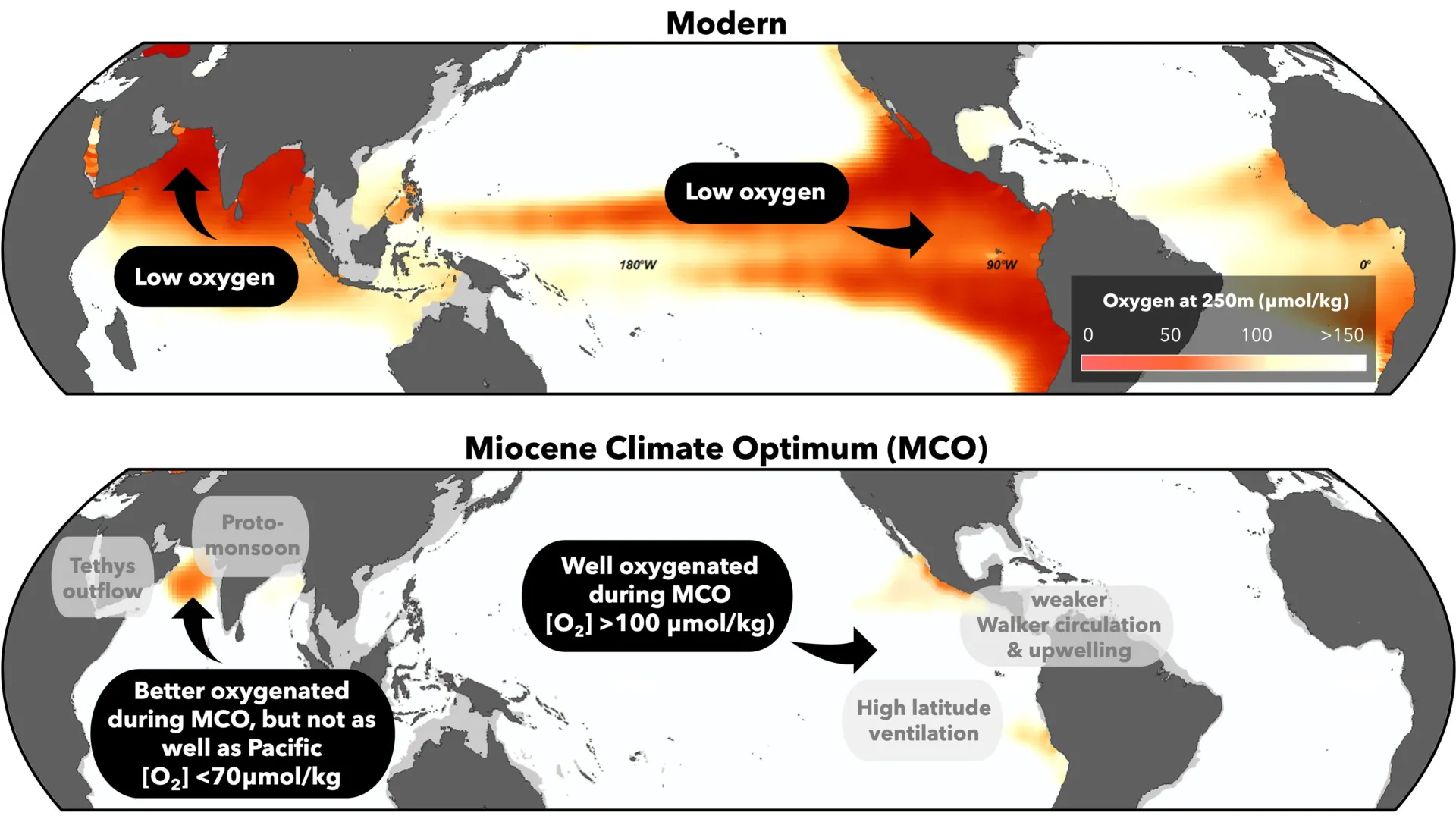
Scientists studying ancient ocean fossils found that the Arabian Sea was better oxygenated 16 million years ago, even though the planet was warmer than today. Oxygen levels only plunged millions of years later, after the climate cooled, defying expectations. Powerful monsoons and ocean circulation appear to have delayed oxygen loss in this region compared to the Pacific. The discovery suggests future ocean oxygen levels may not follow a simple warming-equals-deoxygenation rule.
Read on the original site
Open the publisher's page for the full experience