The recent discovery of organic carbon on a Martian rock by a rover is a compelling development, though ultimately one that demands cautious interpretation. The presence of organic molecules – compounds containing carbon, the backbone of life as we know it – is significant in itself, sparking renewed excitement about the possibility of past or present life on Mars. However, as the article rightly points out, these molecules can arise from non-biological processes, meaning their detection alone isn’t definitive proof of life. This highlights a fundamental challenge in astrobiology: discerning between biogenic (life-produced) and abiogenic (non-life produced) signatures. It's a nuance often lost in the popular press, and one that requires rigorous, data-driven assessment. The imperative for sample return missions – bringing Martian material back to Earth for detailed laboratory analysis – becomes even more evident in light of this finding. Such analysis, leveraging far more sophisticated instrumentation than can be deployed on a rover, is essential to fully characterize the carbon compounds and determine their origin. This resonates with our ongoing work examining complex systems; as seen in Environmental management in global value chains: how production fragmentation drives environmental upgrading in China’s ocean manufacturing, understanding the intricate interplay of factors is crucial for drawing valid conclusions about large and complex systems. The implications of this discovery extend beyond the immediate question of Martian life. It speaks to the prevalence of organic chemistry in the universe, and the potential for life to arise elsewhere. The conditions that led to the formation of these organic molecules on Mars, regardless of their origin, provide valuable insights into the early chemistry of planetary systems. This also draws a parallel to the fragility of life on Earth, and the impact of human activity. The tragic incident involving a Pregnant Endangered Fin Whale Found Dead On Cruise Ship Bow In Alaska serves as a stark reminder of how readily even established ecosystems can be disrupted, highlighting the importance of careful environmental stewardship – a principle applicable both on Earth and in the search for life beyond. The ability to detect and analyze organic molecules, even in challenging environments, is a testament to the advancements in remote sensing and analytical techniques, further fueling the drive for more sophisticated exploration missions. The recent events surrounding the Video: Russian Drone Strike Kills Crew Member Aboard Turkish Cargo Ship Bound For Ukraine underscore the volatile global landscape and the increasingly complex challenges to scientific endeavor, requiring innovative solutions for data collection and analysis even in hostile environments. The significance of this Martian finding is compounded by the broader context of exoplanet research. Thousands of planets have been discovered orbiting other stars, many within the “habitable zone” – the region around a star where liquid water could exist on a planet’s surface. The discovery of organic carbon on Mars, even if abiogenic, strengthens the argument that the building blocks of life are common throughout the cosmos. It suggests that the conditions necessary for life to arise may be more widespread than previously thought, increasing the probability that life exists elsewhere. This reinforces the need for continued investment in space exploration and astrobiology research, both robotic and crewed missions. Real-time data acquisition and integrated data ecosystems, like those we are developing, are crucial for effectively processing and analyzing the vast quantities of data generated by these missions and for fostering global collaboration in the pursuit of scientific discovery. The rigorous, peer-reviewed validation of findings, like those presented here, is paramount in ensuring the integrity of scientific progress. Looking ahead, the key question is how quickly we can secure and analyze Martian samples. The current timeline for sample return is ambitious, requiring international collaboration and significant technological advancements. While remote analysis will continue to yield valuable data, the definitive answer regarding the origin of this organic carbon – and the potential for past or present life on Mars – will only come from detailed laboratory analysis on Earth. Furthermore, the development of even more sensitive and specific analytical techniques will be essential for characterizing organic molecules in increasingly complex environments, both on Mars and elsewhere in the solar system.
Organic Molecules Detected on Mars: Earth Return Needed for Validation.
A groundbreaking discovery by the Mars rover suggests the presence of organic carbon detected directly on a rock surface.
4 min readScience News
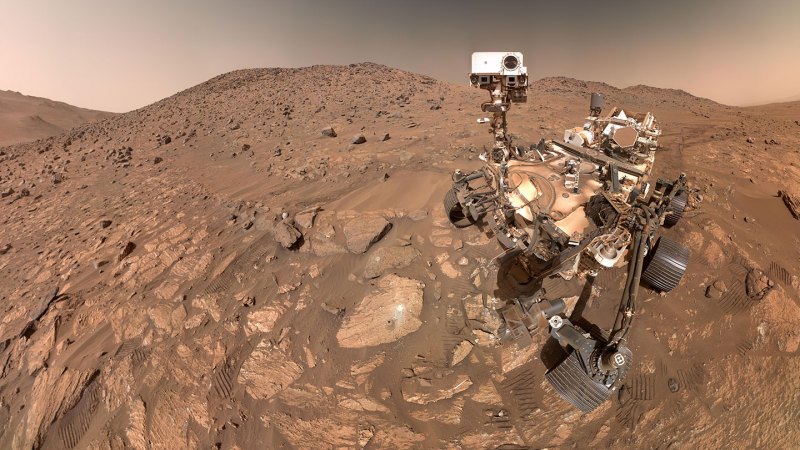
The organic molecules could come from life or from ordinary chemistry — only samples returned to Earth can settle it.